
Veronica
A large group of wild and garden flowers known as speedwell
Veronica is a genus of about 500 flowering plants, including annuals, perennials, and shrubs. Most species are native to the temperate Northern Hemisphere, with some in the Southern Hemisphere, especially New Zealand. They are grown as ground cover, sometimes seen as weeds, and some are edible or used in traditional medicine.
- Veronica includes about 500 species of flowering plants
- Some species are edible and taste like watercress
- Many are used as ground cover in gardens
- Several species are common lawn weeds
- Some species were formerly classified as Hebe
What does Veronica look like?
Veronica plants can be annuals, perennials, subshrubs, or small shrubs. Their flowers are usually small and are often blue, but can also be white or pink in some species. The plants may have rounded stems, which helps distinguish them from similar-looking members of the mint family. Some species are low-growing and used as ground cover, while others grow taller. The leaves and flowers vary widely across the genus.
Where does Veronica come from?
Veronica is mainly found in the temperate regions of the Northern Hemisphere, but some species are native to the Southern Hemisphere, especially New Zealand. The genus name was adopted by Carl Linnaeus, based on its common use in European languages, possibly linked to Saint Veronica. The group has a complex taxonomic history, with many Southern Hemisphere species formerly placed in separate genera like Hebe, but now included in Veronica after molecular studies.
When and how Veronica blooms
Veronica species grow in a range of climates, from temperate to arid regions. They can be grown from seed or cuttings, depending on the species. Some are adapted to unpredictable or dry environments and may have an annual life cycle. Gardeners often use certain species and cultivars as ground cover, while others may appear as weeds in lawns.

How Veronica is used
Some Veronica species, such as Veronica americana, are edible and have a taste similar to watercress. Native Americans made tea from Veronica for respiratory issues, and the plant has been used in traditional Austrian medicine for various ailments. In gardens, they are valued as ground cover, but some species are considered weeds. The flowers also serve as food for certain butterfly larvae.
Kinds of Veronica
There are about 500 species and hybrids in the genus, including those formerly in the genus Hebe. Notable species include Persian speedwell, creeping speedwell, corn speedwell, germander speedwell, and ivy-leaved speedwell. These species can look similar, making identification difficult. The genus includes both annual and perennial forms.
What Veronica means
The name Veronica has been used in English since at least the 16th century and may be connected to Saint Veronica. The genus is important in horticulture for ground cover and is sometimes seen as a weed. Some species are part of local traditions, such as food and medicine, but the sources do not mention specific symbolism or festival roles.
Questions people ask about Veronica
Where does Veronica come from?
Most Veronica species are native to the temperate Northern Hemisphere, but some are found in the Southern Hemisphere, especially in New Zealand.
What does Veronica look like?
Veronica plants vary widely, but many have small blue, white, or pink flowers and can be low-growing or shrubby. Their stems are usually rounded.
Is Veronica edible?
Yes, some species like Veronica americana are edible and have a flavor similar to watercress. Most species in the genus are considered nutritious.
What is Veronica used for?
Veronica is used as ground cover in gardens, as an edible plant, and in traditional medicine. Some species are also considered weeds in lawns.
Does Veronica have any symbolic meaning?
The sources do not mention any specific symbolism or festival use for Veronica, though its name may be linked to Saint Veronica.
Good reading and sources
- Encyclopaedia BritannicaArticle
- USDA Plants DatabaseUS Department of Agriculture, Article
- Plants of the World OnlineRoyal Botanic Gardens, Kew, Plant database
- Where it has been recordedGBIF, Plant database
- Sightings and photos by naturalistsiNaturalist, Plant database
- Veronica (plant) on WikipediaEncyclopedia
- More photos on Wikimedia CommonsPhotos
- Wikidata recordOpen data
The facts on this page come from the Wikipedia article "Veronica (plant)", written by its contributors and used under the CC BY-SA 4.0 licence, and from its Wikidata record (CC0). Phool rewrote the text in its own words, with AI assistance, and compares every page with the article to make sure no passage is copied. It may be reused under the same CC BY-SA 4.0 licence with a link back.
It may contain mistakes. It is not medical or foraging advice: many flowers are poisonous, and traditional uses are reported, not recommended. If something is wrong, tell us. Last refreshed 2026-10-03.
Others in the family Plantaginaceae
The whole family FoxgloveDigitalis purpurea
Tall spikes of bell-shaped, spotted flowers in purple, pink, white or yellow
🇩🇪 Germany and 5 more · Wildflower
FoxgloveDigitalis purpurea
Tall spikes of bell-shaped, spotted flowers in purple, pink, white or yellow
🇩🇪 Germany and 5 more · Wildflower
 ToadflaxLinaria
A group of nearly 200 flowering plants called toadflax, found mainly around the Mediterranean
Linaria · Wildflower
ToadflaxLinaria
A group of nearly 200 flowering plants called toadflax, found mainly around the Mediterranean
Linaria · Wildflower
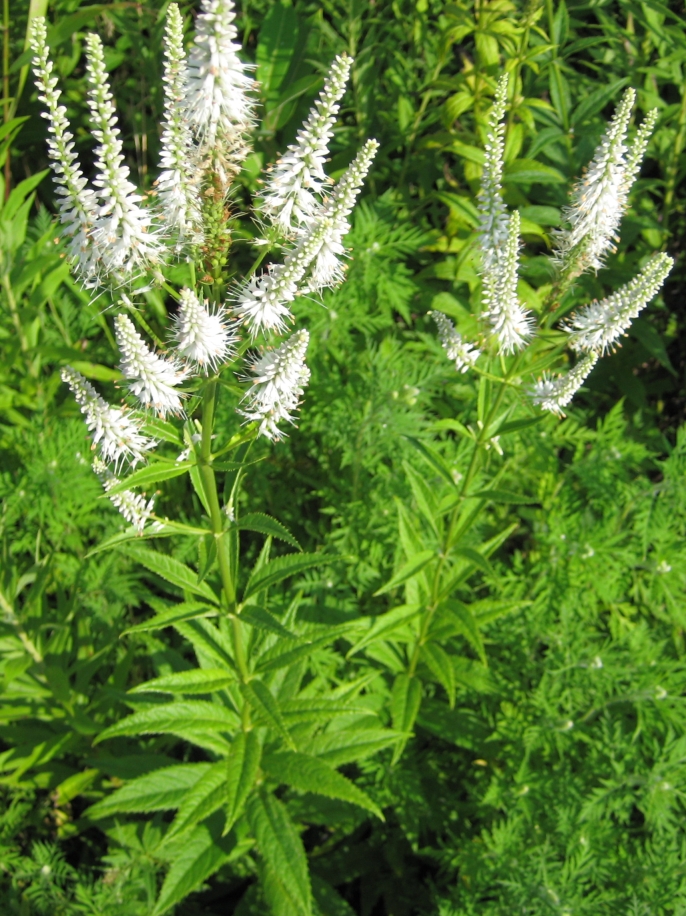 Veronicastrum
A group of upright flowering plants in the plantain family
Veronicastrum · Wildflower
Veronicastrum
A group of upright flowering plants in the plantain family
Veronicastrum · Wildflower
 Alpine toadflaxLinaria alpina
A small violet-flowered plant of rocky European mountain slopes
🇦🇹 Austria and 7 more · Wildflower
Alpine toadflaxLinaria alpina
A small violet-flowered plant of rocky European mountain slopes
🇦🇹 Austria and 7 more · Wildflower