
Foxglove
Digitalis purpurea, family Plantaginaceae
Tall spikes of bell-shaped, spotted flowers in purple, pink, white or yellow
Foxglove is a biennial plant with tall stems of tubular, hanging flowers, most often purple but also pink, white, or yellow. Native to western Europe and North Africa, it is widely grown in gardens and has naturalized in many temperate regions. All parts of the plant are poisonous.
- All parts of foxglove are poisonous and can be fatal if eaten.
- Foxglove is native to western Europe and North Africa.
- Flowers are usually purple with spots, but can also be pink, white, or yellow.
- It is a biennial, flowering in its second year and then dying.
- Bees are attracted to its tubular flowers for nectar.
What does Foxglove look like?
Foxglove grows as a leafy rosette in its first year, with soft, woolly leaves. In its second year, it sends up a tall stem, often reaching 1–2 meters, topped with a long cluster of drooping, tube-shaped flowers. Most wild foxgloves are purple with spotted throats, but cultivated forms can be pink, white, or yellow. The flowers are arranged on one side of the stem in the wild, but garden types may have flowers all around. Bees are frequent visitors, crawling inside the tubes for nectar.
Where does Foxglove come from?
Foxglove is native to western Europe and North Africa, found in countries like the United Kingdom, France, Spain, Portugal, and Morocco. It grows wild in woods, clearings, moorlands, and rocky slopes, especially where the soil is acidic and the ground has been disturbed. Over time, foxglove has spread far beyond its original range, becoming naturalized in North America, Asia, and other temperate regions. Its name and use in gardens have a long history in Europe.
When and how Foxglove blooms
Foxglove is a biennial, forming a rosette of leaves in its first year and flowering in its second. It thrives in humus-rich, acidic soils and prefers partial shade but can grow in sun or deeper shade. The plant produces many small seeds in capsules, which scatter when ripe, allowing it to quickly colonize disturbed ground. Gardeners grow it from seed or buy young plants in spring.


How Foxglove is used
Foxglove is grown for its striking flower spikes in gardens and parks, valued for height and color in early summer. All parts of the plant are highly poisonous if eaten, affecting the heart. Extracts from its leaves have been used in medicine to treat heart conditions, especially before safer drugs were developed. It is also a symbol in some regions and appears in wildflower meadows.
Kinds of Foxglove
Several subspecies and hybrids exist. Subspecies include those native to Portugal (around the Douro Basin), Morocco, and central Spain. Gardeners have bred many cultivars with different flower colors and forms, such as the Excelsior hybrids. There are also natural hybrids with other Digitalis species.
What Foxglove means
Foxglove is known for its beauty and toxicity. It is a familiar wildflower in Europe and a classic garden plant. In the past, it played an important role in medicine. Some regions consider it an emblematic flower. Its presence in disturbed ground has made it a symbol of renewal in some places, and it is featured in folklore and art.
Traditions that use it
Questions people ask about Foxglove
Where does foxglove come from?
Foxglove is native to western Europe and North Africa, growing wild in countries such as the United Kingdom, France, Spain, Portugal, and Morocco. It has also spread to many other temperate regions around the world.
What does foxglove look like?
Foxglove produces tall stems with clusters of drooping, tubular flowers, most often purple with spotted throats. Garden varieties can also be pink, white, or yellow. The plant forms a rosette of woolly leaves at its base.
Is foxglove poisonous?
Yes, all parts of the foxglove plant are highly toxic and can be fatal if ingested. The plant contains chemicals that affect the heart, so it should never be eaten or used without expert guidance.
How is foxglove used?
Foxglove is mainly grown as a garden flower for its tall, colorful spikes. In the past, extracts from its leaves were used in medicine to treat heart conditions, but safer alternatives are now available.
Are there different types of foxglove?
Yes, there are several subspecies found in different regions, as well as many garden cultivars with a range of flower colors and forms. Some natural hybrids with other Digitalis species also exist.
Good reading and sources
- Encyclopaedia BritannicaArticle
- Digitalis purpurea 'Camelot Cream' (Camelot Series)Royal Horticultural Society, Article
- Plants of the World OnlineRoyal Botanic Gardens, Kew, Plant database
- Where it has been recordedGBIF, Plant database
- Sightings and photos by naturalistsiNaturalist, Plant database
- Digitalis purpurea on WikipediaEncyclopedia
- More photos on Wikimedia CommonsPhotos
- Wikidata recordOpen data
The facts on this page come from the Wikipedia article "Digitalis purpurea", written by its contributors and used under the CC BY-SA 4.0 licence, and from its Wikidata record (CC0). Phool rewrote the text in its own words, with AI assistance, and compares every page with the article to make sure no passage is copied. It may be reused under the same CC BY-SA 4.0 licence with a link back.
It may contain mistakes. It is not medical or foraging advice: many flowers are poisonous, and traditional uses are reported, not recommended. If something is wrong, tell us. Last refreshed 2026-10-03.
Others in the family Plantaginaceae
The whole family ToadflaxLinaria
A group of nearly 200 flowering plants called toadflax, found mainly around the Mediterranean
Linaria · Wildflower
ToadflaxLinaria
A group of nearly 200 flowering plants called toadflax, found mainly around the Mediterranean
Linaria · Wildflower
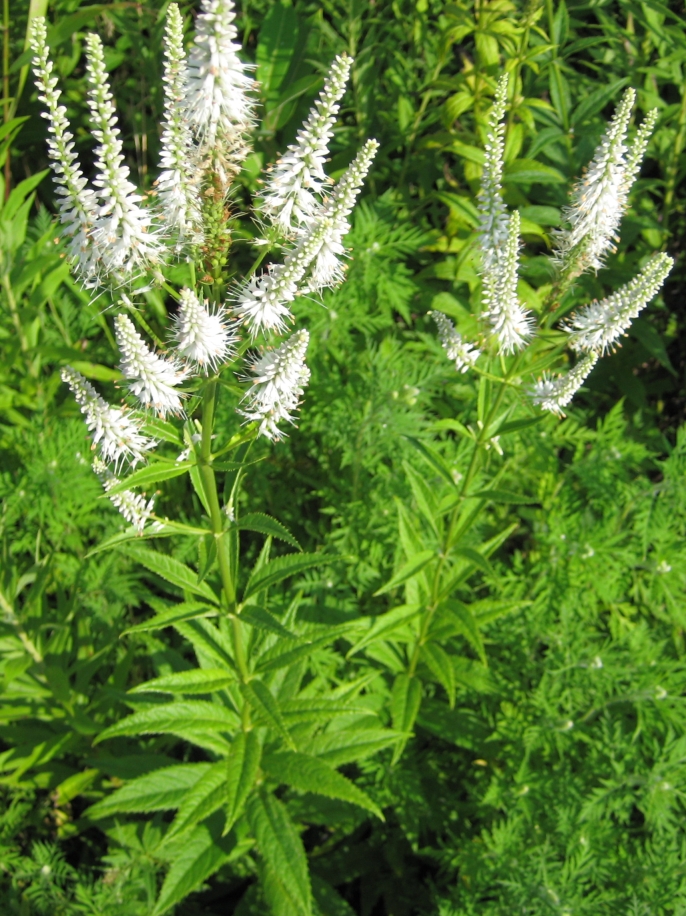 Veronicastrum
A group of upright flowering plants in the plantain family
Veronicastrum · Wildflower
Veronicastrum
A group of upright flowering plants in the plantain family
Veronicastrum · Wildflower
 Veronica
A large group of wild and garden flowers known as speedwell
Veronica · Wildflower
Veronica
A large group of wild and garden flowers known as speedwell
Veronica · Wildflower
 Alpine toadflaxLinaria alpina
A small violet-flowered plant of rocky European mountain slopes
🇦🇹 Austria and 7 more · Wildflower
Alpine toadflaxLinaria alpina
A small violet-flowered plant of rocky European mountain slopes
🇦🇹 Austria and 7 more · Wildflower
More from Germany
All the flowers of Germany AlmondPrunus amygdalus
A Mediterranean tree grown for its fragrant spring flowers and edible seeds
🇮🇷 Iran and 6 more · Flowering tree
AlmondPrunus amygdalus
A Mediterranean tree grown for its fragrant spring flowers and edible seeds
🇮🇷 Iran and 6 more · Flowering tree
 TulipTulipa
Spring-blooming bulbs with showy, cup-shaped flowers in many colours
🇳🇱 Netherlands and 7 more · Wildflower
TulipTulipa
Spring-blooming bulbs with showy, cup-shaped flowers in many colours
🇳🇱 Netherlands and 7 more · Wildflower
 LindenTilia
Tall, broad-leaved trees with fragrant yellow flowers and heart-shaped leaves
🇨🇳 China and 7 more · Flowering tree
LindenTilia
Tall, broad-leaved trees with fragrant yellow flowers and heart-shaped leaves
🇨🇳 China and 7 more · Flowering tree
 BlackthornPrunus spinosa
A spiny shrub with white spring flowers and tart blue-black fruit
🇬🇧 United Kingdom and 7 more · Wildflower
BlackthornPrunus spinosa
A spiny shrub with white spring flowers and tart blue-black fruit
🇬🇧 United Kingdom and 7 more · Wildflower