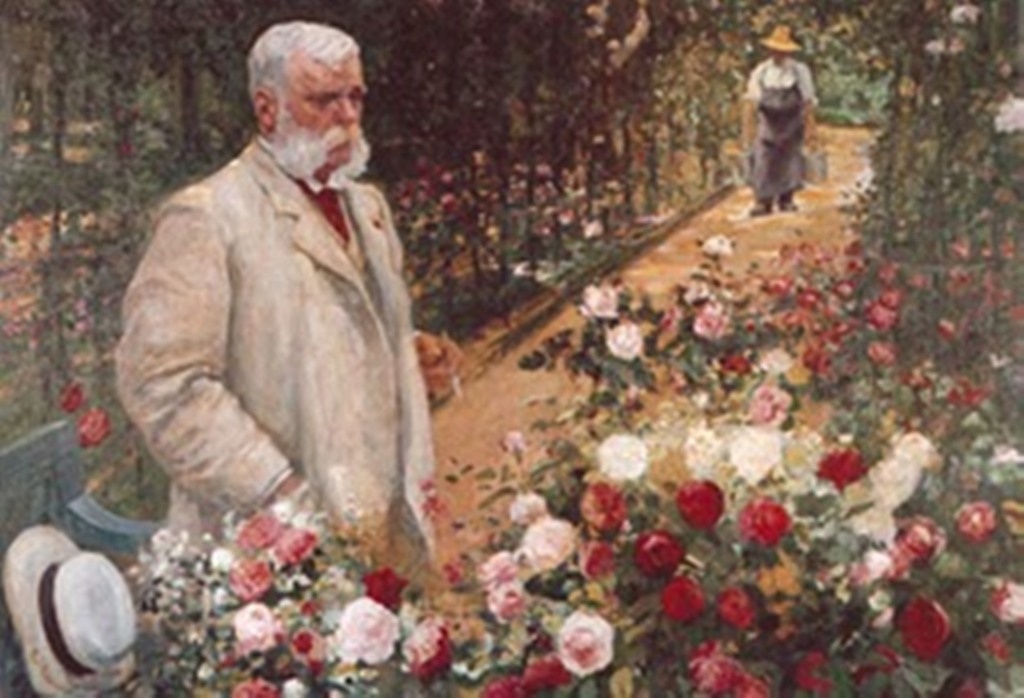
Roseraie du Val-de-Marne
A historic rose garden just south of Paris with thousands of rose varieties
Roseraie du Val-de-Marne is a large rose garden in L'Haÿ-les-Roses, near Paris, France. Created in the late 19th century, it now displays over 13,000 rose bushes and more than 3,000 types of roses in formal and themed sections. Visitors can explore both modern and classic roses, as well as a central reflecting pool.
- Home to over 13,000 rose bushes and 3,200 types of roses
- Founded by Jules Gravereaux in the 1890s
- The town was renamed L'Haÿ-les-Roses in honor of the garden
- Several famous rose varieties originated here
- Recognized as a historic monument in France
What is Roseraie du Val-de-Marne?
This garden is arranged in thirteen formal areas, each dedicated to different groups of roses. There are over 13,000 rose bushes and more than 3,000 species and varieties, including both old and modern roses. The garden features a central reflecting pool, pavilions, and a mix of French and international rose types. Visitors walk among carefully designed beds and can see a wide range of colors and forms.
The history of Roseraie du Val-de-Marne
Jules Gravereaux established the garden in the 1890s after purchasing land in L'Haÿ, south of Paris. He worked with landscape architect Édouard André to create what is considered the first garden devoted only to roses. Gravereaux collected roses from across Europe and bred new types, especially for rose oil. The town later changed its name to L'Haÿ-les-Roses to honor the garden’s fame.
What there is to see
The garden was designed with formal symmetry and themed sections. Roses are planted in beds grouped by type or origin, with modern varieties on one side and historic roses on the other. The reflecting pool forms a central feature. The garden is maintained year-round, but the main display is during the blooming seasons.

When to go
The Roseraie is open to visitors, especially in spring and summer when the roses are in full bloom. It serves as a living collection for rose enthusiasts, horticulturists, and tourists. The garden is also recognized as a historic monument, and its pavilions are protected for their cultural value.
Parts and collections
Several rose varieties were first bred here, such as 'Roseraie de L'Haÿ' and 'Amélie Gravereaux', both hybrids of Rosa rugosa. The garden also inspired rose breeders abroad, with a Brazilian tea rose named after Jules Gravereaux. The collection includes both French and foreign roses, with new cultivars added over time.
Why Roseraie du Val-de-Marne matters
The garden’s reputation led the town to add 'les-Roses' to its name in 1914. It has been marked as part of the Méridienne verte, a symbolic line through France. The site is protected as a historic monument, reflecting its importance in horticultural history and rose breeding.
The flowers of Roseraie du Val-de-Marne

Questions people ask about Roseraie du Val-de-Marne
Where is the Roseraie du Val-de-Marne located?
It is in L'Haÿ-les-Roses, a town about 8 kilometers south of Paris, France, on Rue Albert Watel.
What can I see at the Roseraie du Val-de-Marne?
Visitors can explore thirteen formal sections with over 13,000 rose bushes, including both modern and old roses, and enjoy features like a central reflecting pool and historic pavilions.
Who created the Roseraie du Val-de-Marne?
Jules Gravereaux, after making his fortune in Paris, established the garden in the 1890s with the help of landscape architect Édouard André.
What is special about this rose garden?
It was among the first gardens dedicated solely to roses and has produced several notable rose varieties, including 'Roseraie de L'Haÿ' and 'Amélie Gravereaux'.
Why did the town change its name?
In 1914, the town officially became L'Haÿ-les-Roses to recognize the significance and reputation of the rose garden.
Good reading and sources
- Roseraie du Val-de-Marne on WikipediaEncyclopedia
- More photos on Wikimedia CommonsPhotos
- Wikidata recordOpen data
The facts on this page come from the Wikipedia article "Roseraie du Val-de-Marne", written by its contributors and used under the CC BY-SA 4.0 licence, and from its Wikidata record (CC0). Phool rewrote the text in its own words, with AI assistance, and compares every page with the article to make sure no passage is copied. It may be reused under the same CC BY-SA 4.0 licence with a link back.
It may contain mistakes. Opening times, prices and bloom dates change: check with the place before you travel. If something is wrong, tell us. Last refreshed 2026-10-03.
More of the same kind
 Place
AlhambraLa Alhambra
Medieval palace and fortress complex overlooking Granada, Spain
Granada, 🇪🇸 Spain · Flower garden
Place
AlhambraLa Alhambra
Medieval palace and fortress complex overlooking Granada, Spain
Granada, 🇪🇸 Spain · Flower garden
 Place
Chashme Shahi
A Mughal garden built around a spring in Srinagar, Kashmir
Srinagar, 🇮🇳 India · Flower garden, Mar to Nov
Place
Chashme Shahi
A Mughal garden built around a spring in Srinagar, Kashmir
Srinagar, 🇮🇳 India · Flower garden, Mar to Nov
 Place
Yadavindra Gardens
A 17th-century Mughal garden with seven terraces in Pinjore, Haryana
Panchkula, 🇮🇳 India · Flower garden, Apr to Dec
Place
Yadavindra Gardens
A 17th-century Mughal garden with seven terraces in Pinjore, Haryana
Panchkula, 🇮🇳 India · Flower garden, Apr to Dec
 Place
Shalimar Bagh
A Mughal-era garden of terraces, fountains and chinar trees by Dal Lake, Srinagar
Srinagar, 🇮🇳 India · Flower garden
Place
Shalimar Bagh
A Mughal-era garden of terraces, fountains and chinar trees by Dal Lake, Srinagar
Srinagar, 🇮🇳 India · Flower garden
More from France
All the flowers of France Place
Parc floral de Paris
A botanical garden and flower park in the Bois de Vincennes, Paris
Paris, 🇫🇷 France · Botanical garden
Place
Parc floral de Paris
A botanical garden and flower park in the Bois de Vincennes, Paris
Paris, 🇫🇷 France · Botanical garden
 Place
Parc Floral de la Source
A large public garden in Orléans built around the source of the Loiret river
Orléans, 🇫🇷 France · Botanical garden
Place
Parc Floral de la Source
A large public garden in Orléans built around the source of the Loiret river
Orléans, 🇫🇷 France · Botanical garden
 Place
SaultSaut
A rural village in Provence known for its summer lavender fields
Sault, 🇫🇷 France · Bloom site, Jun to Sep
Place
SaultSaut
A rural village in Provence known for its summer lavender fields
Sault, 🇫🇷 France · Bloom site, Jun to Sep
 Place
Tuileries GardenJardin des Tuileries
Historic public gardens between the Louvre and Place de la Concorde in Paris
1st arrondissement of Paris, 🇫🇷 France · Flower garden
Place
Tuileries GardenJardin des Tuileries
Historic public gardens between the Louvre and Place de la Concorde in Paris
1st arrondissement of Paris, 🇫🇷 France · Flower garden