
Sezincote House
A Neo-Mughal country house and garden in the Cotswolds, England
Sezincote House is a country estate in Gloucestershire, England, built in 1805 in a Neo-Mughal style inspired by 16th and 17th-century Indian architecture. The house features a copper dome, red sandstone colour, and gardens with Hindu and Mughal elements, blending British and Indian influences.
- Built in 1805 in Gloucestershire, England
- Features a copper onion dome and red sandstone colour
- Gardens designed by Humphry Repton with Hindu motifs
- Inspired by Mughal architecture of 16th–17th century India
- Grade I listed historic house and garden
What is Sezincote House?
Sezincote House is a large country house set on high ground in the Cotswolds. Its most striking feature is a copper-covered dome, shaped like an onion, which sits above red sandstone walls. The windows are tall and topped with shell-like fan arches. The gardens include a crescent bridge with columns, serpent fountains, and Hindu-inspired features such as a Surya temple, Shiva lingams, and Nandi bull statues. The landscape, designed by Humphry Repton, combines renaissance garden style with Indian motifs.
The history of Sezincote House
The estate was bought in 1795 by Colonel John Cockerell after his return from Bengal. After his death, his brother Sir Charles Cockerell inherited it and asked Samuel Pepys Cockerell to design a house in the Indian style. Though Samuel never visited India, he drew inspiration from drawings and engravings of Mughal architecture. The garden was designed by Thomas Daniell, who had spent time in India. The house was completed in 1805 and is considered a unique British interpretation of Mughal forms.
What there is to see
Sezincote House was built using stone from a nearby quarry, possibly stained to resemble red sandstone. The dome is covered in copper, unlike the white marble domes found in India. The gardens were laid out with a mix of renaissance and Hindu styles, featuring water elements, bridges, and temple-like structures. The estate includes Mughal garden features and decorative details inspired by Indian architecture.


When to go
Today, Sezincote House is known as a historic house and garden open to visitors. People come to see its unique blend of British and Indian design, the copper dome, and the gardens with their Mughal and Hindu elements. The house and grounds are Grade I listed and are a notable example of early 19th-century interest in Indian architecture in England.
Parts and collections
Sezincote is unique in its combination of Neo-Mughal architecture and English country house tradition. The house stands out for its use of a copper dome and red sandstone colour, and the gardens mix renaissance layout with Indian motifs. Other houses in England experimented with Indian elements, but Sezincote is considered the most complete example.
Why Sezincote House matters
Sezincote House reflects the fascination with Indian art and architecture in early 19th-century Britain, especially among those connected to the East India Company. Its design draws on Mughal forms, such as domes and chhatris, and incorporates Hindu symbols in the garden. The estate is a rare example of Indo-Saracenic revival architecture outside India and is protected as a Grade I listed building.
Questions people ask about Sezincote House
Where is Sezincote House located?
Sezincote House is in the parish of Sezincote, Gloucestershire, England, about 1.5 miles from Moreton-in-Marsh and set in the Cotswolds countryside.
What is special about Sezincote House's architecture?
The house is designed in a Neo-Mughal style, inspired by 16th and 17th-century Indian architecture, with features like a copper onion dome, red sandstone colour, and shell-like fan arches above the windows.
Who designed Sezincote House and its gardens?
Samuel Pepys Cockerell designed the house, and the gardens were laid out by Humphry Repton with input from Thomas Daniell, reflecting both British and Indian influences.
What can visitors see at Sezincote House?
Visitors can see the unique house with its copper dome, red sandstone walls, and gardens featuring Mughal and Hindu-inspired elements such as a crescent bridge, serpent fountains, and temple-like structures.
Why was Sezincote House built in an Indian style?
Sir Charles Cockerell, who inherited the estate, had family connections to India through the East India Company and wanted a house reflecting the Mughal architecture he admired from drawings and engravings.
Good reading and sources
- Sezincote House on WikipediaEncyclopedia
- More photos on Wikimedia CommonsPhotos
- Wikidata recordOpen data
The facts on this page come from the Wikipedia article "Sezincote House", written by its contributors and used under the CC BY-SA 4.0 licence, and from its Wikidata record (CC0). Phool rewrote the text in its own words, with AI assistance, and compares every page with the article to make sure no passage is copied. It may be reused under the same CC BY-SA 4.0 licence with a link back.
It may contain mistakes. Opening times, prices and bloom dates change: check with the place before you travel. If something is wrong, tell us. Last refreshed 2026-10-03.
More of the same kind
 Place
AlhambraLa Alhambra
Medieval palace and fortress complex overlooking Granada, Spain
Granada, 🇪🇸 Spain · Flower garden
Place
AlhambraLa Alhambra
Medieval palace and fortress complex overlooking Granada, Spain
Granada, 🇪🇸 Spain · Flower garden
 Place
Chashme Shahi
A Mughal garden built around a spring in Srinagar, Kashmir
Srinagar, 🇮🇳 India · Flower garden, Mar to Nov
Place
Chashme Shahi
A Mughal garden built around a spring in Srinagar, Kashmir
Srinagar, 🇮🇳 India · Flower garden, Mar to Nov
 Place
Yadavindra Gardens
A 17th-century Mughal garden with seven terraces in Pinjore, Haryana
Panchkula, 🇮🇳 India · Flower garden, Apr to Dec
Place
Yadavindra Gardens
A 17th-century Mughal garden with seven terraces in Pinjore, Haryana
Panchkula, 🇮🇳 India · Flower garden, Apr to Dec
 Place
Shalimar Bagh
A Mughal-era garden of terraces, fountains and chinar trees by Dal Lake, Srinagar
Srinagar, 🇮🇳 India · Flower garden
Place
Shalimar Bagh
A Mughal-era garden of terraces, fountains and chinar trees by Dal Lake, Srinagar
Srinagar, 🇮🇳 India · Flower garden
More from the United Kingdom
All the flowers of the United Kingdom Place
Royal Botanic Gardens, Kew
London’s world-renowned botanical gardens and plant science centre
Kew, 🇬🇧 United Kingdom · Botanical garden
Place
Royal Botanic Gardens, Kew
London’s world-renowned botanical gardens and plant science centre
Kew, 🇬🇧 United Kingdom · Botanical garden
 Place
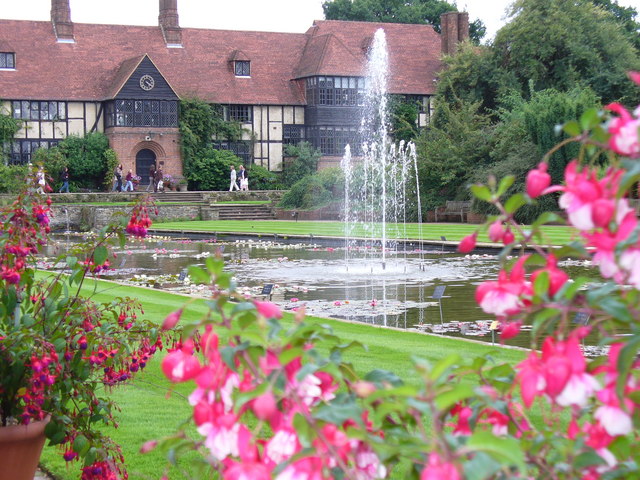
RHS Garden Wisley
A major English garden with glasshouses, borders and plant trials in Surrey
Wisley, 🇬🇧 United Kingdom · Botanical garden
Place
RHS Garden Wisley
A major English garden with glasshouses, borders and plant trials in Surrey
Wisley, 🇬🇧 United Kingdom · Botanical garden
 Place
Hestercombe House
Historic house and gardens in Somerset with Georgian, Victorian, and Edwardian designs
Cheddon Fitzpaine, 🇬🇧 United Kingdom · Flower garden
Place
Hestercombe House
Historic house and gardens in Somerset with Georgian, Victorian, and Edwardian designs
Cheddon Fitzpaine, 🇬🇧 United Kingdom · Flower garden
 Place
RHS Garden Bridgewater
A 154-acre public garden on the former Worsley New Hall estate in Salford, England
Salford, 🇬🇧 United Kingdom · Flower garden
Place
RHS Garden Bridgewater
A 154-acre public garden on the former Worsley New Hall estate in Salford, England
Salford, 🇬🇧 United Kingdom · Flower garden