🇮🇸 The flowers of Iceland
5 pages from Iceland: its flowers, the things made with them and the places to see them.
Iceland’s flowers and flowering plants are shaped by its cool climate, volcanic soils, and history of human settlement. Most flowering plants are low-growing, with mosses, sedges, and grasses common across the land. Daisies and carnations are the most widespread wildflowers, and Iceland moss is a notable lichen found in many places.
- Only about 25% of Iceland has full vegetation cover.
- Daisy and carnation families are the most common wildflowers.
- Iceland moss, a lichen, grows widely on tundra and slopes.
- Most trees are under 2 meters tall.
- Soil erosion affects three-quarters of the country.
The plant life of Iceland
Iceland’s plant life is limited by its northern location, volcanic ground, and cool, windy weather. Only a quarter of the island is fully covered in vegetation, with much of the rest made up of rocky deserts, glaciers, and eroded soils. Marshes and tundra are widespread, especially in the north, supporting mosses, sedges, and grasses. The island’s forests were mostly cleared after people arrived, leaving only scattered patches of small trees. About 540 plant species grow here, with woody plants and low shrubs common.
From region to region in Iceland
Plant life changes across Iceland’s varied landscape. The high central plateau is mostly volcanic desert and glaciers, with little cover. Northern areas are marshy or tundra, where mosses and sedges thrive. River valleys in the north and east shelter the few taller trees. Coastal plains, shaped by fjords, have more vegetation than the interior.
Flowers to know in Iceland
Among Iceland’s flowering plants, members of the daisy and carnation families are especially common. Mosses and lichens, such as Iceland moss, are abundant and sometimes used as emergency food. Most trees and shrubs are low, rarely growing taller than a person. The flora includes survivors from the ice ages and species brought by wind, birds, or sea ice.
How flowers are used in Iceland
Iceland moss, though a lichen, has been used as a food source in times of scarcity. Settlers cleared forests for wood and grazing, which changed the landscape and reduced tree cover. Sheep grazing continues to shape the plant life, often limiting the growth of new trees and shrubs.
Threats and protection in Iceland
Soil erosion is a major problem, affecting three-quarters of the island. Overgrazing by sheep and past deforestation have left much of the land unable to support dense plant life. Conservation efforts focus on protecting remaining vegetation and preventing further loss of soil and native plants.
The facts in this overview come from the Wikipedia article "Wildlife of Iceland", written by its contributors and used under the CC BY-SA 4.0 licence. Phool rewrote the text in its own words, with AI assistance, and compares every page with the article to make sure no passage is copied. It may be reused under the same CC BY-SA 4.0 licence with a link back.

 Common ValerianValeriana officinalis
Tall, sweet-scented wildflower with pale pink blooms and a long history in herbal lore
🇮🇸 Iceland and 8 more · Wildflower
Common ValerianValeriana officinalis
Tall, sweet-scented wildflower with pale pink blooms and a long history in herbal lore
🇮🇸 Iceland and 8 more · Wildflower
 Wild PansyViola tricolor
A small wildflower with purple, yellow, and white blooms found across Eurasia
🇨🇳 China and 3 more · Wildflower
Wild PansyViola tricolor
A small wildflower with purple, yellow, and white blooms found across Eurasia
🇨🇳 China and 3 more · Wildflower
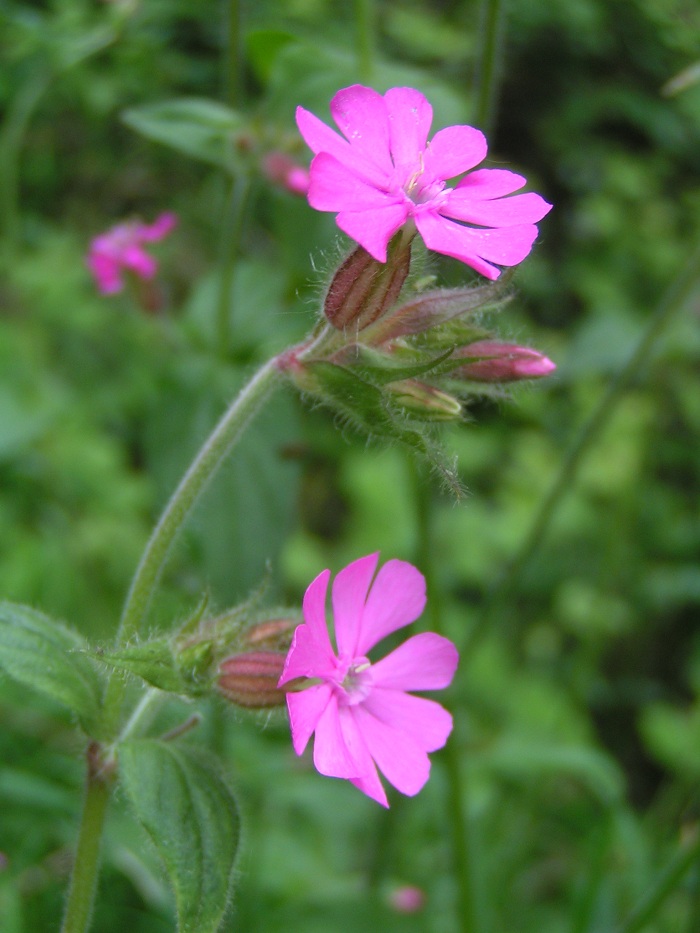 Red campionSilene dioica
A wild pink-red flower of woods and roadsides in northern and central Europe
🇮🇪 Ireland and 4 more · Wildflower
Red campionSilene dioica
A wild pink-red flower of woods and roadsides in northern and central Europe
🇮🇪 Ireland and 4 more · Wildflower
 Eightpetal mountain-avensDryas octopetala
A low evergreen with creamy white eight-petalled flowers of Arctic and alpine regions
🇮🇸 Iceland and 2 more · Wildflower
Eightpetal mountain-avensDryas octopetala
A low evergreen with creamy white eight-petalled flowers of Arctic and alpine regions
🇮🇸 Iceland and 2 more · Wildflower
 Saxifraga cotyledon
A white-flowered saxifrage from northern and mountain regions of Europe
🇳🇴 Norway and 1 more · Wildflower
Saxifraga cotyledon
A white-flowered saxifrage from northern and mountain regions of Europe
🇳🇴 Norway and 1 more · Wildflower
Photo credits on this page
The small pictures above come from Wikimedia Commons under free licences. Some are cropped to fit.
- Red campion: Unknown author, CC BY-SA 3.0, source
- Common Valerian: Ivar Leidus, CC BY-SA 4.0, source
- Wild Pansy: Kim Hansen, CC BY-SA 3.0, source
- Eightpetal mountain-avens: Jörg Hempel, CC BY-SA 3.0 de, source
- Saxifraga cotyledon: Banangraut, CC BY-SA 3.0, source
- Iceland Lupin Fields: User:NancyHeise, Public domain, source