
Eightpetal mountain-avens
Dryas octopetala, family Rosaceae
A low evergreen with creamy white eight-petalled flowers of Arctic and alpine regions
Eightpetal mountain-avens is a small evergreen subshrub with white flowers, found in Arctic and mountain regions across the Northern Hemisphere. It forms dense mats on rocky, lime-rich soils and is the national flower of Iceland and the territorial flower of the Northwest Territories.
- Flowers usually have eight creamy white petals, sometimes up to sixteen.
- It is the national flower of Iceland and the territorial flower of the Northwest Territories.
- Grows in Arctic and mountain regions on lime-rich, rocky soils.
- Seed heads have feathery hairs that help wind dispersal.
- Leaves are sometimes used to make herbal tea.
What does Eightpetal mountain-avens look like?
Eightpetal mountain-avens is a low, spreading evergreen shrub with woody, twisted stems and dense mats of small leaves. The leaves are smooth on top and covered with white hairs underneath. Its flowers, each on a short stalk, usually have eight creamy white petals, though sometimes more. After flowering, the seed heads develop white feathery hairs that help the seeds travel on the wind.
Where does Eightpetal mountain-avens come from?
This plant grows wild across the Arctic and in mountain ranges such as the Alps, Carpathians, and Rockies. It prefers rocky, lime-rich soils where snow melts early. Its name comes from the Greek for 'eight petals', a feature unusual in its rose family. During past ice ages, it was widespread across much of the Northern Hemisphere, as shown by pollen records.
When and how Eightpetal mountain-avens blooms
Eightpetal mountain-avens blooms in spring and summer, especially in places where snow clears early. It thrives in dry, stony, calcareous ground and is often found in alpine gardens or as groundcover. Gardeners grow it for its hardiness and mat-forming habit, and it has received awards for its garden performance.


How Eightpetal mountain-avens is used
People grow this plant in rock gardens and alpine beds for its neat foliage and distinctive flowers. In some places, its leaves are used to make herbal tea. It is also valued as a symbol: it is the national flower of Iceland and the official flower of the Northwest Territories in Canada.
Kinds of Eightpetal mountain-avens
Flowers usually have eight petals, but some may have up to sixteen. The plant forms large colonies and can vary in leaf hairiness and size depending on its growing conditions. No named cultivars are noted in the sources.
What Eightpetal mountain-avens means
Eightpetal mountain-avens is a national and territorial emblem in Iceland and the Northwest Territories. It has also given its name to several cold periods in Earth's history, known as the Younger Dryas and Older Dryas, because its pollen is a marker in geological records. It is recognized by horticultural societies for its value in gardens.
Questions people ask about Eightpetal mountain-avens
Where does eightpetal mountain-avens come from?
It grows wild across the Arctic and in mountain ranges of Europe, Asia, and North America, especially in places with rocky, lime-rich soils.
What does the flower look like?
The flower usually has eight creamy white petals, though sometimes more, and sits on a short stalk above small, evergreen leaves.
What is eightpetal mountain-avens used for?
It is grown in gardens, used as groundcover, and its leaves are sometimes made into herbal tea. It is also a national and territorial symbol.
Why is it important in Iceland and Canada?
It is the national flower of Iceland and the official flower of the Northwest Territories in Canada, symbolizing their northern landscapes.
Does it have any special meaning?
Besides its emblem status, it is notable in science for marking cold periods in Earth's history due to its pollen in geological layers.
Good reading and sources
- Dryas octopetalaRoyal Horticultural Society, Article
- USDA Plants DatabaseUS Department of Agriculture, Article
- Plants of the World OnlineRoyal Botanic Gardens, Kew, Plant database
- Where it has been recordedGBIF, Plant database
- Sightings and photos by naturalistsiNaturalist, Plant database
- Dryas octopetala on WikipediaEncyclopedia
- More photos on Wikimedia CommonsPhotos
- Wikidata recordOpen data
The facts on this page come from the Wikipedia article "Dryas octopetala", written by its contributors and used under the CC BY-SA 4.0 licence, and from its Wikidata record (CC0). Phool rewrote the text in its own words, with AI assistance, and compares every page with the article to make sure no passage is copied. It may be reused under the same CC BY-SA 4.0 licence with a link back.
It may contain mistakes. It is not medical or foraging advice: many flowers are poisonous, and traditional uses are reported, not recommended. If something is wrong, tell us. Last refreshed 2026-10-03.
Others in the family Rosaceae
The whole family RoseRosa
Woody perennial plants with showy, often fragrant flowers in many colours
Rosa · Wildflower
RoseRosa
Woody perennial plants with showy, often fragrant flowers in many colours
Rosa · Wildflower
 PeachPrunus persica
A flowering fruit tree from China, grown for its pink blossoms and sweet fruit
🇨🇳 China and 7 more · Flowering tree
PeachPrunus persica
A flowering fruit tree from China, grown for its pink blossoms and sweet fruit
🇨🇳 China and 7 more · Flowering tree
 AlmondPrunus amygdalus
A Mediterranean tree grown for its fragrant spring flowers and edible seeds
🇮🇷 Iran and 6 more · Flowering tree
AlmondPrunus amygdalus
A Mediterranean tree grown for its fragrant spring flowers and edible seeds
🇮🇷 Iran and 6 more · Flowering tree
 ApricotPrunus armeniaca
A small fruit tree with early white to pink blossoms and golden-orange fruit
🇨🇳 China and 6 more · Flowering tree
ApricotPrunus armeniaca
A small fruit tree with early white to pink blossoms and golden-orange fruit
🇨🇳 China and 6 more · Flowering tree
More from Iceland
All the flowers of Iceland Common ValerianValeriana officinalis
Tall, sweet-scented wildflower with pale pink blooms and a long history in herbal lore
🇮🇸 Iceland and 8 more · Wildflower
Common ValerianValeriana officinalis
Tall, sweet-scented wildflower with pale pink blooms and a long history in herbal lore
🇮🇸 Iceland and 8 more · Wildflower
 Wild PansyViola tricolor
A small wildflower with purple, yellow, and white blooms found across Eurasia
🇨🇳 China and 3 more · Wildflower
Wild PansyViola tricolor
A small wildflower with purple, yellow, and white blooms found across Eurasia
🇨🇳 China and 3 more · Wildflower
 Saxifraga cotyledon
A white-flowered saxifrage from northern and mountain regions of Europe
🇳🇴 Norway and 1 more · Wildflower
Saxifraga cotyledon
A white-flowered saxifrage from northern and mountain regions of Europe
🇳🇴 Norway and 1 more · Wildflower
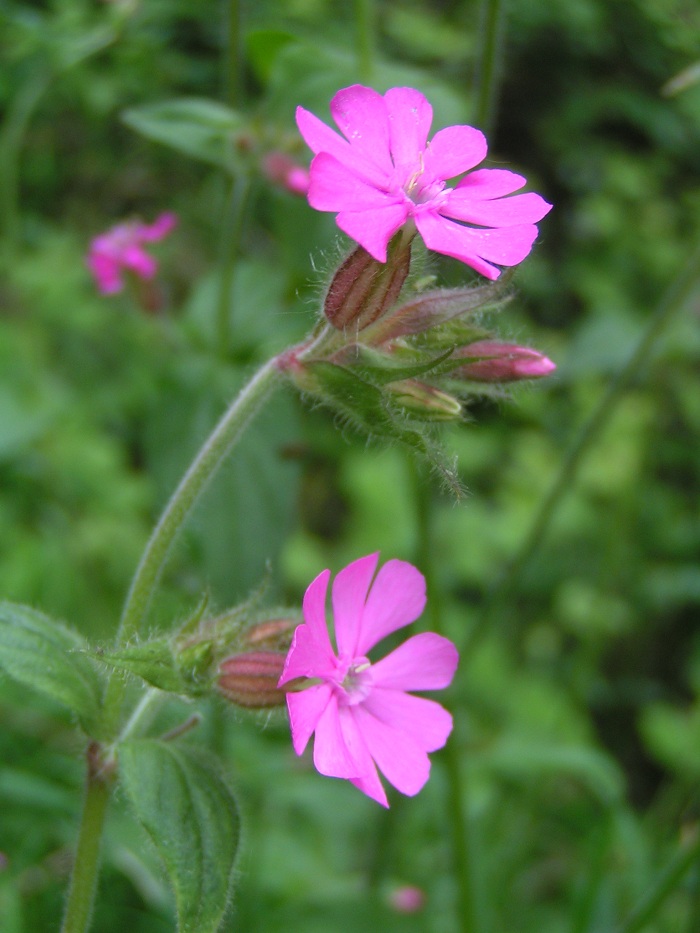 Red campionSilene dioica
A wild pink-red flower of woods and roadsides in northern and central Europe
🇮🇪 Ireland and 4 more · Wildflower
Red campionSilene dioica
A wild pink-red flower of woods and roadsides in northern and central Europe
🇮🇪 Ireland and 4 more · Wildflower