
Artificial flower
Imitation flowers made from fabric, plastic, paper, clay and other materials
Artificial flowers are crafted imitations of real blooms, made from materials like polyester, plastic, paper, clay, and glass. Used for decoration in homes and public spaces, they range from mass-produced plastic flowers to detailed handmade pieces, and have a long history across many cultures.
- Most artificial flowers today are made from polyester and plastic.
- Guangdong, China, is a major center for artificial flower production.
- Ancient Egyptians and Romans made artificial flowers from horn, metals, and wax.
- Handmade clay and glass flowers can be highly realistic and artistic.
- Artificial flowers are used in homes, ceremonies, and scientific displays.
What is Artificial flower?
Artificial flowers are man-made replicas of real flowers, created from materials such as polyester fabric, plastic, paper, silk, nylon, clay, glass, feathers, and soap. They can be simple, mass-produced items or highly detailed works of art. Some are so realistic that they closely resemble living flowers, while others are clearly decorative. They are used in homes, public spaces, ceremonies, and as art objects.
Where does Artificial flower come from?
The making of artificial flowers dates back to ancient Egypt, where colored horn and metals were used. Romans crafted imitation flowers from wax, gold, and silver. In later centuries, Italy became known for skilled artificial flower making, followed by England, France, and the United States. China and Japan have long traditions as well, and today, most artificial flowers are produced in China, especially in Guangdong. Materials and techniques have evolved from ribbons and feathers to modern polyester and plastics.
How Artificial flower is made
Modern artificial flowers are most often made from polyester fabric, which is stiffened, cut into petal and leaf shapes, dyed, and assembled on wire stems. Other methods use paper, silk, nylon stockings, clay, glass, feathers, or soap. Handmade flowers involve cutting, shaping, coloring, and assembling each part, while mass production uses molds and machines. Nylon flowers, clay flowers, and glass flowers each have their own distinct crafting processes.


When and where Artificial flower is used
Artificial flowers are used in home decoration, weddings, funerals, festivals, and as gifts. They are chosen for their durability and ability to mimic real flowers without wilting. Museums and scientific collections sometimes use them to represent plant species. In some cultures, artificial flowers are floated in sake cups or used in ceremonies. They also serve as art objects and are popular in craft traditions worldwide.
Forms of Artificial flower
There are many types of artificial flowers, distinguished by material and technique. Silk, polyester, and plastic are common for mass production. Handmade varieties include clay flowers from Thailand, nylon stocking flowers popular in Japan and the US, and glass flowers like those at Harvard. Soap and feather flowers are rarer but have unique traditions. Each material and method gives a different look and feel.
What Artificial flower means
Artificial flowers have been part of rituals, celebrations, and daily life for centuries. In ancient Rome, gold and silver flowers were given as prizes. Victorian Britain saw a fashion for wax flower sculptures. Today, artificial flowers are a global industry, with China as a major exporter. They are valued for their practicality, artistry, and as a way to enjoy floral beauty year-round.
Questions people ask about Artificial flower
Where do artificial flowers come from?
Artificial flowers have a long history, with early examples from Egypt and Rome. Today, most are produced in China, especially in the Guangdong region, but traditions exist in Italy, Japan, Thailand, and elsewhere.
What materials are used to make artificial flowers?
Materials include polyester, plastic, paper, silk, nylon, clay, glass, feathers, and soap. Polyester and plastic are most common in mass production, while handmade flowers may use more specialized materials.
How are artificial flowers made?
Processes vary: mass-produced flowers use molds and machines, while handmade flowers involve cutting, shaping, coloring, and assembling petals and leaves from fabric, clay, or other materials.
What are artificial flowers used for?
They are used for home decoration, weddings, funerals, festivals, gifts, and as art objects. Some are made for scientific collections to represent plant species.
Are artificial flowers important in any culture?
Yes, they have been used in ceremonies and as art in many cultures, from ancient Egypt and Rome to modern China, Japan, and Europe. They are valued for their beauty and durability.
Good reading and sources
- Artificial plants on WikipediaEncyclopedia
- More photos on Wikimedia CommonsPhotos
- Wikidata recordOpen data
The facts on this page come from the Wikipedia article "Artificial plants", written by its contributors and used under the CC BY-SA 4.0 licence, and from its Wikidata record (CC0). Phool rewrote the text in its own words, with AI assistance, and compares every page with the article to make sure no passage is copied. It may be reused under the same CC BY-SA 4.0 licence with a link back.
It may contain mistakes. If something is wrong, tell us. Last refreshed 2026-10-03.
More of the same kind
 Decoration
Nageirebana抛入花
A free-form ikebana style using tall vases and no flower holders
Arrangement
Decoration
Nageirebana抛入花
A free-form ikebana style using tall vases and no flower holders
Arrangement
 Decoration
Tokonoma床の間
A Japanese alcove for displaying scrolls and flower arrangements
🇯🇵 Japan · Arrangement
Decoration
Tokonoma床の間
A Japanese alcove for displaying scrolls and flower arrangements
🇯🇵 Japan · Arrangement
 Decoration
Vase
An open container for holding and displaying cut flowers
Arrangement
Decoration
Vase
An open container for holding and displaying cut flowers
Arrangement
 Decoration
Sōgetsu草月流
A modern school of Japanese ikebana open to all materials and styles
🇯🇵 Japan · Arrangement
Decoration
Sōgetsu草月流
A modern school of Japanese ikebana open to all materials and styles
🇯🇵 Japan · Arrangement
More from China
All the flowers of China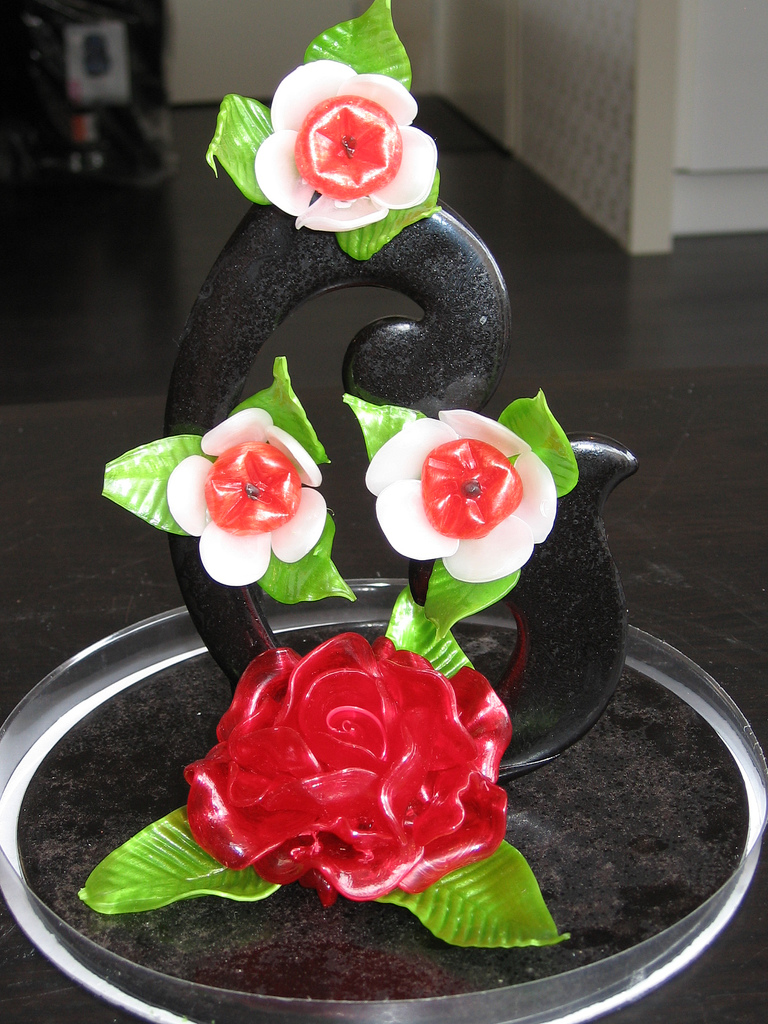 Decoration
Sugar sculpture
Artistic centerpieces and figures made entirely from cooked sugar
🇨🇳 China and 1 more · Flower craft
Decoration
Sugar sculpture
Artistic centerpieces and figures made entirely from cooked sugar
🇨🇳 China and 1 more · Flower craft
 Decoration
Famille rose粉彩
Pink-enamel style of Chinese porcelain decoration
🇨🇳 China and 1 more · Art or design
Decoration
Famille rose粉彩
Pink-enamel style of Chinese porcelain decoration
🇨🇳 China and 1 more · Art or design
 Decoration
Bouquet
A creative arrangement of flowers, given or displayed for many occasions
🇨🇳 China and 1 more · Arrangement
Decoration
Bouquet
A creative arrangement of flowers, given or displayed for many occasions
🇨🇳 China and 1 more · Arrangement
 Decoration
History of flower arrangement
How arranging flowers became an art across cultures and centuries
🇪🇬 Egypt and 3 more · Arrangement
Decoration
History of flower arrangement
How arranging flowers became an art across cultures and centuries
🇪🇬 Egypt and 3 more · Arrangement