
Giant hyssop
Agastache, family Lamiaceae
Aromatic perennial herbs with upright spikes of tubular flowers
Giant hyssop (Agastache) is a group of aromatic perennial herbs in the mint family, mostly native to North America, with one species in eastern Asia. These plants grow upright and bear spikes of tubular flowers in shades of white, pink, mauve, or purple, and are valued for their scent, garden use, and edible leaves.
- Most species are native to North America, with one in eastern Asia
- Flowers are tubular and come in white, pink, mauve, or purple
- Leaf tips can be eaten or used for tea
- Agastache rugosa is used in Chinese herbology
- Cultivar 'Blue Fortune' has won a Royal Horticultural Society award
What does Giant hyssop look like?
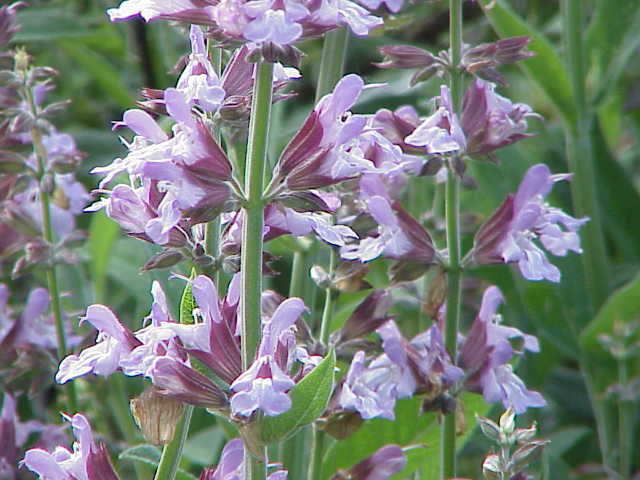
Giant hyssops are upright, aromatic perennial herbs reaching 0.5 to 3 metres tall. Their stems are stiff and angular, with lance-shaped, toothed leaves. At the tips of the stems, they produce spikes of tubular, two-lipped flowers in summer. Flower colors include white, pink, mauve, and purple, with bracts that may match or slightly contrast the flower color. The plants are known for their pleasant scent and attractive flower spikes.
Where does Giant hyssop come from?
Agastache originated mainly in North America, with one species native to eastern Asia. The genus is part of the mint family and is closely related to other aromatic herbs. Its evolutionary history traces back about 25 million years, likely as an offshoot from Asian ancestors. The genus was formally named in 1762, and its species are now found from Arctic Canada and the United States to Mexico and parts of eastern Asia.
When and how Giant hyssop blooms
These plants grow best in moist, well-drained soil and prefer sunny spots. They are usually propagated from seed or cuttings. Flowering occurs in summer, when upright spikes of tubular flowers appear at the stem tips. Some species are very hardy, tolerating cold northern climates, while others are suited to warmer regions. Gardeners often choose cultivars for their flower color and hardiness.


How Giant hyssop is used
Giant hyssops are grown in gardens for their aromatic leaves and showy flower spikes. The leaf tips can be eaten or brewed as tea. Agastache rugosa, in particular, has a history of use in Chinese herbology. Some cultivars are popular in ornamental horticulture, and the flowers attract pollinators such as hummingbirds and bees.
Kinds of Giant hyssop
The genus is divided into two main sections: sect. Agastache, found in western and central North America and eastern Asia, and sect. Brittonastrum, centered in southwestern North America and northern Mexico. Notable species include A. foeniculum (anise hyssop), A. rugosa (Korean mint), and A. cana (Texas hummingbird mint). Cultivars like 'Blue Fortune' are valued in gardens.
What Giant hyssop means
Agastache species are valued for their aromatic qualities and use in gardens and herbal teas. Agastache rugosa is known in Chinese herbology as huoxiang. The plants are sometimes called hummingbird mints because their flowers attract hummingbirds. Some species have become naturalized outside their native range, and certain cultivars have received horticultural awards.
Questions people ask about Giant hyssop
Where does giant hyssop come from?
Most species of giant hyssop are native to North America, with one species found in eastern Asia. They grow wild in regions ranging from Arctic Canada and the United States to Mexico and parts of Asia.
What does giant hyssop look like?
Giant hyssop plants are upright herbs with stiff, angular stems and lance-shaped, toothed leaves. They produce spikes of tubular, two-lipped flowers in summer, with colors including white, pink, mauve, and purple.
How is giant hyssop used?
People grow giant hyssop in gardens for its aromatic leaves and colorful flowers. The leaf tips can be eaten or brewed into tea, and Agastache rugosa is used in Chinese traditional medicine.
What does giant hyssop symbolise?
The sources do not mention any particular symbolism for giant hyssop, but it is valued for its scent, garden appeal, and use in herbal teas.
Are there different types of giant hyssop?
Yes, the genus includes about 22 species, such as anise hyssop (A. foeniculum), Korean mint (A. rugosa), and Texas hummingbird mint (A. cana), each with its own range and flower color.
Good reading and sources
- Lady Bird Johnson Wildflower CenterLady Bird Johnson Wildflower Center, Article
- Agastache 'Blue Fortune'Royal Horticultural Society, Article
- USDA Plants DatabaseUS Department of Agriculture, Article
- Plants of the World OnlineRoyal Botanic Gardens, Kew, Plant database
- Where it has been recordedGBIF, Plant database
- Sightings and photos by naturalistsiNaturalist, Plant database
The facts on this page come from the Wikipedia article "Agastache", written by its contributors and used under the CC BY-SA 4.0 licence, and from its Wikidata record (CC0). EveryPhool rewrote the text in its own words, with AI assistance, and compares every page with the article to make sure no passage is copied. It may be reused under the same CC BY-SA 4.0 licence with a link back.
It may contain mistakes. It is not medical or foraging advice: many flowers are poisonous, and traditional uses are reported, not recommended. If something is wrong, tell us. Last refreshed 2026-10-03.
Others in the family Lamiaceae
The whole family RosemarySalvia rosmarinus
A fragrant evergreen shrub with needle-like leaves and purple, blue, or white flowers
🇪🇸 Spain and 5 more · Flowering shrub
RosemarySalvia rosmarinus
A fragrant evergreen shrub with needle-like leaves and purple, blue, or white flowers
🇪🇸 Spain and 5 more · Flowering shrub
 Salvia
A vast group of aromatic herbs and shrubs known for their flowers and uses
Salvia · Wildflower
Salvia
A vast group of aromatic herbs and shrubs known for their flowers and uses
Salvia · Wildflower
 Common sageSalvia officinalis
A Mediterranean herb with grey-green leaves and blue to purple flowers
🇨🇳 China and 1 more · Herb or useful flower
Common sageSalvia officinalis
A Mediterranean herb with grey-green leaves and blue to purple flowers
🇨🇳 China and 1 more · Herb or useful flower
 Holy basilOcimum tenuiflorum
A fragrant herb central to Hindu worship and Southeast Asian cooking
🇲🇲 Myanmar and 6 more · Herb or useful flower
Holy basilOcimum tenuiflorum
A fragrant herb central to Hindu worship and Southeast Asian cooking
🇲🇲 Myanmar and 6 more · Herb or useful flower