
Candlenut
Aleurites moluccanus, family Euphorbiaceae
A tall tropical tree with small flowers, oily nuts and many traditional uses
Candlenut is a fast-growing tree up to 30 m tall, with pale green leaves and small male and female flowers. Native to Southeast Asia but spread widely by early Austronesian voyagers, it is valued for its oily kernels used in food, light, dye, medicine and crafts across the tropics.
- State tree of Hawaii since 1959
- Nuts strung and burned as time-measuring torches in ancient Hawaii
- Archaeological evidence of use dating back 13,000 years in Indonesia
- Raw seeds are mildly toxic but safe when cooked or toasted
- Used across the Pacific as a canoe plant by Austronesian voyagers
What does Candlenut look like?
The candlenut tree grows up to 30 metres tall with wide or drooping branches. Its leaves are pale green, heart-shaped or lobed, and covered in fine hairs when young. The flowers are small, male ones about 5 mm wide, female about 9 mm. The fruit is a round drupe containing one or two oily white kernels inside a hard shell.
Where does Candlenut come from?
Its exact native range is unclear due to ancient human dispersal, but it was first domesticated in Southeast Asia. Archaeological remains from Timor and Morotai date back 13,000 years. Early Austronesian seafarers carried it as a canoe plant across the Pacific, where it became naturalized on volcanic islands.
When and how Candlenut blooms
The tree thrives in tropical rainforests and disturbed forest areas, from sea level up to 800 m in Australia. It grows quickly and bears separate male and female flowers on the same tree. The fruit develops into a drupe with a hard-shelled kernel rich in oil.


How Candlenut is used
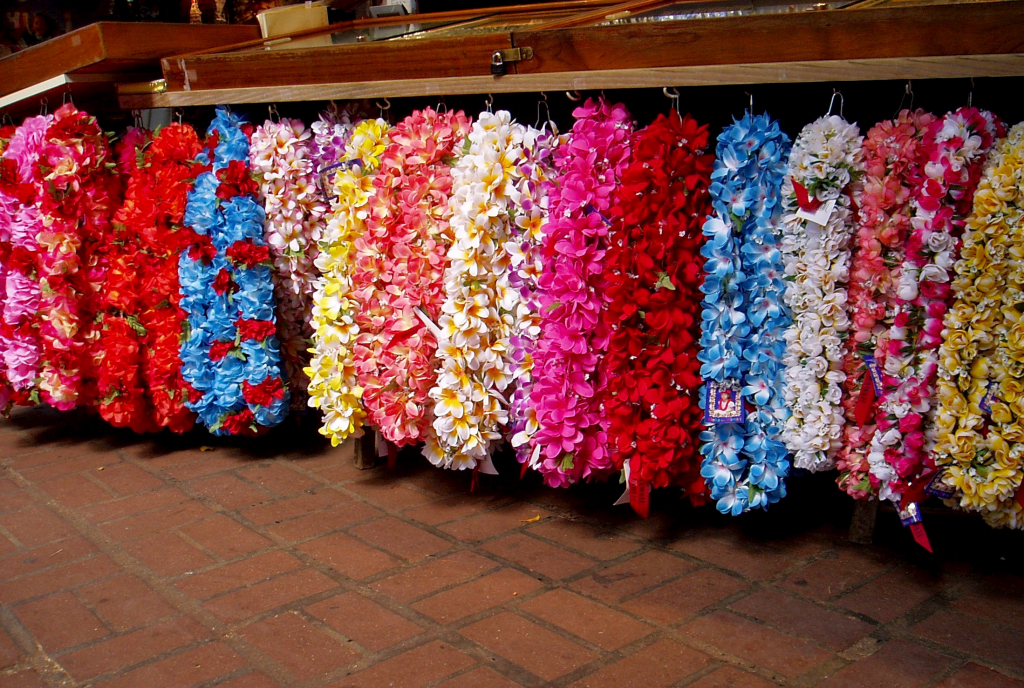
Cooked candlenut is used in Indonesian and Malaysian curries and Hawaiian ʻinamona paste. The oil fuels traditional lamps, preserves fishing nets, and appears in cosmetics. Shells, leaves and flowers make leis; bark yields dye; wood is carved into canoes and coffins. Raw nuts are mildly toxic but safe after heating.
What Candlenut means
In Hawaii, kukui symbolizes enlightenment, protection and peace, and is the state tree and emblem of Molokaʻi. Legends link it to the demigod Kamapuaʻa. In Uganda it is called kabakanjagala ('the king loves me'). Malay names include buah keras ('hard fruit') and kemiri. Proto-Austronesian roots reflect its use in torches.
Where Candlenut is used and seen

Questions people ask about Candlenut
Where does candlenut come from?
Its precise origin is unclear due to early human spread, but it was first domesticated in Southeast Asia and carried across the tropics by Austronesian voyagers.
Is candlenut edible?
Raw seeds are mildly toxic, but cooking or toasting makes them safe. They are used in Indonesian curries, Malaysian sauces, and Hawaiian ʻinamona condiment.
Why is it called candlenut?
In ancient Hawaii, the oily nuts were strung on a stick and lit one by one as a slow-burning torch, also used to measure time.
What is candlenut used for besides food?
Its oil lights lamps, preserves nets, and appears in cosmetics. Wood makes canoes and coffins; shells and leaves form leis; bark gives dye; charred nuts make tattoo ink.
What does candlenut symbolize in Hawaii?
It represents enlightenment, protection, and peace. It is the state tree and the emblem of the island of Molokaʻi.
Good reading and sources
- Encyclopaedia BritannicaArticle
- IUCN Red List of Threatened SpeciesIUCN Red List, Article
- USDA Plants DatabaseUS Department of Agriculture, Article
- Plants of the World OnlineRoyal Botanic Gardens, Kew, Plant database
- Where it has been recordedGBIF, Plant database
- Sightings and photos by naturalistsiNaturalist, Plant database
- Aleurites moluccanus on WikipediaEncyclopedia
- More photos on Wikimedia CommonsPhotos
- Wikidata recordOpen data
The facts on this page come from the Wikipedia article "Aleurites moluccanus", written by its contributors and used under the CC BY-SA 4.0 licence, and from its Wikidata record (CC0). EveryPhool rewrote the text in its own words, with AI assistance, and compares every page with the article to make sure no passage is copied. It may be reused under the same CC BY-SA 4.0 licence with a link back.
It may contain mistakes. It is not medical or foraging advice: many flowers are poisonous, and traditional uses are reported, not recommended. If something is wrong, tell us. Last refreshed 2026-10-04.
Others in the family Euphorbiaceae
The whole family PoinsettiaEuphorbia pulcherrima
The red-bracted shrub of Christmas displays, native to Mexico and Central America
🇲🇽 Mexico and 8 more · Wildflower
PoinsettiaEuphorbia pulcherrima
The red-bracted shrub of Christmas displays, native to Mexico and Central America
🇲🇽 Mexico and 8 more · Wildflower
 Crown of thornsEuphorbia milii
A spiny flowering shrub with red, pink, or white bracts, native to Madagascar
🇲🇬 Madagascar and 5 more · Wildflower
Crown of thornsEuphorbia milii
A spiny flowering shrub with red, pink, or white bracts, native to Madagascar
🇲🇬 Madagascar and 5 more · Wildflower
 Castor oil plantRicinus communis
A tall, fast-growing shrub with dramatic leaves and toxic seeds
🇪🇹 Ethiopia and 9 more · Flowering shrub
Castor oil plantRicinus communis
A tall, fast-growing shrub with dramatic leaves and toxic seeds
🇪🇹 Ethiopia and 9 more · Flowering shrub
 Spurge familyEuphorbiaceae
A vast global plant family famous for false blossoms, milky sap, and rubber
Euphorbiaceae · Wildflower
Spurge familyEuphorbiaceae
A vast global plant family famous for false blossoms, milky sap, and rubber
Euphorbiaceae · Wildflower
More from Indonesia
All the flowers of Indonesia Acacia
Shrubs and trees with golden or cream puffball flowers, native mostly to Australia
🇦🇺 Australia and 6 more · Wildflower
Acacia
Shrubs and trees with golden or cream puffball flowers, native mostly to Australia
🇦🇺 Australia and 6 more · Wildflower
 Plumeria
Fragrant tropical tree with waxy, five-petaled flowers in many colours
🇲🇽 Mexico and 6 more · Flowering tree
Plumeria
Fragrant tropical tree with waxy, five-petaled flowers in many colours
🇲🇽 Mexico and 6 more · Flowering tree
 Ylang-ylangCananga odorata
A tropical tree with highly fragrant yellow flowers used for perfume and decoration
🇻🇳 Vietnam and 8 more · Flowering tree
Ylang-ylangCananga odorata
A tropical tree with highly fragrant yellow flowers used for perfume and decoration
🇻🇳 Vietnam and 8 more · Flowering tree
 ChampakMagnolia champaca
A tall tree with fragrant yellow to orange flowers, prized in South and Southeast Asia
🇲🇲 Myanmar and 7 more · Flowering tree
ChampakMagnolia champaca
A tall tree with fragrant yellow to orange flowers, prized in South and Southeast Asia
🇲🇲 Myanmar and 7 more · Flowering tree