
Allium
The genus of onions, garlic, leeks, chives and their wild relatives
Allium is a vast group of flowering plants that includes onions, garlic, leeks, chives, and many wild species. Found mainly in temperate regions of the Northern Hemisphere, these plants are grown for food, gardens, and sometimes for their ornamental flowers, all marked by a distinct onion or garlic scent.
- Allium includes over 1,000 species, making it one of the largest plant genera.
- The group contains onions, garlic, leeks, chives, and many wild relatives.
- Allium plants are known for their distinctive onion or garlic scent.
- Both bulbs and leaves of many species are edible.
- Some species are grown for their ornamental flower clusters.
What does Allium look like?
Allium plants are herbaceous perennials, usually growing from bulbs, though some have rhizomes or tuberous roots. Their leaves are often linear or flat, sometimes broad, and can wither before or during flowering. The flowers are grouped in round or dome-shaped clusters called umbels, sitting atop a leafless stalk. Each flower has six petal-like segments, and the plants often have a noticeable onion or garlic smell. Bulbs vary in size and color, and some species form small bulbs or bulbils around the main bulb.
Where does Allium come from?
Allium is native mainly to temperate parts of the Northern Hemisphere, but a few species are found in South America and tropical Africa. The genus was described by Carl Linnaeus in 1753, with the name coming from the Latin for garlic. Allium has a complex taxonomy due to its diversity and adaptability to many habitats. Over time, the genus has absorbed several smaller genera, and modern research uses genetic methods to clarify relationships among its many species.
When and how Allium blooms
Allium species grow from bulbs or rhizomes, with new bulbs forming each year. They thrive in temperate climates and are often grown from seed or by dividing bulbs. Flowering occurs when the plant sends up a stalk topped with an umbel of flowers. Some species multiply by forming offsets or bulbils. Soil with good sulfate content helps produce the characteristic flavor and scent.


How Allium is used
People have grown and used Allium species since ancient times. Many, like onions, garlic, leeks, and chives, are staple foods, eaten raw or cooked. Both bulbs and leaves are often edible. Some species are grown as ornamental plants for their attractive flower clusters. Alliums are also used in traditional medicine, though not all species are equally flavorful or used in the same way.
Kinds of Allium
The genus includes over 1,000 species, such as onions (Allium cepa), garlic (A. sativum), leeks (A. ampeloprasum), chives (A. schoenoprasum), and many wild types. Some, like the Egyptian onion (A. × proliferum), form large bulbils in the flowerhead. The group is divided into several subgenera and evolutionary lines, with ongoing research refining their classification.
What Allium means
Allium species are important food crops worldwide and are also valued as garden plants. Their strong flavors and scents come from sulfur compounds, which depend on soil content. The genus has a long history in human diets and agriculture, and some species are used in traditional remedies. Care is needed, as some unrelated plants that look similar are poisonous but lack the onion smell.
Where Allium is used and seen


Questions people ask about Allium
Where does Allium come from?
Most Allium species are native to temperate regions of the Northern Hemisphere, with a few found in South America and tropical Africa.
What plants are included in the Allium genus?
The genus includes onions, garlic, leeks, chives, scallions, and many wild species, as well as some grown for their decorative flowers.
How are Allium plants used?
Many Allium species are eaten as vegetables or herbs, both raw and cooked. Some are grown as ornamentals, and a few are used in traditional medicine.
What makes Allium plants smell like onions or garlic?
They produce organosulfur compounds, which give them their characteristic onion or garlic flavor and scent. The strength of the scent depends on the sulfur content of the soil.
Are all Allium species safe to eat?
While many Allium species are edible, some unrelated plants that look similar are poisonous but do not have the onion or garlic smell.
Good reading and sources
- Encyclopaedia BritannicaArticle
- Allium 'Ambassador'Royal Horticultural Society, Article
- USDA Plants DatabaseUS Department of Agriculture, Article
- Plants of the World OnlineRoyal Botanic Gardens, Kew, Plant database
- Where it has been recordedGBIF, Plant database
- Sightings and photos by naturalistsiNaturalist, Plant database
The facts on this page come from the Wikipedia article "Allium", written by its contributors and used under the CC BY-SA 4.0 licence, and from its Wikidata record (CC0). Phool rewrote the text in its own words, with AI assistance, and compares every page with the article to make sure no passage is copied. It may be reused under the same CC BY-SA 4.0 licence with a link back.
It may contain mistakes. It is not medical or foraging advice: many flowers are poisonous, and traditional uses are reported, not recommended. If something is wrong, tell us. Last refreshed 2026-10-03.
Others in the family Amaryllidaceae
The whole family Narcissus
Spring-flowering bulbs with trumpet-shaped blooms in white, yellow, and orange
🇬🇧 United Kingdom and 7 more · Wildflower
Narcissus
Spring-flowering bulbs with trumpet-shaped blooms in white, yellow, and orange
🇬🇧 United Kingdom and 7 more · Wildflower
 Wild GarlicAllium ursinum
A wild woodland plant with star-shaped white flowers and edible leaves
🇮🇪 Ireland · Wildflower
Wild GarlicAllium ursinum
A wild woodland plant with star-shaped white flowers and edible leaves
🇮🇪 Ireland · Wildflower
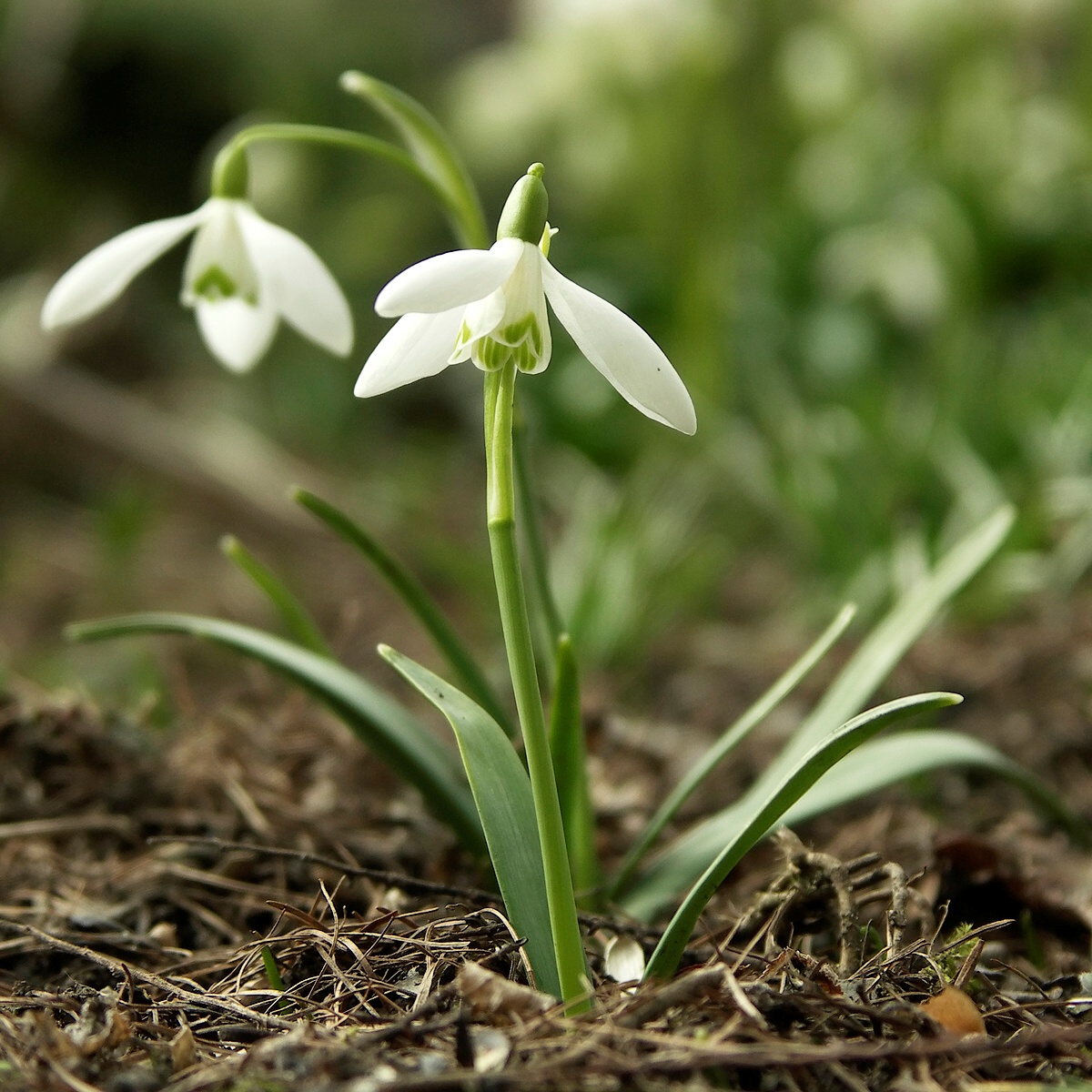 SnowdropGalanthus
White bell-shaped flowers that bloom at the end of winter
🇹🇷 Turkey and 7 more · Wildflower
SnowdropGalanthus
White bell-shaped flowers that bloom at the end of winter
🇹🇷 Turkey and 7 more · Wildflower
 Leucojum
White-flowered bulbs of damp meadows and shady gardens
🇪🇸 Spain and 6 more · Wildflower
Leucojum
White-flowered bulbs of damp meadows and shady gardens
🇪🇸 Spain and 6 more · Wildflower