
Wild Garlic
Allium ursinum, family Amaryllidaceae
A wild woodland plant with star-shaped white flowers and edible leaves
Wild garlic (Allium ursinum) is a bulbous perennial found in moist woodlands across Europe and Asia. It has bright green, lance-shaped leaves and clusters of small, white, star-like flowers. All parts are edible and it is used in salads, cooked dishes, and even to coat cheese rinds.
- All parts of wild garlic are edible and used in salads or cooked dishes
- It grows in moist woodlands across Europe and Asia
- Its white flowers bloom in spring before trees leaf out
- Wild garlic is often confused with toxic plants like lily of the valley
What does Wild Garlic look like?
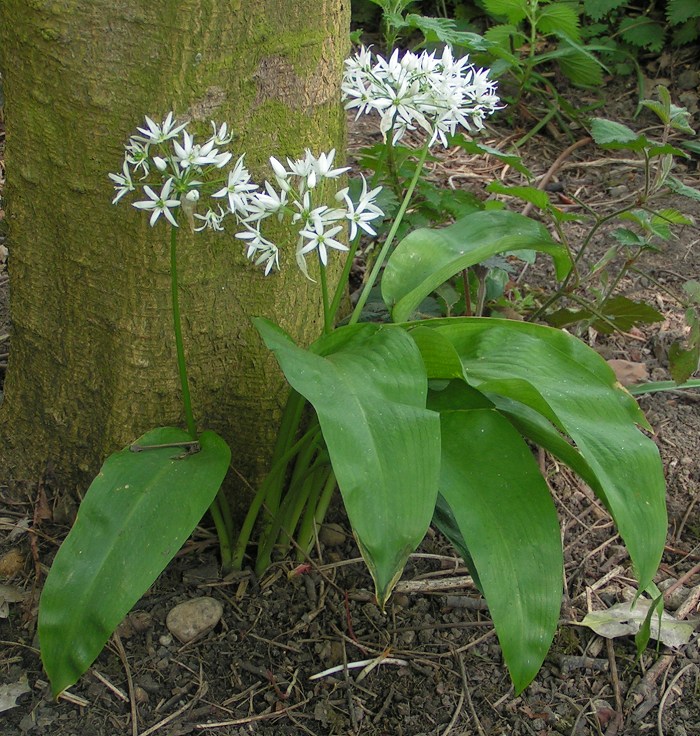
Wild garlic is a low-growing perennial with narrow bulbs and bright green, elliptical leaves up to 25 cm long. The leaves are soft, shiny when new, and have a single main vein. In spring, it sends up a triangular flower stem topped with a loose cluster (umbel) of six to twenty star-shaped white flowers, each with six tepals. The flowers are about 16–20 mm across. The plant gives off a garlic-like smell when crushed.
Where does Wild Garlic come from?
Allium ursinum is native to moist woodlands of Europe and Asia, from Ireland to the Caucasus. It prefers slightly acidic soils and is often found in ancient deciduous forests, sometimes alongside bluebells. The plant has been known since ancient times, with evidence of use by Celtic Britons and early European tribes. Its Latin name refers to bears, reflecting old tales of bears eating the bulbs after hibernation.
When and how Wild Garlic blooms
Wild garlic grows from bulbs, sprouting leaves in early spring before the trees above leaf out. It reproduces mainly by seed. The plant thrives in moist, shaded woodlands with rich, slightly acidic soil. It is not usually cultivated on a large scale but is foraged from the wild. Flowering occurs from April to June in the British Isles.


How Wild Garlic is used
All parts of wild garlic are edible. The leaves are eaten raw in salads or cooked as a vegetable, and the flowers can be used as a garnish. In some regions, wild garlic leaves are used to coat cheese rinds, such as in a variety of Cornish Yarg. Historically, it was also used as fodder and was known as a healing herb among ancient peoples.
Kinds of Wild Garlic
There are two recognised subspecies: Allium ursinum subsp. ursinum, found in western and central Europe, and Allium ursinum subsp. ucrainicum, found in eastern and southeastern Europe. Wild garlic is related to other Allium species like crow garlic and field garlic, but it does not produce bulbils in its flower heads.
What Wild Garlic means
Wild garlic has a long history in British and European cuisine and folklore. Its name and those in other languages often refer to bears or cows, reflecting its appeal to wildlife and livestock. It is considered an indicator of ancient woodland. Care must be taken when foraging, as it resembles several poisonous plants, leading to accidental poisonings in Europe.
Where Wild Garlic is used and seen

Questions people ask about Wild Garlic
Where does wild garlic come from?
Wild garlic is native to moist woodlands in Europe and Asia, from Ireland east to the Caucasus. It grows especially well in ancient deciduous forests with rich, slightly acidic soil.
What does wild garlic look like?
It has bright green, lance-shaped leaves up to 25 cm long and clusters of small, star-shaped white flowers. The plant grows low to the ground and gives off a garlic-like smell when its leaves are crushed.
How is wild garlic used?
All parts of the plant are edible. The leaves are used in salads, cooked as a vegetable, and sometimes used to coat cheese rinds. The flowers can be eaten as a garnish.
Is wild garlic safe to eat?
Wild garlic itself is edible, but it closely resembles several poisonous plants such as lily of the valley and Colchicum autumnale. Foragers must take care to identify it correctly.
What does wild garlic symbolise or mean in culture?
Wild garlic has been valued since ancient times as a healing herb and food. Its name refers to bears, reflecting old stories about bears eating the bulbs after hibernation.
Good reading and sources
- USDA Plants DatabaseUS Department of Agriculture, Article
- Allium ursinumRoyal Horticultural Society, Article
- Plants of the World OnlineRoyal Botanic Gardens, Kew, Plant database
- Where it has been recordedGBIF, Plant database
- Sightings and photos by naturalistsiNaturalist, Plant database
- Allium ursinum on WikipediaEncyclopedia
- More photos on Wikimedia CommonsPhotos
- Wikidata recordOpen data
The facts on this page come from the Wikipedia article "Allium ursinum", written by its contributors and used under the CC BY-SA 4.0 licence, and from its Wikidata record (CC0). Phool rewrote the text in its own words, with AI assistance, and compares every page with the article to make sure no passage is copied. It may be reused under the same CC BY-SA 4.0 licence with a link back.
It may contain mistakes. It is not medical or foraging advice: many flowers are poisonous, and traditional uses are reported, not recommended. If something is wrong, tell us. Last refreshed 2026-10-03.
Others in the family Amaryllidaceae
The whole family Narcissus
Spring-flowering bulbs with trumpet-shaped blooms in white, yellow, and orange
🇬🇧 United Kingdom and 7 more · Wildflower
Narcissus
Spring-flowering bulbs with trumpet-shaped blooms in white, yellow, and orange
🇬🇧 United Kingdom and 7 more · Wildflower
 Allium
The genus of onions, garlic, leeks, chives and their wild relatives
Allium · Wildflower
Allium
The genus of onions, garlic, leeks, chives and their wild relatives
Allium · Wildflower
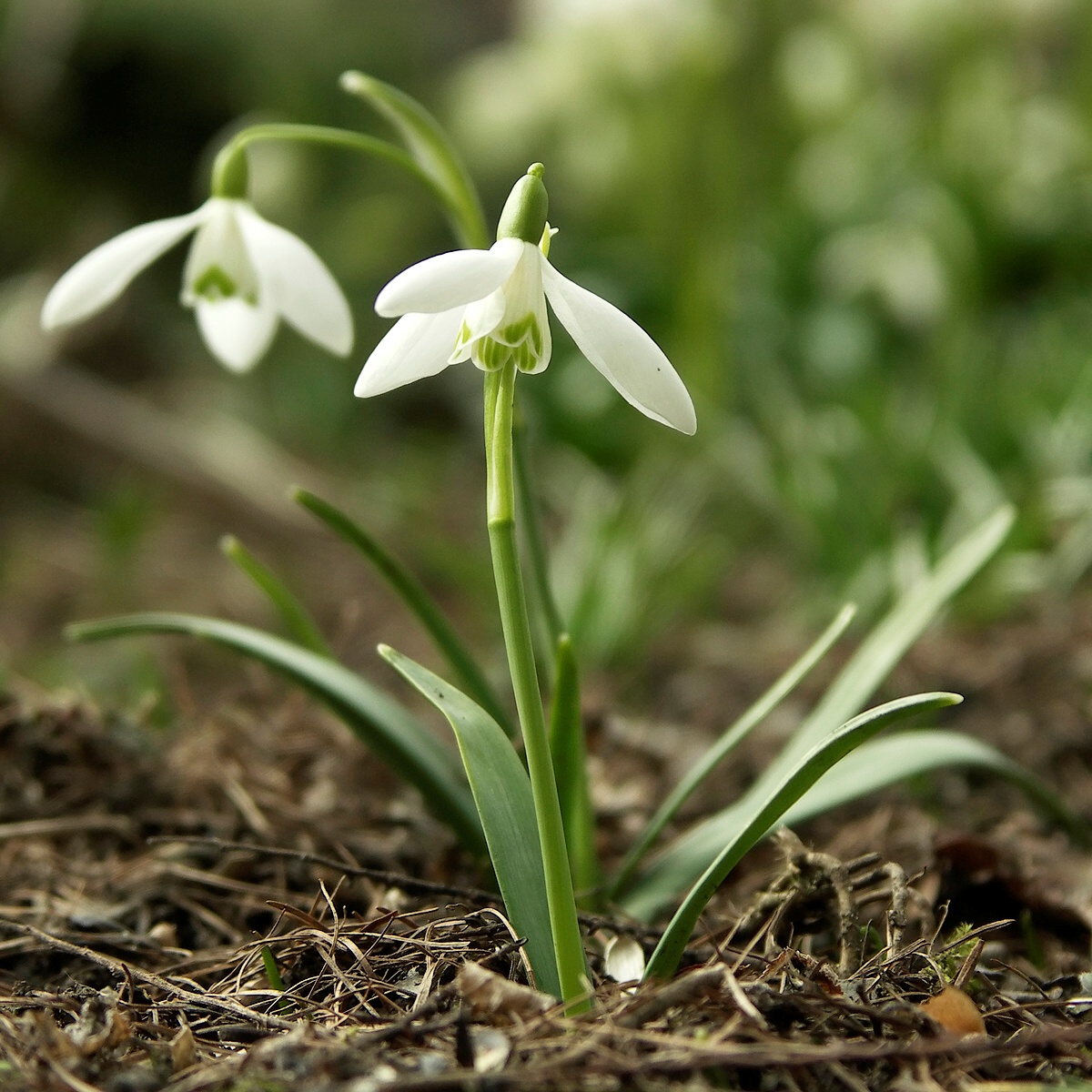 SnowdropGalanthus
White bell-shaped flowers that bloom at the end of winter
🇹🇷 Turkey and 7 more · Wildflower
SnowdropGalanthus
White bell-shaped flowers that bloom at the end of winter
🇹🇷 Turkey and 7 more · Wildflower
 Giant snowdropGalanthus elwesii
A tall, early-blooming snowdrop from the Balkans and Asia Minor
🇹🇷 Turkey and 5 more · Wildflower
Giant snowdropGalanthus elwesii
A tall, early-blooming snowdrop from the Balkans and Asia Minor
🇹🇷 Turkey and 5 more · Wildflower
More from Ireland
All the flowers of Ireland Common flaxLinum usitatissimum
The slender blue-flowered plant grown for linen and linseed
🇨🇳 China and 7 more · Wildflower
Common flaxLinum usitatissimum
The slender blue-flowered plant grown for linen and linseed
🇨🇳 China and 7 more · Wildflower
 HawthornCrataegus
A thorny shrub or tree with white or pink spring flowers and small edible fruits
🇮🇪 Ireland and 7 more · Wildflower
HawthornCrataegus
A thorny shrub or tree with white or pink spring flowers and small edible fruits
🇮🇪 Ireland and 7 more · Wildflower
 Lily-of-the-valleyConvallaria majalis
A woodland plant with sweet-scented white bell flowers in late spring
🇫🇮 Finland and 4 more · Wildflower
Lily-of-the-valleyConvallaria majalis
A woodland plant with sweet-scented white bell flowers in late spring
🇫🇮 Finland and 4 more · Wildflower
 RapeseedBrassica napus
A yellow-flowered crop grown for its oil-rich seeds and protein meal
🇨🇳 China and 7 more · Wildflower
RapeseedBrassica napus
A yellow-flowered crop grown for its oil-rich seeds and protein meal
🇨🇳 China and 7 more · Wildflower