
Candelabra aloe
Aloe arborescens, family Asphodelaceae
A large, branching aloe with red-orange flowers and spiky green leaves
Candelabra aloe is a sprawling succulent from southeastern Africa, known for its tall, multi-headed form and clusters of red-orange, tubular flowers. It blooms in winter, attracts birds and insects, and is often grown as a garden plant or living fence in its native region and beyond.
- Can grow up to 3 meters tall with many branches
- Produces red-orange flowers in winter
- Native to southeastern Africa and naturalized worldwide
- Attracts birds, bees, and butterflies
- Used as a living fence around livestock enclosures
What does Candelabra aloe look like?
Candelabra aloe is a large, multi-branched succulent that can reach 2 to 3 meters in height. Its green leaves, sometimes tinged with blue, are thick and fleshy with small spikes along the edges and grow in rosettes at the ends of branches. The plant produces tall, unbranched flower stalks called racemes, each bearing clusters of cylindrical, bright red-orange flowers. These blooms appear in winter and attract birds, bees, and butterflies.
Where does Candelabra aloe come from?
This aloe is native to the southeastern part of Southern Africa, including South Africa, Malawi, Mozambique, and Zimbabwe. It grows wild from sea level up to mountain tops, often on rocky cliffs and exposed ridges. The name 'krantz aloe' comes from the Afrikaans word for rocky cliff. Over time, candelabra aloe has spread widely and become naturalized in places such as the western Mediterranean, Australia, Japan, South Korea, and the Marshall Islands, and is considered invasive in Portugal.
When and how Candelabra aloe blooms
Candelabra aloe blooms in winter, producing its showy flowers when many other plants are dormant. It thrives in sunny, well-drained spots and tolerates a range of altitudes and conditions, from sea level to mountains. In temperate climates, it is often grown under glass to protect it from cold. The plant is easily propagated from cuttings, and a variegated cultivar has received gardening awards.


How Candelabra aloe is used
In Southern Africa, candelabra aloe is traditionally planted as a living fence around livestock enclosures, where its persistence marks old kraal sites long after abandonment. Gardeners value it for its striking winter flowers and ability to attract pollinators. It is also grown as an ornamental plant in many countries outside its native range.
Kinds of Candelabra aloe
Aloe arborescens is closely related to other species in the Arborescentes series, such as Aloe pluridens and Aloe mutabilis. The cultivar 'Variegata', with striped leaves, has been recognized for its garden merit. Its form and flower color are generally consistent, but it adapts well to different environments.
What Candelabra aloe means
The plant is a familiar sight in Southern African landscapes and gardens, where it serves both practical and decorative purposes. Its resilience and vivid winter flowers make it popular with gardeners and wildlife alike. In some regions, it has become invasive, spreading beyond cultivated areas.
Where Candelabra aloe is used and seen


Questions people ask about Candelabra aloe
Where does candelabra aloe come from?
Candelabra aloe is native to the southeastern part of Southern Africa, including South Africa, Malawi, Mozambique, and Zimbabwe. It grows in a range of habitats from rocky cliffs to mountain slopes.
What does candelabra aloe look like?
It is a large, branching succulent with green, spiky-edged leaves arranged in rosettes. In winter, it produces tall stalks topped with clusters of red-orange, tubular flowers.
How is candelabra aloe used?
In its native region, it is planted as a living fence around kraals (livestock enclosures). Gardeners elsewhere grow it for its winter flowers and to attract pollinators like birds and bees.
Is candelabra aloe invasive?
Yes, in some regions outside its native range, such as Portugal, candelabra aloe has become invasive and spreads beyond gardens.
What does candelabra aloe symbolize or mean?
The sources do not mention any specific symbolism or cultural meaning for candelabra aloe.
Good reading and sources
- Aloe arborescens 'Variegata' (v)Royal Horticultural Society, Article
- IUCN Red List of Threatened SpeciesIUCN Red List, Article
- Plants of the World OnlineRoyal Botanic Gardens, Kew, Plant database
- Where it has been recordedGBIF, Plant database
- Sightings and photos by naturalistsiNaturalist, Plant database
- Aloe arborescens on WikipediaEncyclopedia
- More photos on Wikimedia CommonsPhotos
- Wikidata recordOpen data
The facts on this page come from the Wikipedia article "Aloe arborescens", written by its contributors and used under the CC BY-SA 4.0 licence, and from its Wikidata record (CC0). Phool rewrote the text in its own words, with AI assistance, and compares every page with the article to make sure no passage is copied. It may be reused under the same CC BY-SA 4.0 licence with a link back.
It may contain mistakes. It is not medical or foraging advice: many flowers are poisonous, and traditional uses are reported, not recommended. If something is wrong, tell us. Last refreshed 2026-10-03.
Others in the family Asphodelaceae
The whole family Cape aloeAloe ferox
A tall, spiny aloe from southern Africa with orange-red flowers and medicinal uses
🇱🇸 Lesotho · Wildflower
Cape aloeAloe ferox
A tall, spiny aloe from southern Africa with orange-red flowers and medicinal uses
🇱🇸 Lesotho · Wildflower
 Kniphofia thomsonii
A spiky-flowered plant from Africa’s Great Lakes region
🇰🇪 Kenya and 5 more · Wildflower
Kniphofia thomsonii
A spiky-flowered plant from Africa’s Great Lakes region
🇰🇪 Kenya and 5 more · Wildflower
 Zimbabwe AloeAloe excelsa
A tall, single-stemmed aloe from southern Africa with a crown of curved leaves
🇿🇼 Zimbabwe and 4 more · Flowering tree
Zimbabwe AloeAloe excelsa
A tall, single-stemmed aloe from southern Africa with a crown of curved leaves
🇿🇼 Zimbabwe and 4 more · Flowering tree
 Spiral aloeAloe polyphylla
A rare mountain succulent with leaves arranged in a perfect spiral
🇱🇸 Lesotho and 1 more · Cactus or succulent
Spiral aloeAloe polyphylla
A rare mountain succulent with leaves arranged in a perfect spiral
🇱🇸 Lesotho and 1 more · Cactus or succulent
More from South Africa
All the flowers of South Africa Eucalyptus
The tall, aromatic trees and shrubs known as gum trees or eucalypts
🇦🇺 Australia and 7 more · Flowering tree
Eucalyptus
The tall, aromatic trees and shrubs known as gum trees or eucalypts
🇦🇺 Australia and 7 more · Flowering tree
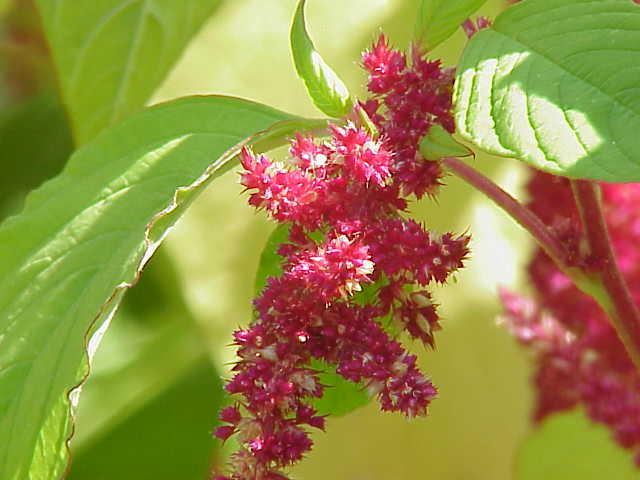 AmaranthAmaranthus
A tall, colourful plant grown for its flowers, leaves and edible seeds
🇲🇽 Mexico and 7 more · Wildflower
AmaranthAmaranthus
A tall, colourful plant grown for its flowers, leaves and edible seeds
🇲🇽 Mexico and 7 more · Wildflower
 Acacia
Shrubs and trees with golden or cream puffball flowers, native mostly to Australia
🇦🇺 Australia and 6 more · Wildflower
Acacia
Shrubs and trees with golden or cream puffball flowers, native mostly to Australia
🇦🇺 Australia and 6 more · Wildflower
 Sensitive PlantMimosa pudica
A touch-sensitive plant whose leaves fold up when disturbed
🇧🇷 Brazil and 8 more · Wildflower
Sensitive PlantMimosa pudica
A touch-sensitive plant whose leaves fold up when disturbed
🇧🇷 Brazil and 8 more · Wildflower