
Tulip orchids
Anguloa, family Orchidaceae
Large, cinnamon-scented orchids from the Andes with tulip-shaped blooms
Tulip orchids (Anguloa) are large orchids native to high-altitude forests in the Andes, found from Venezuela to Bolivia. Their waxy flowers, which smell of cinnamon, come in shades from greenish white to yellow and red. The blooms resemble tulips, and the plants are known for their unusual pollination by orchid bees.
- Flowers give off a strong cinnamon scent
- Native to high-altitude forests in the Andes
- Blooms resemble tulips in shape and color
- Pollinated by orchid bees using a moving lip
- Leaves can reach over one metre in length
What does Tulip orchids look like?
Tulip orchids are robust plants with thick, fleshy bases called pseudobulbs that can reach over 20 cm long. Each pseudobulb supports two to four long, pleated leaves, which can grow longer than a metre and fall off before new growth appears. The flowers are solitary, waxy, and strongly scented with cinnamon. Their sepals form a rounded, tulip-like shape, and their colors range from greenish white to yellow and red, depending on the species. The lip of the flower is divided into three parts, and the column contains four pollen masses.
Where does Tulip orchids come from?
Anguloa was first described in 1798 by Spanish botanists José Antonio Pavón and Hipólito Ruiz López, who named it after Francisco de Angulo. These orchids are native to the forest floors of the Andes, from Venezuela through Colombia, Ecuador, Peru, and Bolivia. They thrive at high elevations and are closely related to Lycaste orchids, with which they can cross-breed. The genus includes both naturally occurring and horticulturally bred hybrids.
When and how Tulip orchids blooms
Tulip orchids grow in cool, humid forests at altitude. They are mostly terrestrial but can also be found growing on trees. Each new growth produces a single flower, though some species can have several per pseudobulb. The leaves drop before the plant flowers. In cultivation, they are grown for their striking blooms and fragrance, often from seed or by dividing mature plants.


How Tulip orchids is used
These orchids are mainly grown for their ornamental value, both in gardens and as part of orchid collections. Their strong cinnamon scent makes them desirable for those interested in fragrant plants. While not widely used in ceremonies or as emblems, their unusual flower shape and pollination method attract orchid enthusiasts.
Kinds of Tulip orchids
The genus Anguloa is divided into two main groups: Guoloanga, which includes yellow and red-flowered species like A. clowesii and A. hohenlohii, and Euanguloa, which has white-flowered species such as A. uniflora and A. eburnea. There are 13 recognized species, with some hybrids occurring naturally and others bred by growers.
What Tulip orchids means
Tulip orchids are sometimes called cradle orchids or 'cuna de Venus' in Colombia, referring to the flower's shape and movement. Their unique pollination, involving orchid bees, is a point of interest. While not a national symbol, their distinct look and scent have made them notable among orchid collectors and botanists.
Questions people ask about Tulip orchids
Where do tulip orchids come from?
Tulip orchids are native to the high mountain forests of northern and western South America, especially in countries like Venezuela, Colombia, Ecuador, Peru, and Bolivia.
What do tulip orchid flowers look and smell like?
Their flowers are waxy, tulip-shaped, and can be white, yellow, red, or greenish, depending on the species. They have a strong cinnamon fragrance.
How are tulip orchids pollinated?
Orchid bees pollinate them. When a bee lands, the flower's lip moves, helping to transfer pollen as the bee enters and exits.
What are tulip orchids used for?
They are mainly grown as ornamental plants in gardens and collections, valued for their unique blooms and strong scent.
Are there different types of tulip orchids?
Yes, there are 13 species divided into two groups based on flower color, with both natural and cultivated hybrids.
Good reading and sources
- Plants of the World OnlineRoyal Botanic Gardens, Kew, Plant database
- Where it has been recordedGBIF, Plant database
- Sightings and photos by naturalistsiNaturalist, Plant database
The facts on this page come from the Wikipedia article "Anguloa", written by its contributors and used under the CC BY-SA 4.0 licence, and from its Wikidata record (CC0). Phool rewrote the text in its own words, with AI assistance, and compares every page with the article to make sure no passage is copied. It may be reused under the same CC BY-SA 4.0 licence with a link back.
It may contain mistakes. It is not medical or foraging advice: many flowers are poisonous, and traditional uses are reported, not recommended. If something is wrong, tell us. Last refreshed 2026-10-03.
Others in the family Orchidaceae
The whole family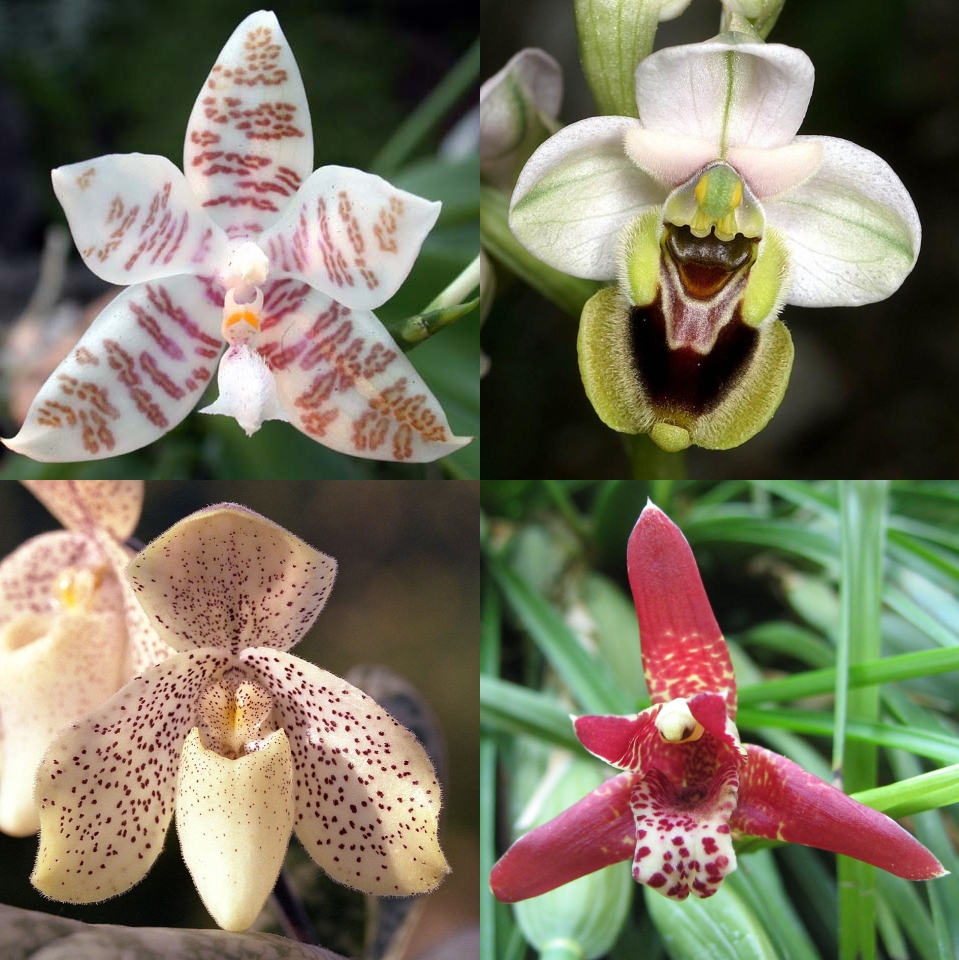 OrchidOrchidaceae
A vast family of colourful, often fragrant flowers found almost everywhere on earth
Orchidaceae · Wildflower
OrchidOrchidaceae
A vast family of colourful, often fragrant flowers found almost everywhere on earth
Orchidaceae · Wildflower
 Vanilla
Climbing orchids with pods used for the world’s most popular flavor
🇲🇽 Mexico and 7 more · Wildflower
Vanilla
Climbing orchids with pods used for the world’s most popular flavor
🇲🇽 Mexico and 7 more · Wildflower
 Orchis
A group of wild orchids with tuberous roots from Europe, North Africa and Asia
🇹🇷 Turkey and 7 more · Wildflower
Orchis
A group of wild orchids with tuberous roots from Europe, North Africa and Asia
🇹🇷 Turkey and 7 more · Wildflower
 Pansy orchidMiltoniopsis
An orchid with flowers that resemble garden pansies
🇨🇷 Costa Rica and 5 more · Orchid
Pansy orchidMiltoniopsis
An orchid with flowers that resemble garden pansies
🇨🇷 Costa Rica and 5 more · Orchid
More from Venezuela
All the flowers of Venezuela DogwoodCornus
Woody trees and shrubs with showy bracts and colorful berries
🇨🇳 China and 7 more · Wildflower
DogwoodCornus
Woody trees and shrubs with showy bracts and colorful berries
🇨🇳 China and 7 more · Wildflower
 PassionflowerPassiflora
A vine with intricate flowers and edible fruits, grown worldwide
🇺🇸 United States and 7 more · Wildflower
PassionflowerPassiflora
A vine with intricate flowers and edible fruits, grown worldwide
🇺🇸 United States and 7 more · Wildflower
 Mexican twistLophospermum erubescens
A pink and white climbing flower from Mexico, grown as a garden ornamental
🇲🇽 Mexico and 7 more · Garden flower
Mexican twistLophospermum erubescens
A pink and white climbing flower from Mexico, grown as a garden ornamental
🇲🇽 Mexico and 7 more · Garden flower
 Mexican flamevinePseudogynoxys chenopodioides
A climbing vine with bright orange daisy-like flowers from Central and South America
🇲🇽 Mexico and 7 more · Climber
Mexican flamevinePseudogynoxys chenopodioides
A climbing vine with bright orange daisy-like flowers from Central and South America
🇲🇽 Mexico and 7 more · Climber