
Angel's-tears
Brugmansia suaveolens, family Solanaceae
A night-fragrant trumpet flower from Brazil, now grown worldwide
Angel's-tears is a semi-woody shrub or small tree with large oval leaves and long, hanging trumpet-shaped flowers that are usually white but can be yellow or pink. Native to south-eastern Brazil’s coastal rainforests, it is likely extinct in the wild but widely cultivated and naturalised across tropical and subtropical regions.
- Flowers are strongly fragrant at night to attract moth pollinators
- All parts are poisonous, especially seeds and leaves
- Likely extinct in its native Brazilian rainforests
- Used traditionally in southern Brazil for pain relief
- Larvae of Placidula euryanassa butterfly feed on it and store its toxins
What does Angel's-tears look like?
This plant grows 3 to 5 metres tall with a branching trunk and large oval leaves up to 25 cm long. Its most striking feature is the pendulous trumpet flower, 24–32 cm long, usually white but sometimes yellow or pink. The blooms curve outward at the tips and release a strong sweet scent at night and early morning.
Where does Angel's-tears come from?
Originally found only in the humid coastal rainforests of south-eastern Brazil, below 1,000 metres elevation, Brugmansia suaveolens is now considered extinct in its native habitat. It was first described in 1809 as Datura suaveolens and later moved to the Brugmansia genus in 1823. Human cultivation has spread it far beyond its original range.
When and how Angel's-tears blooms
It thrives in warm, humid climates with rich soil, regular water, and plenty of fertilizer during active growth. Young plants grow upright until they fork at about 1 metre high; only new branches above this fork produce flowers. Propagation is typically by woody or leafy cuttings, which may flower quickly if taken from flowering parts.


How Angel's-tears is used
In southern Brazil, flower and seed infusions are traditionally drunk for pain relief. Some Amazonian groups use it ritually as an entheogen or add it to ayahuasca brews. It is also grown ornamentally in gardens and containers in frost-free areas, valued for its dramatic night-scented blooms.
What Angel's-tears means
The plant holds ritual significance among several South American Indigenous groups, including the Ingano and Siona, who use it for spiritual purposes. Its name reflects its fragrance, 'suaveolens' means 'sweet-smelling' in Latin. Despite its beauty, it is highly toxic and listed as invasive in places like New Caledonia.
Questions people ask about Angel's-tears
Where does Angel's-tears come from?
It is native to the coastal rainforests of south-eastern Brazil, though it is now thought to be extinct in the wild there.
What does it smell like?
Its flowers give off a strong sweet scent, especially during the night and early morning hours.
Is Angel's-tears poisonous?
Yes, every part is toxic, with seeds and leaves being especially dangerous due to tropane alkaloids like scopolamine.
How is it used in traditional practices?
In southern Brazil, it is used for pain relief; some Amazonian groups use it ritually as an entheogen or in ayahuasca brews.
When does it bloom?
It flowers during warm months, typically in summer, producing long, pendulous trumpet-shaped blooms.
Good reading and sources
- Brugmansia suaveolensRoyal Horticultural Society, Article
- Library of Congress CatalogLibrary of Congress, Article
- Plants of the World OnlineRoyal Botanic Gardens, Kew, Plant database
- Where it has been recordedGBIF, Plant database
- Sightings and photos by naturalistsiNaturalist, Plant database
- Brugmansia suaveolens on WikipediaEncyclopedia
- More photos on Wikimedia CommonsPhotos
- Wikidata recordOpen data
The facts on this page come from the Wikipedia article "Brugmansia suaveolens", written by its contributors and used under the CC BY-SA 4.0 licence, and from its Wikidata record (CC0). Phool rewrote the text in its own words, with AI assistance, and compares every page with the article to make sure no passage is copied. It may be reused under the same CC BY-SA 4.0 licence with a link back.
It may contain mistakes. It is not medical or foraging advice: many flowers are poisonous, and traditional uses are reported, not recommended. If something is wrong, tell us. Last refreshed 2026-10-03.
Others in the family Solanaceae
The whole family Thorn-appleDatura stramonium
A poisonous, night-blooming plant with trumpet-shaped white or violet flowers
🇨🇳 China and 7 more · Wildflower
Thorn-appleDatura stramonium
A poisonous, night-blooming plant with trumpet-shaped white or violet flowers
🇨🇳 China and 7 more · Wildflower
 Datura
A group of trumpet-shaped, highly toxic flowering plants in the nightshade family
🇲🇽 Mexico and 7 more · Wildflower
Datura
A group of trumpet-shaped, highly toxic flowering plants in the nightshade family
🇲🇽 Mexico and 7 more · Wildflower
 Nicotiana
The tobacco plant genus, grown for leaves and garden flowers worldwide
Nicotiana · Wildflower
Nicotiana
The tobacco plant genus, grown for leaves and garden flowers worldwide
Nicotiana · Wildflower
 Petunia
A South American garden flower with trumpet-shaped blooms in many colours
Petunia · Garden flower
Petunia
A South American garden flower with trumpet-shaped blooms in many colours
Petunia · Garden flower
More from Brazil
All the flowers of Brazil CactusCactaceae
Succulent plants with spines, native to the Americas
🇲🇽 Mexico and 7 more · Wildflower
CactusCactaceae
Succulent plants with spines, native to the Americas
🇲🇽 Mexico and 7 more · Wildflower
 Eucalyptus
The tall, aromatic trees and shrubs known as gum trees or eucalypts
🇦🇺 Australia and 7 more · Flowering tree
Eucalyptus
The tall, aromatic trees and shrubs known as gum trees or eucalypts
🇦🇺 Australia and 7 more · Flowering tree
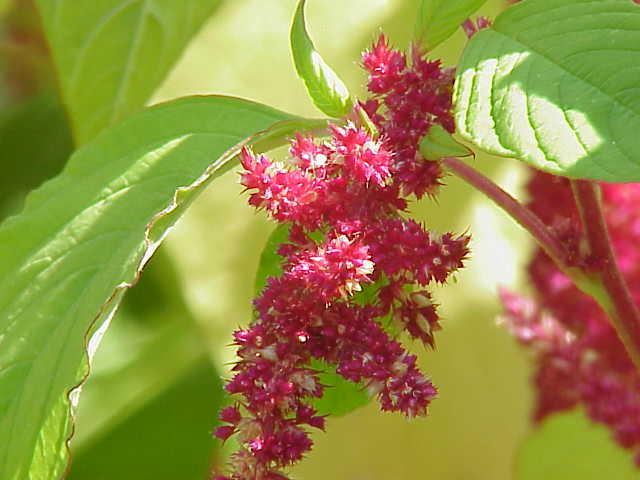 AmaranthAmaranthus
A tall, colourful plant grown for its flowers, leaves and edible seeds
🇲🇽 Mexico and 7 more · Wildflower
AmaranthAmaranthus
A tall, colourful plant grown for its flowers, leaves and edible seeds
🇲🇽 Mexico and 7 more · Wildflower
 Sensitive PlantMimosa pudica
A touch-sensitive plant whose leaves fold up when disturbed
🇧🇷 Brazil and 8 more · Wildflower
Sensitive PlantMimosa pudica
A touch-sensitive plant whose leaves fold up when disturbed
🇧🇷 Brazil and 8 more · Wildflower