Brunsvigia
Bulbous plants with striking pink or red flowers from southern Africa
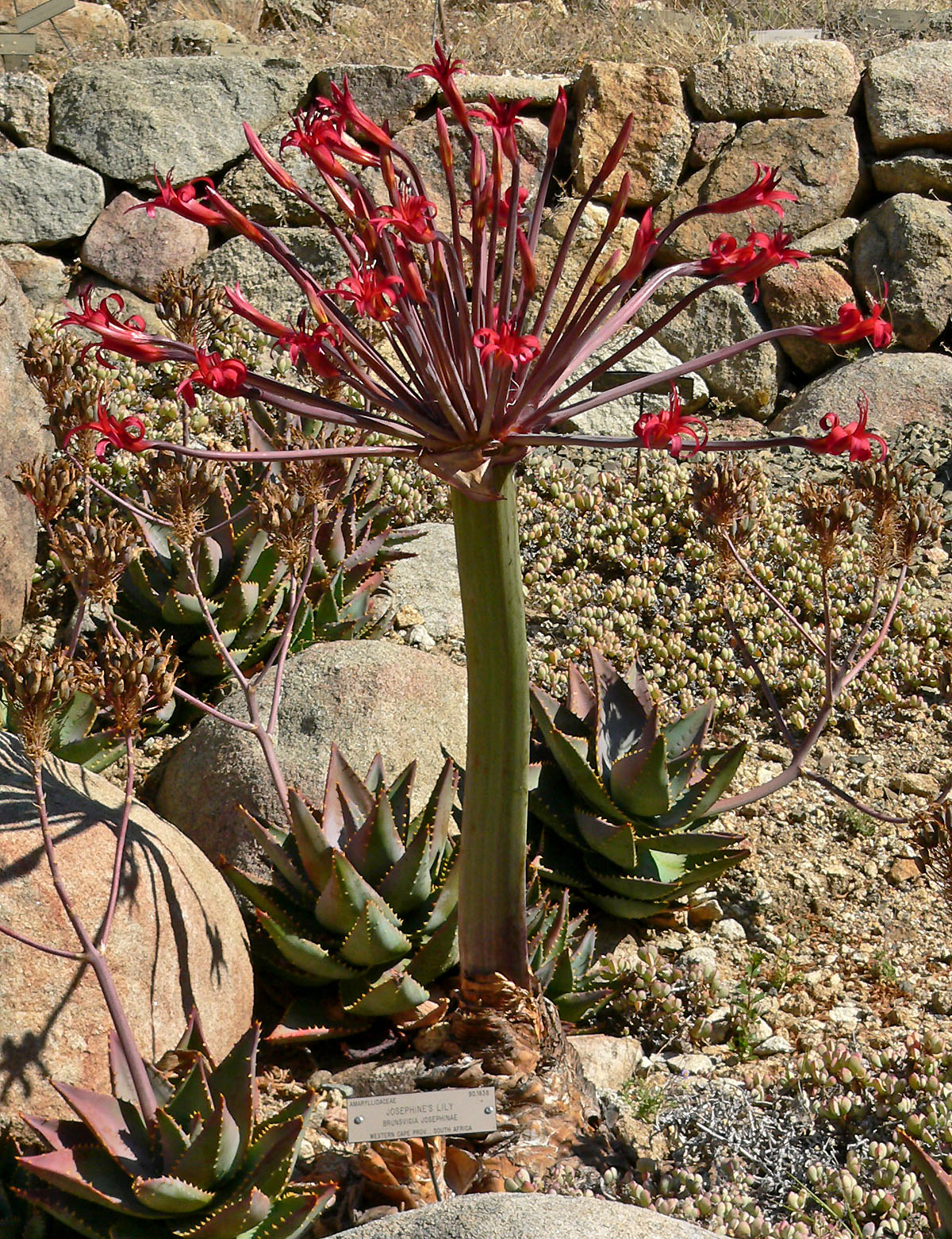
Brunsvigia is a group of bulb plants native to southeastern and southern Africa. Their large, showy flower heads, mostly pink or red, appear in late summer or autumn and are pollinated by birds. These perennials grow in sandy, well-drained soils and are valued for their unusual blooms.
- Produces large, rounded clusters of pink or red flowers
- Native to sandy, semi-arid regions of southeastern and southern Africa
- Some species are endangered due to habitat loss
- Flowers are pollinated by birds
- Named after the Duke of Brunswick in the 18th century
What does Brunsvigia look like?
Brunsvigia plants grow from bulbs that can reach up to 20 cm in diameter. Their leaves are broad, often lying flat on the ground, with some species having bristly or hairy surfaces. The flowers form in rounded clusters on short stems, with each bloom showing six petal-like segments. Most species have pink flowers, but some display deep red or scarlet. The flower heads can be nearly spherical or more brush-like, depending on the species. Many are scented and produce nectar.
Where does Brunsvigia come from?
Brunsvigia is native to sandy, semi-arid parts of southeastern and southern Africa. The genus was named in the mid-1700s by Lorenz Heister to honor the Duke of Brunswick, who supported botanical research. The first plant described came from the Cape region. Brunsvigia species are adapted to both winter and summer rainfall zones, and their bulbs allow them to survive dry periods.
When and how Brunsvigia blooms
These plants grow from bulbs, which are usually planted in sandy, well-drained soil. They are dormant in summer and grow leaves and flowers in cooler months. Flowering typically happens at the end of summer or in autumn, with the leaves appearing either after or during flowering, depending on the rainfall pattern of the region. The plants can be grown in gardens, and some have been used to create hybrids with related genera.


How Brunsvigia is used
Brunsvigia is mainly grown for its decorative flowers in gardens and collections. Their unusual and bold flower heads make them a choice for bulb enthusiasts. Some species are threatened in the wild, especially where their habitats are lost to development or invasive plants. The flowers are also important for local bird pollinators.
Kinds of Brunsvigia
There are about 20 species in the genus, with differences in flower shape, color, and leaf form. Some, like B. marginata and B. orientalis, have red flowers, while others are pink. A few species have compact, brush-like flower heads, while most have open, spherical clusters. Certain species, such as B. litoralis, are endangered.
What Brunsvigia means
The genus is notable for its striking blooms and has been the subject of botanical study since the 18th century. Some species are rare or threatened, drawing attention to conservation needs. Brunsvigia has also been used in plant breeding to create hybrids with Amaryllis, known as × Amarygia.
Questions people ask about Brunsvigia
Where does Brunsvigia come from?
Brunsvigia is native to southeastern and southern Africa, including areas from Tanzania to South Africa. It grows in sandy soils in regions with both summer and winter rainfall.
What do Brunsvigia flowers look like?
The flowers appear in rounded or brush-like clusters, mostly in shades of pink, red, or scarlet. Each flower has six segments and is often showy and sometimes scented.
How is Brunsvigia used?
Brunsvigia is mainly grown in gardens for its decorative flowers. Its bold blooms attract gardeners and collectors, and some species are used in hybrid plant breeding.
Are any Brunsvigia species endangered?
Yes, some species such as Brunsvigia litoralis are endangered, mainly due to habitat loss from development and invasive plants.
What does Brunsvigia symbolise?
The sources do not mention any specific symbolism for Brunsvigia.
Good reading and sources
- Plants of the World OnlineRoyal Botanic Gardens, Kew, Plant database
- Where it has been recordedGBIF, Plant database
- Sightings and photos by naturalistsiNaturalist, Plant database
The facts on this page come from the Wikipedia article "Brunsvigia", written by its contributors and used under the CC BY-SA 4.0 licence, and from its Wikidata record (CC0). Phool rewrote the text in its own words, with AI assistance, and compares every page with the article to make sure no passage is copied. It may be reused under the same CC BY-SA 4.0 licence with a link back.
It may contain mistakes. It is not medical or foraging advice: many flowers are poisonous, and traditional uses are reported, not recommended. If something is wrong, tell us. Last refreshed 2026-10-03.
Others in the family Amaryllidaceae
The whole family Narcissus
Spring-flowering bulbs with trumpet-shaped blooms in white, yellow, and orange
🇬🇧 United Kingdom and 7 more · Wildflower
Narcissus
Spring-flowering bulbs with trumpet-shaped blooms in white, yellow, and orange
🇬🇧 United Kingdom and 7 more · Wildflower
 Wild GarlicAllium ursinum
A wild woodland plant with star-shaped white flowers and edible leaves
🇮🇪 Ireland · Wildflower
Wild GarlicAllium ursinum
A wild woodland plant with star-shaped white flowers and edible leaves
🇮🇪 Ireland · Wildflower
 Allium
The genus of onions, garlic, leeks, chives and their wild relatives
Allium · Wildflower
Allium
The genus of onions, garlic, leeks, chives and their wild relatives
Allium · Wildflower
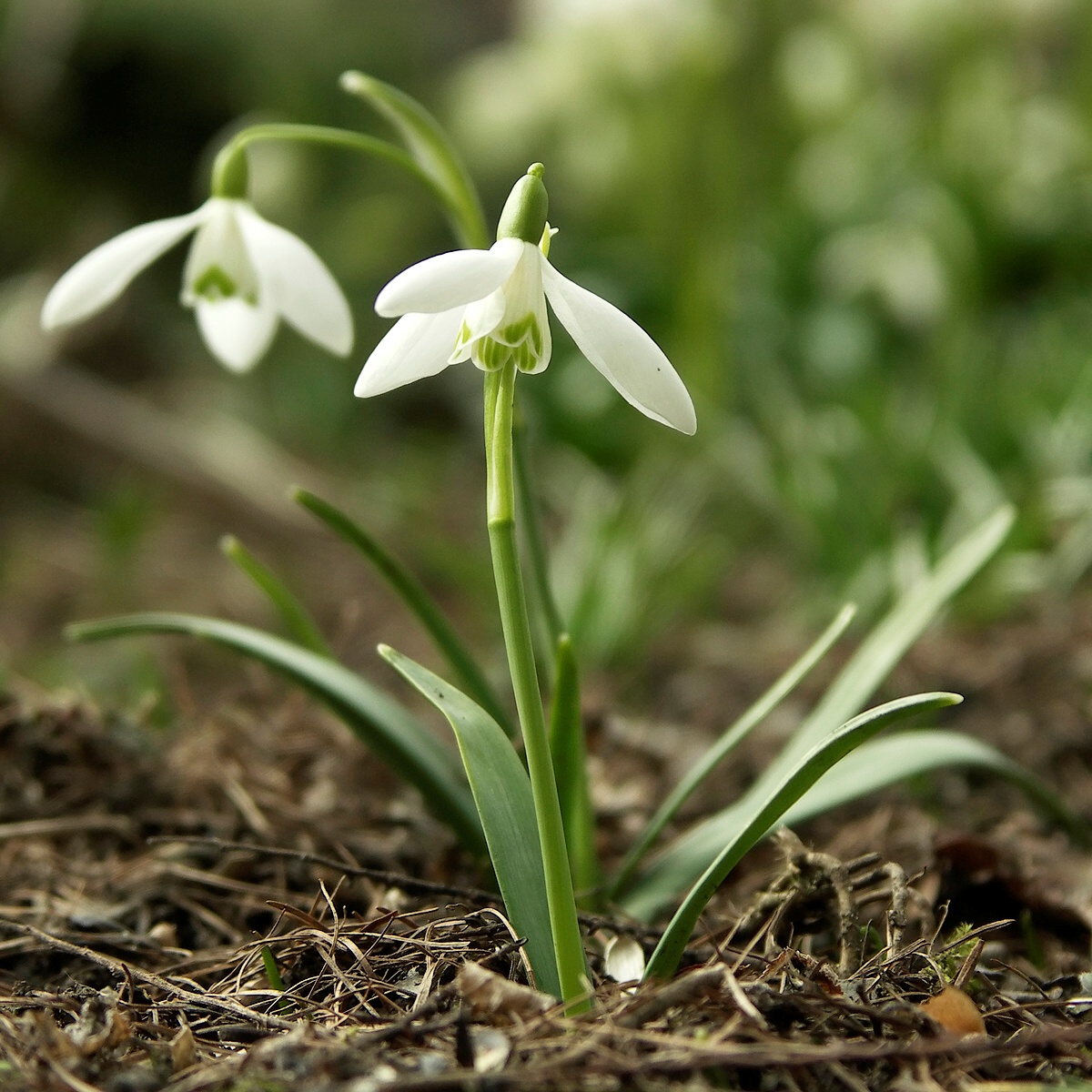 SnowdropGalanthus
White bell-shaped flowers that bloom at the end of winter
🇹🇷 Turkey and 7 more · Wildflower
SnowdropGalanthus
White bell-shaped flowers that bloom at the end of winter
🇹🇷 Turkey and 7 more · Wildflower
More from Tanzania
All the flowers of Tanzania Tritonia
Strongly scented yellow to brown flowers from southern Africa
🇿🇦 South Africa and 7 more · Wildflower
Tritonia
Strongly scented yellow to brown flowers from southern Africa
🇿🇦 South Africa and 7 more · Wildflower
 African violetSaintpaulia
A small, velvety-leaved house plant with violet, blue or white flowers from East Africa
🇹🇿 Tanzania and 1 more · Wildflower
African violetSaintpaulia
A small, velvety-leaved house plant with violet, blue or white flowers from East Africa
🇹🇿 Tanzania and 1 more · Wildflower
 Cape primroseStreptocarpus
A houseplant with tubular blooms from African mountains and forests
🇿🇦 South Africa and 7 more · Wildflower
Cape primroseStreptocarpus
A houseplant with tubular blooms from African mountains and forests
🇿🇦 South Africa and 7 more · Wildflower
 Woodfordia fruticosadhavdi
A flowering shrub found from Africa to South and Southeast Asia
🇲🇲 Myanmar and 7 more · Wildflower
Woodfordia fruticosadhavdi
A flowering shrub found from Africa to South and Southeast Asia
🇲🇲 Myanmar and 7 more · Wildflower