
Cape primrose
Streptocarpus, family Gesneriaceae
A houseplant with tubular blooms from African mountains and forests
Cape primrose (Streptocarpus) is a group of flowering plants from mountain regions in Africa, Madagascar, and the Comoro Islands. Their flowers, shaped like narrow tubes with five lobes, come in a range of colors and are popular as houseplants for their long blooming season and unusual leaves.
- Native to African mountains, Madagascar, and the Comoro Islands
- Flowers are tubular with five lobes, often purple, pink, white, or blue
- Leaves can be single or in rosettes, sometimes trailing
- Grown widely as a houseplant for its long blooming season
What does Cape primrose look like?
Streptocarpus plants, known as Cape primrose, produce flowers with long, narrow tubes that flare into five lobes, often compared to small orchids. The blooms hover or arch above the leaves and come in shades of purple, pink, white, and blue. Leaves can be single and large or arranged in a rosette, depending on the species. Some have trailing stems, while others grow upright. The fruit is a long, twisted pod.
Where does Cape primrose come from?
Streptocarpus is native to the highland forests and rocky outcrops of central, eastern, and southern Africa, as well as Madagascar and the Comoro Islands. The genus name comes from Greek words meaning 'twisted fruit', referring to the spiral seed pods. The first described species was Streptocarpus rexii from South Africa. Over time, many species have been found across Africa’s mountain regions, and the group has been split into subgenera based on differences in leaves and stems.
When and how Cape primrose blooms
These plants flower mainly from spring through autumn. In the wild, they grow in shaded, moist places on rocks or forest floors. As houseplants, they prefer indirect light and well-drained soil. Streptocarpus can be grown from seed or leaf cuttings, and some species produce new plantlets from their roots. Modern hybrids offer a variety of flower forms and colors.
![Streptocarpus × hybridus 'Marleen' Vernacular names [ edit wikidata M3206583 ] English : Cape Primerose Deutsch : Drehfrucht français : Primevere du Cap hornjoserbsce : Wšědny streptokarpus lietuvių : Streptokarpas portu](https://upload.wikimedia.org/wikipedia/commons/e/ee/2007-03-20Streptocarpus03.jpg)


How Cape primrose is used
Cape primrose is widely grown as a decorative houseplant for its attractive flowers and foliage. Some varieties are also used as cut flowers, lasting well in vases. They are not known for traditional uses in ceremonies or medicine, but are valued for their long blooming period and ease of care indoors.
Kinds of Cape primrose
There are about 184 species in the Streptocarpus genus. Some, like Streptocarpus rexii and S. candidus, are known for their scent. The group is divided into subgenera: some have a single large leaf, others form rosettes or trailing clumps. Hybrids bred for home use show a wide range of flower shapes and colors. African violets, once a separate genus, are now included as a section within Streptocarpus.
What Cape primrose means
Cape primrose is mainly appreciated as a houseplant and does not have a strong role in folklore or religious practice. Its unusual leaves and long-lasting flowers have made it a favorite among indoor gardeners. In botany, it is known for its unique fruit and leaf forms, and its relationship to African violets has been clarified by DNA studies.
Questions people ask about Cape primrose
Where does Streptocarpus come from?
Streptocarpus is native to mountain forests and rocky slopes in central, eastern, and southern Africa, as well as Madagascar and the Comoro Islands.
What do Cape primrose flowers look like?
The flowers have a long, narrow tube that opens into five lobes, resembling small orchids. They come in shades of purple, pink, white, and blue.
How is Streptocarpus used?
It is mainly grown as a houseplant for its decorative flowers and unusual leaves. Some varieties are also used as cut flowers.
Are there different types of Streptocarpus?
Yes, there are about 184 species, with some having a single large leaf and others forming rosettes or trailing stems. Modern hybrids offer many flower colors and forms.
Does Streptocarpus have any special meaning or symbolism?
Streptocarpus is valued for its beauty and long flowering period, but it is not strongly tied to symbolism or tradition.
Good reading and sources
- USDA Plants DatabaseUS Department of Agriculture, Article
- Plants of the World OnlineRoyal Botanic Gardens, Kew, Plant database
- Where it has been recordedGBIF, Plant database
- Sightings and photos by naturalistsiNaturalist, Plant database
- Streptocarpus on WikipediaEncyclopedia
- More photos on Wikimedia CommonsPhotos
- Wikidata recordOpen data
The facts on this page come from the Wikipedia article "Streptocarpus", written by its contributors and used under the CC BY-SA 4.0 licence, and from its Wikidata record (CC0). Phool rewrote the text in its own words, with AI assistance, and compares every page with the article to make sure no passage is copied. It may be reused under the same CC BY-SA 4.0 licence with a link back.
It may contain mistakes. It is not medical or foraging advice: many flowers are poisonous, and traditional uses are reported, not recommended. If something is wrong, tell us. Last refreshed 2026-10-03.
Others in the family Gesneriaceae
The whole family HaberleaHaberlea rhodopensis
A rare Balkan flower that revives after years without water
🇧🇬 Bulgaria and 1 more · Wildflower
HaberleaHaberlea rhodopensis
A rare Balkan flower that revives after years without water
🇧🇬 Bulgaria and 1 more · Wildflower
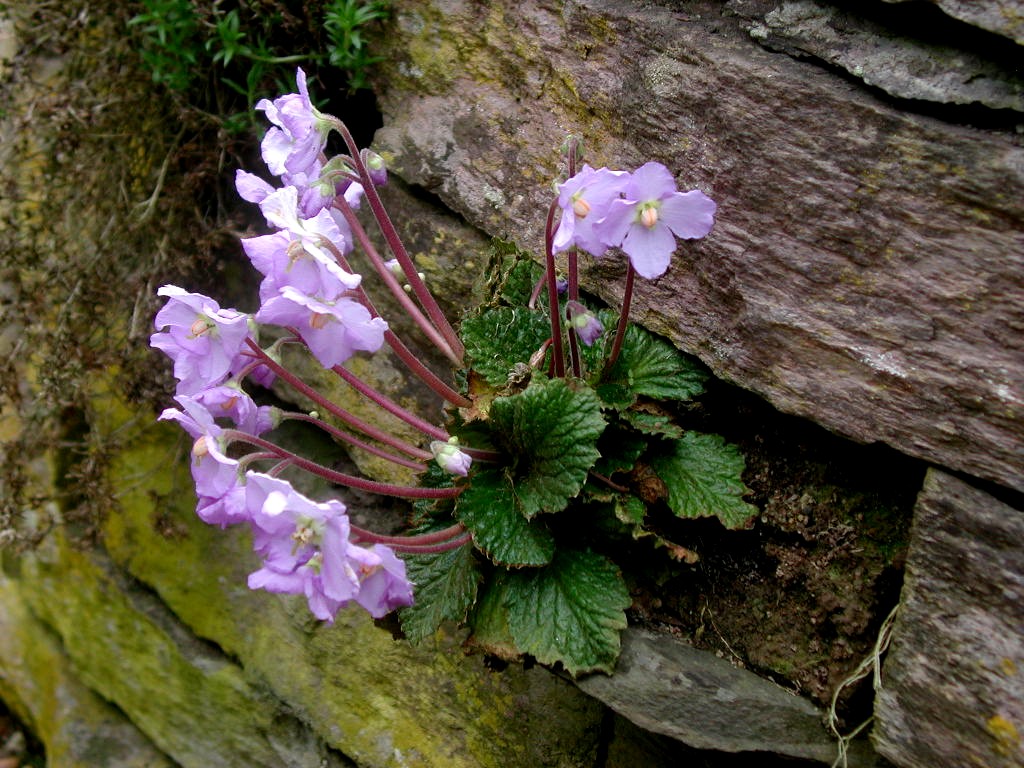 Ramonda nathaliaeНаталијина рамонда
A small Balkan flower that can survive drying out and revive with water
🇷🇸 Serbia and 2 more · Wildflower
Ramonda nathaliaeНаталијина рамонда
A small Balkan flower that can survive drying out and revive with water
🇷🇸 Serbia and 2 more · Wildflower
 African violetSaintpaulia
A small, velvety-leaved house plant with violet, blue or white flowers from East Africa
🇹🇿 Tanzania and 1 more · Wildflower
African violetSaintpaulia
A small, velvety-leaved house plant with violet, blue or white flowers from East Africa
🇹🇿 Tanzania and 1 more · Wildflower
 Brazilian gloxiniaSinningia speciosa
A tuberous houseplant with large, velvety flowers from Brazil
🇧🇷 Brazil and 1 more · Garden flower
Brazilian gloxiniaSinningia speciosa
A tuberous houseplant with large, velvety flowers from Brazil
🇧🇷 Brazil and 1 more · Garden flower
More from South Africa
All the flowers of South Africa Eucalyptus
The tall, aromatic trees and shrubs known as gum trees or eucalypts
🇦🇺 Australia and 7 more · Flowering tree
Eucalyptus
The tall, aromatic trees and shrubs known as gum trees or eucalypts
🇦🇺 Australia and 7 more · Flowering tree
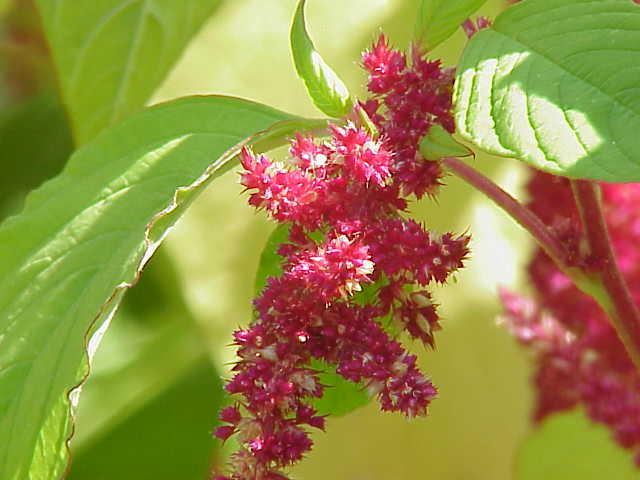 AmaranthAmaranthus
A tall, colourful plant grown for its flowers, leaves and edible seeds
🇲🇽 Mexico and 7 more · Wildflower
AmaranthAmaranthus
A tall, colourful plant grown for its flowers, leaves and edible seeds
🇲🇽 Mexico and 7 more · Wildflower
 Acacia
Shrubs and trees with golden or cream puffball flowers, native mostly to Australia
🇦🇺 Australia and 6 more · Wildflower
Acacia
Shrubs and trees with golden or cream puffball flowers, native mostly to Australia
🇦🇺 Australia and 6 more · Wildflower
 Sensitive PlantMimosa pudica
A touch-sensitive plant whose leaves fold up when disturbed
🇧🇷 Brazil and 8 more · Wildflower
Sensitive PlantMimosa pudica
A touch-sensitive plant whose leaves fold up when disturbed
🇧🇷 Brazil and 8 more · Wildflower