![[Alaotra-Mangoro and Analanjirofo region, Madagascar / マダガスカル北東部 アラオトラ=マゴンロ, アナランジロフォ] SECTION Alcistachys .mw-parser-output .smallcaps{font-variant:small-caps} Schltr. , Feddes Repert. Spec. Nov. Regni Veg. Beih., 33, 2](https://thumb.wikimedia.org/wikipedia/commons/thumb/3/3e/Bulbophyllum_hamelinii_W.Watson%2C_Gard._%26_Forest_6_336_%281893%29_%2850209119327%29.jpg/1280px-Bulbophyllum_hamelinii_W.Watson%2C_Gard._%26_Forest_6_336_%281893%29_%2850209119327%29.jpg)
Bulbophyllum
The world's largest orchid genus, famed for bizarre hinged blossoms and intense scents
Bulbophyllum is a vast genus of tropical orchids that grow on trees and rocks across the warmer parts of the globe. Known for their swollen pseudobulbs, strange hinged flower lips, and fly-attracting scents, these diverse plants are prized by specialized collectors.
- Contains over 2,000 species, making it the largest genus in the entire orchid family.
- Papua New Guinea is the diversity hotspot, harboring more than 600 native species.
- Possesses a spring-loaded or seesaw lip that traps flies against the reproductive column.
- Some species produce intense odors compared to rotting carrion to attract fly pollinators.
What does Bulbophyllum look like?
Bulbophyllum orchids are mostly epiphytes and rock-dwellers with creeping, thread-like roots. Each plant produces creeping stems divided into distinct swollen pseudobulbs, topped by one or two leathery or fleshy leaves. Unbranched flower spikes emerge from the base of these pseudobulbs. The blooms display a unique structure: the upper dorsal sepal stands free, while the side sepals may join or remain separate, framing smaller petals. A fleshy lip is hinged at the base of the central column, acting as a spring, pivot, or see-saw. Flower scents range dramatically across species. Many release strong scents reminiscent of carrion, dung, blood, urine, or tree sap to attract true flies, while others emit sweet, fruity fragrances that lure fruit flies.
Where does Bulbophyllum come from?
This massive genus arose during the early Miocene epoch within the Asia-Pacific region. From this ancient cradle, ancestral orchids dispersed westward across the globe, establishing major evolutionary groups in Africa, Madagascar, and the tropical Americas. Today, the montane rainforests of Papua New Guinea form the greatest center of diversity, sheltering more than six hundred species. Other key native regions include Borneo, Australia, India, and continental Africa, along with Madagascar, which holds over one hundred species. The French botanist Louis-Marie Aubert du Petit-Thouars first formally established the genus in 1822 after studying island flora. He created the name Bulbophyllum by combining the Greek words for bulb and leaf, highlighting the characteristic growth of foliage atop swollen pseudobulbs.
When and how Bulbophyllum blooms
In warm tropical environments, many Bulbophyllum orchids bloom continuously throughout the entire year without entering a regular winter rest period. Growers cultivate them on wooden or cork plaques to accommodate their spreading rhizomes, though smaller species can grow in shallow pots filled with fine bark chips. They demand gentle, moderate light and warm temperatures, failing rapidly if exposed to freezing conditions. High atmospheric humidity paired with buoyant, steady airflow is vital for their survival. Because these plants produce delicate root systems that react poorly to handling and disturbance, the growing medium must remain evenly damp at all times without turning stagnant.


How Bulbophyllum is used
Orchid enthusiasts and specialized collectors have gathered and grown Bulbophyllum species for well over a century. Because they need strict humidity and air circulation, they are rarely kept as regular household plants and are instead maintained inside controlled greenhouses. In botanical collections, their clever pollination method attracts widespread attention. When flies land to feed on chemical rewards such as methyl eugenol or raspberry ketone, their movement triggers a seesaw or spring-loaded lip. The hinged mechanism snaps upward, thrusting the insect directly against the reproductive column to pick up or deposit pollinia.
Kinds of Bulbophyllum
With more than two thousand species, Bulbophyllum is the largest genus in the entire orchid family. Botanists divide the genus into four primary regional clades: Asia-Pacific, Madagascar, Africa, and the Neotropics. Individual members showcase extraordinary diversity in scale and shape. Bulbophyllum minutissimum represents one of the tiniest orchids known, while Bulbophyllum beccarii and Bulbophyllum fletcherianum produce enormous foliage and notorious odors powerful enough to overwhelm an entire greenhouse. Other remarkable members include Bulbophyllum barbigerum, Bulbophyllum medusae, Bulbophyllum falcatum, and Bulbophyllum macphersonii. In 2014, researchers also absorbed the small related genus Drymoda into Bulbophyllum.
What Bulbophyllum means
A number of Bulbophyllum species face severe threats in the wild and are listed by the International Union for Conservation of Nature. Bulbophyllum filiforme and Bulbophyllum kupense are formally classified as critically endangered. Several other species, such as Bulbophyllum modicum, Bulbophyllum pandanetorum, Bulbophyllum rubrolabellum, and Bulbophyllum tokioi, rank as endangered. In addition, species including Bulbophyllum bifarium, Bulbophyllum gravidum, Bulbophyllum jaapii, and Bulbophyllum nigericum are categorized as vulnerable. Protecting tropical montane canopies and native forests remains crucial for sustaining these sensitive epiphytic populations against extinction.
Where Bulbophyllum is used and seen
Questions people ask about Bulbophyllum
Where do Bulbophyllum orchids originate?
Bulbophyllum orchids evolved in the Asia-Pacific region during the early Miocene epoch before spreading to Africa, Madagascar, and the tropical Americas. Their primary hotspot of diversity is the montane rainforests of Papua New Guinea, which host more than six hundred distinct species.
How are Bulbophyllum orchids grown and used?
Specialized orchid enthusiasts grow these plants in humid, climate-controlled greenhouses, often mounted onto plaques to support their creeping rhizomes. They are rarely grown as typical houseplants because they demand uninterrupted moisture, moderate lighting, and constantly circulating air to thrive.
Why do many Bulbophyllum flowers smell bad?
Many species emit foul odors resembling carrion, dung, or rotting meat to lure true flies for pollination. When the insects land to investigate, the orchid's sensitive, hinged lower lip pivots or snaps shut, pushing the fly against the column to transfer pollen.
What does the name Bulbophyllum mean?
The name was coined in 1822 by the French botanist Louis-Marie Aubert du Petit-Thouars. It comes from the ancient Greek words bolbos, meaning bulb, and phyllon, meaning leaf, referring to the characteristic way each leaf grows directly from a swollen pseudobulb.
Good reading and sources
- Encyclopaedia BritannicaArticle
- USDA Plants DatabaseUS Department of Agriculture, Article
- Plants of the World OnlineRoyal Botanic Gardens, Kew, Plant database
- Where it has been recordedGBIF, Plant database
- Sightings and photos by naturalistsiNaturalist, Plant database
The facts on this page come from the Wikipedia article "Bulbophyllum", written by its contributors and used under the CC BY-SA 4.0 licence, and from its Wikidata record (CC0). EveryPhool rewrote the text in its own words, with AI assistance, and compares every page with the article to make sure no passage is copied. It may be reused under the same CC BY-SA 4.0 licence with a link back.
It may contain mistakes. It is not medical or foraging advice: many flowers are poisonous, and traditional uses are reported, not recommended. If something is wrong, tell us. Last refreshed 2026-10-04.
Others in the family Orchidaceae
The whole family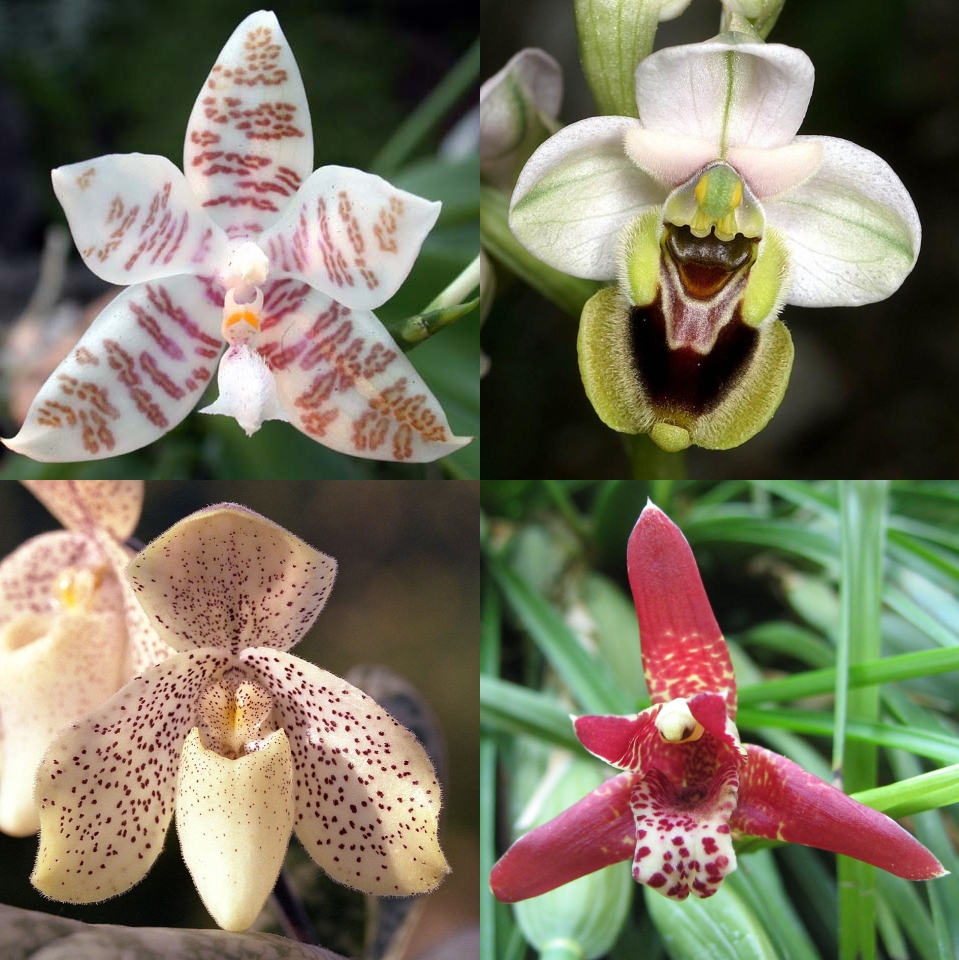 OrchidOrchidaceae
A vast family of colourful, often fragrant flowers found almost everywhere on earth
Orchidaceae · Wildflower
OrchidOrchidaceae
A vast family of colourful, often fragrant flowers found almost everywhere on earth
Orchidaceae · Wildflower
 Vanilla
Climbing orchids with pods used for the world’s most popular flavor
🇲🇽 Mexico and 7 more · Wildflower
Vanilla
Climbing orchids with pods used for the world’s most popular flavor
🇲🇽 Mexico and 7 more · Wildflower
 Orchis
A group of wild orchids with tuberous roots from Europe, North Africa and Asia
🇹🇷 Turkey and 7 more · Wildflower
Orchis
A group of wild orchids with tuberous roots from Europe, North Africa and Asia
🇹🇷 Turkey and 7 more · Wildflower
 VanillaVanilla planifolia
The climbing orchid behind most of the world’s vanilla flavour
🇲🇽 Mexico and 8 more · Wildflower
VanillaVanilla planifolia
The climbing orchid behind most of the world’s vanilla flavour
🇲🇽 Mexico and 8 more · Wildflower
More from Papua New Guinea
All the flowers of Papua New Guinea Forget-me-notMyosotis
Small blue wildflowers known for remembrance and love
🇳🇿 New Zealand and 7 more · Wildflower
Forget-me-notMyosotis
Small blue wildflowers known for remembrance and love
🇳🇿 New Zealand and 7 more · Wildflower
 NarraPterocarpus indicus
Tall tropical tree with yellow flowers and prized rose-scented wood
🇵🇭 Philippines and 7 more · Flowering tree
NarraPterocarpus indicus
Tall tropical tree with yellow flowers and prized rose-scented wood
🇵🇭 Philippines and 7 more · Flowering tree
 Wonga wonga vinePandorea pandorana
A climbing Australian vine with white, purple-marked flowers
🇦🇺 Australia and 5 more · Climber
Wonga wonga vinePandorea pandorana
A climbing Australian vine with white, purple-marked flowers
🇦🇺 Australia and 5 more · Climber
 Broad-leaved paperbarkMelaleuca quinquenervia
A swamp-dwelling Australian tree with peeling bark and creamy bottlebrush flowers
🇦🇺 Australia and 2 more · Flowering tree
Broad-leaved paperbarkMelaleuca quinquenervia
A swamp-dwelling Australian tree with peeling bark and creamy bottlebrush flowers
🇦🇺 Australia and 2 more · Flowering tree