
Spider orchids
Caladenia, family Orchidaceae
Hairy-leaved ground orchids with intricate, insect-attracting flowers
Spider orchids (Caladenia) are a large group of ground orchids, mostly native to Australia. They have a single hairy leaf and striking flowers with fringed lips, often adapted to attract specific insects. Most species are found in Western Australia, where they grow in forests, swamps, and woodlands.
- Over 350 species, mostly native to Australia
- Single hairy leaf and striking, intricate flowers
- Flowers often mimic insects to attract pollinators
- Difficult to grow outside their natural habitat
- Some species have edible tubers
What does Spider orchids look like?
Spider orchids are ground-dwelling perennial herbs with a single hairy leaf at the base. Their flowers grow on hairy stems and are notable for their long, narrow sepals and petals, sometimes ending in club-shaped tips. The central petal, called the labellum, is often fringed or toothed and decorated with small bumps or calli. Flower shapes vary, with some resembling spiders, others more like fans or zebras. Most have no scent detectable by people, but some mimic the appearance and scent of female insects to attract pollinators.
Where does Spider orchids come from?
Caladenia orchids are mostly native to Australia, especially the south-west of Western Australia, where over a hundred species are found. The first specimens were collected in the late 1700s in Sydney and Western Australia. The genus was formally described by Robert Brown in 1810. The name Caladenia comes from Greek, meaning 'beautiful gland', referring to the colourful labellum. Over time, the genus has included species from related groups, and its classification has changed as botanists have studied its relationships.
When and how Spider orchids blooms
Most spider orchids bloom in early spring, though a few flower at other times. They grow from a tuber underground, which produces new tubers each year. The plant sends up a single hairy leaf and a stem with one to eight flowers. Caladenias are hard to grow outside their natural habitat because they need a special fungus in the soil. Some enthusiasts have managed to grow them by also cultivating this fungus and carefully balancing nutrients.


How Spider orchids is used
Spider orchids are mainly admired in the wild and are not common in gardens due to their special growing needs. In the past, their tubers were eaten, as recorded in 19th-century Australia. Today, they are valued for their beauty and as emblems of local regions, especially in Western Australia, where they are a highlight of the native flora.
Kinds of Spider orchids
The genus is grouped into three main types: spider orchids with long, narrow petals and sepals; zebra orchids with shorter, hanging petals; and cowslip orchids with short, spreading petals. Notable species include the white spider orchid (C. longicauda), clubbed spider orchid (C. longiclavata), zebra orchid (C. cairnsiana), and cowslip orchid (C. flava). There are also hybrids and species with unique pollination strategies.
What Spider orchids means
Spider orchids are a symbol of Western Australia's rich wildflower diversity, with many species unique to the region. They play a role in local identity and are a focus for wildflower tourism. Their intricate pollination methods, including mimicking insects, have made them subjects of scientific study. Some species are difficult to find and may be rare or threatened.
Traditions that use it
Questions people ask about Spider orchids
Where do spider orchids come from?
Most spider orchids are native to Australia, especially the south-west of Western Australia. A few species are also found in New Zealand, Indonesia, and New Caledonia.
What do spider orchids look like?
They have a single hairy leaf at the base and produce one to eight flowers on a hairy stem. The flowers often have long, narrow sepals and petals, with a fringed or toothed central petal called the labellum.
How are spider orchids pollinated?
Many species attract specific insects, especially bees and wasps. Some mimic the appearance and scent of female insects to lure male pollinators.
Are spider orchids easy to grow?
They are difficult to cultivate outside their natural habitat because they need a specific soil fungus to grow well. Some enthusiasts have had limited success by also growing the fungus.
What are spider orchids used for?
They are mainly admired in the wild and valued as emblems of local regions. In the past, their tubers were eaten, but today they are mostly appreciated for their beauty and ecological interest.
Good reading and sources
- Plants of the World OnlineRoyal Botanic Gardens, Kew, Plant database
- Where it has been recordedGBIF, Plant database
- Sightings and photos by naturalistsiNaturalist, Plant database
The facts on this page come from the Wikipedia article "Caladenia", written by its contributors and used under the CC BY-SA 4.0 licence, and from its Wikidata record (CC0). EveryPhool rewrote the text in its own words, with AI assistance, and compares every page with the article to make sure no passage is copied. It may be reused under the same CC BY-SA 4.0 licence with a link back.
It may contain mistakes. It is not medical or foraging advice: many flowers are poisonous, and traditional uses are reported, not recommended. If something is wrong, tell us. Last refreshed 2026-10-03.
Others in the family Orchidaceae
The whole family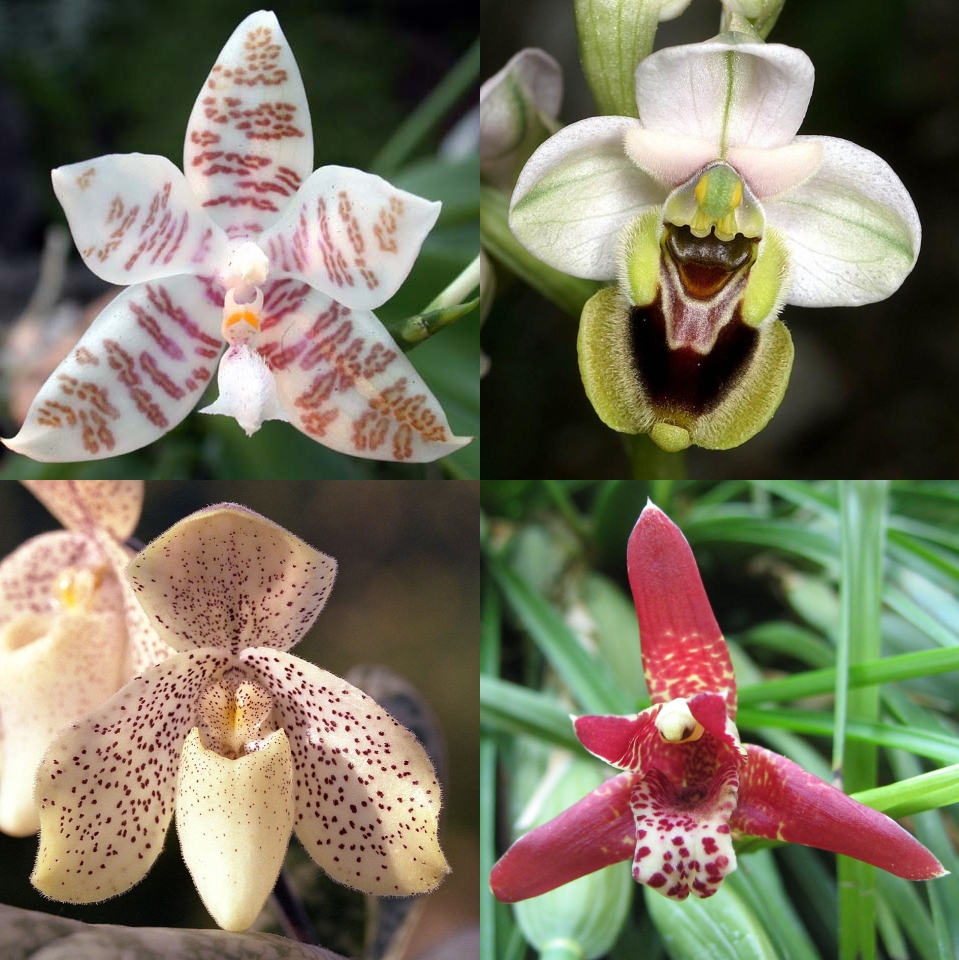 OrchidOrchidaceae
A vast family of colourful, often fragrant flowers found almost everywhere on earth
Orchidaceae · Wildflower
OrchidOrchidaceae
A vast family of colourful, often fragrant flowers found almost everywhere on earth
Orchidaceae · Wildflower
 Vanilla
Climbing orchids with pods used for the world’s most popular flavor
🇲🇽 Mexico and 7 more · Wildflower
Vanilla
Climbing orchids with pods used for the world’s most popular flavor
🇲🇽 Mexico and 7 more · Wildflower
 Orchis
A group of wild orchids with tuberous roots from Europe, North Africa and Asia
🇹🇷 Turkey and 7 more · Wildflower
Orchis
A group of wild orchids with tuberous roots from Europe, North Africa and Asia
🇹🇷 Turkey and 7 more · Wildflower
 VanillaVanilla planifolia
The climbing orchid behind most of the world’s vanilla flavour
🇲🇽 Mexico and 8 more · Wildflower
VanillaVanilla planifolia
The climbing orchid behind most of the world’s vanilla flavour
🇲🇽 Mexico and 8 more · Wildflower
More from Australia
All the flowers of Australia AlmondPrunus amygdalus
A Mediterranean tree grown for its fragrant spring flowers and edible seeds
🇮🇷 Iran and 6 more · Flowering tree
AlmondPrunus amygdalus
A Mediterranean tree grown for its fragrant spring flowers and edible seeds
🇮🇷 Iran and 6 more · Flowering tree
 FennelFoeniculum vulgare
A tall, aromatic herb with feathery leaves and yellow umbels, used for food and spice
🇨🇳 China and 7 more · Herb or useful flower
FennelFoeniculum vulgare
A tall, aromatic herb with feathery leaves and yellow umbels, used for food and spice
🇨🇳 China and 7 more · Herb or useful flower
 Eucalyptus
The tall, aromatic trees and shrubs known as gum trees or eucalypts
🇦🇺 Australia and 7 more · Flowering tree
Eucalyptus
The tall, aromatic trees and shrubs known as gum trees or eucalypts
🇦🇺 Australia and 7 more · Flowering tree
 Acacia
Shrubs and trees with golden or cream puffball flowers, native mostly to Australia
🇦🇺 Australia and 6 more · Wildflower
Acacia
Shrubs and trees with golden or cream puffball flowers, native mostly to Australia
🇦🇺 Australia and 6 more · Wildflower