
Camellia amplexicaulis
In its own language: Hải đường
A pink-flowered camellia tree once found in Vietnam’s forests
Camellia amplexicaulis is a small evergreen tree from Vietnam, now only grown in gardens and not found in the wild. It produces glossy leaves and pink blossoms from late autumn to early spring, and its flowers are used in Vietnamese Tết celebrations.
- No longer found in the wild since 2018
- Native to northern Vietnam’s evergreen forests
- Pink flowers bloom from late autumn to early spring
- Flowers are used for Tết, the Vietnamese New Year
- Only survives in cultivation
What does Camellia amplexicaulis look like?
This camellia grows as a small tree, reaching between 2 and 4 meters in height. Its leaves are evergreen, shiny, and wrap partly around the stem. The tree is known for its pink flowers, which appear from late autumn through early spring. The fruit is round and has a glossy surface. In gardens, the plant can show a range of forms.
Where does Camellia amplexicaulis come from?
Camellia amplexicaulis was first found in 1910 in the Tam Đảo area of northern Vietnam. It once grew in tropical and subtropical evergreen forests. Over time, it disappeared from its natural habitat and has not been seen in the wild since 2018. Today, it survives only in cultivation, mainly in Vietnam.
When and how Camellia amplexicaulis blooms
The tree blooms from late autumn to early spring, producing pink flowers. It is grown in gardens and tended for its decorative value, especially around the Vietnamese New Year. The plant is propagated and maintained by gardeners, as it no longer grows in the wild.
How Camellia amplexicaulis is used
In Vietnam, Camellia amplexicaulis is a popular ornamental plant. Its flowers are especially valued during Tết, the Vietnamese New Year, when they are used for decoration. The tree is also grown in gardens for its attractive foliage and blossoms.
Kinds of Camellia amplexicaulis
Several related species have been separated from Camellia amplexicaulis in recent years. These include Camellia lucii, which has white flowers, and Camellia ingens, Camellia pyriparva, and Camellia scabrosa, all described after 2015.
What Camellia amplexicaulis means
The pink flowers of this camellia hold a place in Vietnamese celebrations, especially during Tết. Although it once grew wild, it now survives only in gardens. Its continued cultivation keeps it present in cultural traditions, even though it is extinct in nature.
Where Camellia amplexicaulis is used and seen
 Hong Kong Zoological and Botanical GardensA historic garden and zoo in Central, Hong Kong with themed plant collections
 New Orleans Botanical GardenA public garden in City Park with themed plant collections and art deco features
 Dandenong Ranges Botanic GardenA cool-climate garden in the hills near Melbourne, famous for rhododendrons and cherry blossom
 Hunter Valley GardensA vast themed garden and event venue in Pokolbin, New South Wales
 Mendocino Coast Botanical GardensA coastal garden in Mendocino County, California with ocean views and diverse plantings
 South China National Botanical GardenA major botanical garden in Guangzhou with diverse plant collections and research focus
 ChabanaSimple flower arrangements for the Japanese tea ceremony
 Sim's Park, CoonoorA century-old botanical garden in the Nilgiri hills of Tamil Nadu
Days and festivals
Questions people ask about Camellia amplexicaulis
Where does Camellia amplexicaulis come from?
This species is native to northern Vietnam, where it once grew in tropical and subtropical evergreen forests.
What does Camellia amplexicaulis look like?
It is a small evergreen tree, 2 to 4 meters tall, with glossy leaves that clasp the stem and pink flowers that appear from late autumn to early spring.
Is Camellia amplexicaulis still found in the wild?
No, it has not been seen in the wild since 2018 and now exists only in cultivation, mainly in Vietnam.
How is Camellia amplexicaulis used in Vietnam?
Its flowers are used for decoration during Tết, the Vietnamese New Year, and it is grown as a garden plant.
Are there any related species to Camellia amplexicaulis?
Yes, several species have been separated from it, including the white-flowered Camellia lucii and others described after 2015.
Good reading and sources
- IUCN Red List of Threatened SpeciesIUCN Red List, Article
- Plants of the World OnlineRoyal Botanic Gardens, Kew, Plant database
- Where it has been recordedGBIF, Plant database
- Sightings and photos by naturalistsiNaturalist, Plant database
- Camellia amplexicaulis on WikipediaEncyclopedia
- More photos on Wikimedia CommonsPhotos
- Wikidata recordOpen data
The facts on this page come from the Wikipedia article "Camellia amplexicaulis", written by its contributors and used under the CC BY-SA 4.0 licence, and from its Wikidata record (CC0). Phool rewrote the text in its own words, with AI assistance, and compares every page with the article to make sure no passage is copied. It may be reused under the same CC BY-SA 4.0 licence with a link back.
It may contain mistakes. It is not medical or foraging advice: many flowers are poisonous, and traditional uses are reported, not recommended. If something is wrong, tell us. Last refreshed 2026-10-03.


More from Vietnam
All the flowers of Vietnam Sacred lotusNelumbo nucifera
The pink aquatic flower sacred in Asia and grown for food, worship and beauty
🇮🇳 India and 7 more · Water flower
Sacred lotusNelumbo nucifera
The pink aquatic flower sacred in Asia and grown for food, worship and beauty
🇮🇳 India and 7 more · Water flower
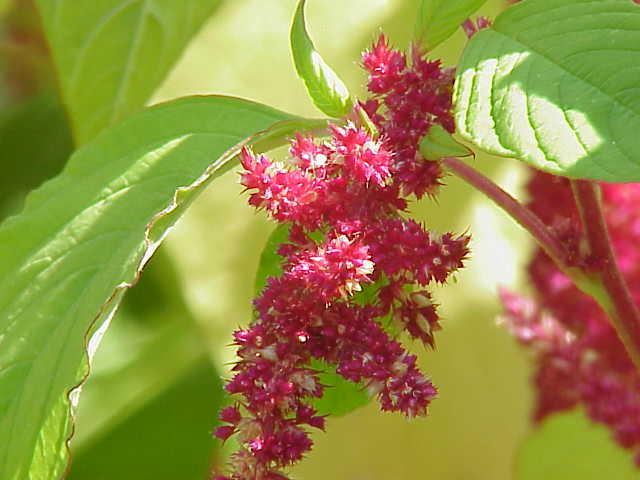 AmaranthAmaranthus
A tall, colourful plant grown for its flowers, leaves and edible seeds
🇲🇽 Mexico and 7 more · Wildflower
AmaranthAmaranthus
A tall, colourful plant grown for its flowers, leaves and edible seeds
🇲🇽 Mexico and 7 more · Wildflower
 LotusNelumbo
Aquatic plants with large, round leaves and striking flowers called lotus
🇮🇳 India and 7 more · Water flower
LotusNelumbo
Aquatic plants with large, round leaves and striking flowers called lotus
🇮🇳 India and 7 more · Water flower
 Camellia
Evergreen shrubs and trees with showy blooms, best known for tea and garden flowers
🇨🇳 China and 6 more · Garden flower
Camellia
Evergreen shrubs and trees with showy blooms, best known for tea and garden flowers
🇨🇳 China and 6 more · Garden flower