
Espeletia
High-altitude daisy-like plants of the northern Andes páramo
Espeletia, called frailejones, is a group of perennial subshrubs from the high Andes in Colombia, Venezuela, and Ecuador. These plants have thick trunks, hairy spiral leaves, and yellow flowers like daisies, and are important for water capture in their mountain habitats.
- Native to high-altitude páramo in Colombia, Venezuela, and Ecuador
- Thick, hairy-leaved trunks help the plant survive cold mountain climates
- Yellow flowers resemble daisies
- Captures water vapor and supports Andean water reserves
- Endangered by agriculture and climate-related pests
What does Espeletia look like?
Espeletia plants are perennial subshrubs found in high-altitude páramo regions. They have thick, spongy trunks and leaves covered in soft hairs, arranged in a dense spiral. The old leaves remain attached, forming a protective layer. Their flowers are usually yellow and resemble daisies. Some species grow with a caulirosulate form, meaning a stem with a rosette of leaves at the top.
Where does Espeletia come from?
The genus Espeletia is native mainly to the northern Andes, especially Colombia, Venezuela, and Ecuador. It was first described in 1808 and named after José Manuel de Ezpeleta, a viceroy of New Granada. These plants are adapted to cold, high-altitude environments and are a key part of the páramo ecosystem.
When and how Espeletia blooms
Espeletia grows in the cool, moist conditions of the páramo, a high mountain grassland. The plants thrive at altitude, where their hairy leaves and marcescent foliage help them survive cold and wind. They reproduce by seed and form dense stands in their native habitat.


How Espeletia is used
While not widely used by people for decoration or food, Espeletia is vital for the environment. Its spongy trunk captures water vapor from clouds and releases it into the soil, helping to form underground water reserves and lakes that feed rivers. This makes the plant important for water sustainability in the Andes.
Kinds of Espeletia
There are several species within the Espeletia genus, each adapted to different parts of the páramo. The genus includes plants with varying trunk thickness, leaf shapes, and flower sizes, but most share the yellow daisy-like blooms and spiral leaf arrangement.
What Espeletia means
Espeletia is endangered due to habitat loss from agriculture, especially potato farming, and new pests linked to climate change. Despite legal protections, threats continue. The plant is recognized for its ecological role in water management and is a symbol of the Andean páramo.
Questions people ask about Espeletia
Where does Espeletia come from?
Espeletia is native to the high-altitude páramo regions of Colombia, Venezuela, and Ecuador in the northern Andes.
What does Espeletia look like?
It has a thick, spongy trunk, hairy leaves arranged in a spiral, and yellow daisy-like flowers. Old leaves stay on the plant, forming a protective layer.
Why is Espeletia important?
The plant helps capture water vapor from clouds and releases it into the soil, supporting underground water reserves and rivers in the Andes.
Is Espeletia endangered?
Yes, it is endangered due to habitat loss from agriculture and new pests, despite legal protection in Colombia.
What does Espeletia symbolise?
Espeletia is a symbol of the Andean páramo and is recognized for its key role in water sustainability.
Good reading and sources
- Encyclopaedia BritannicaArticle
- In the land of El Dorado, clean water has become ‘blue gold’The Guardian, Article
- USDA Plants DatabaseUS Department of Agriculture, Article
- Plants of the World OnlineRoyal Botanic Gardens, Kew, Plant database
- Where it has been recordedGBIF, Plant database
- Sightings and photos by naturalistsiNaturalist, Plant database
The facts on this page come from the Wikipedia article "Espeletia", written by its contributors and used under the CC BY-SA 4.0 licence, and from its Wikidata record (CC0). EveryPhool rewrote the text in its own words, with AI assistance, and compares every page with the article to make sure no passage is copied. It may be reused under the same CC BY-SA 4.0 licence with a link back.
It may contain mistakes. It is not medical or foraging advice: many flowers are poisonous, and traditional uses are reported, not recommended. If something is wrong, tell us. Last refreshed 2026-10-03.
Others in the family Asteraceae
The whole family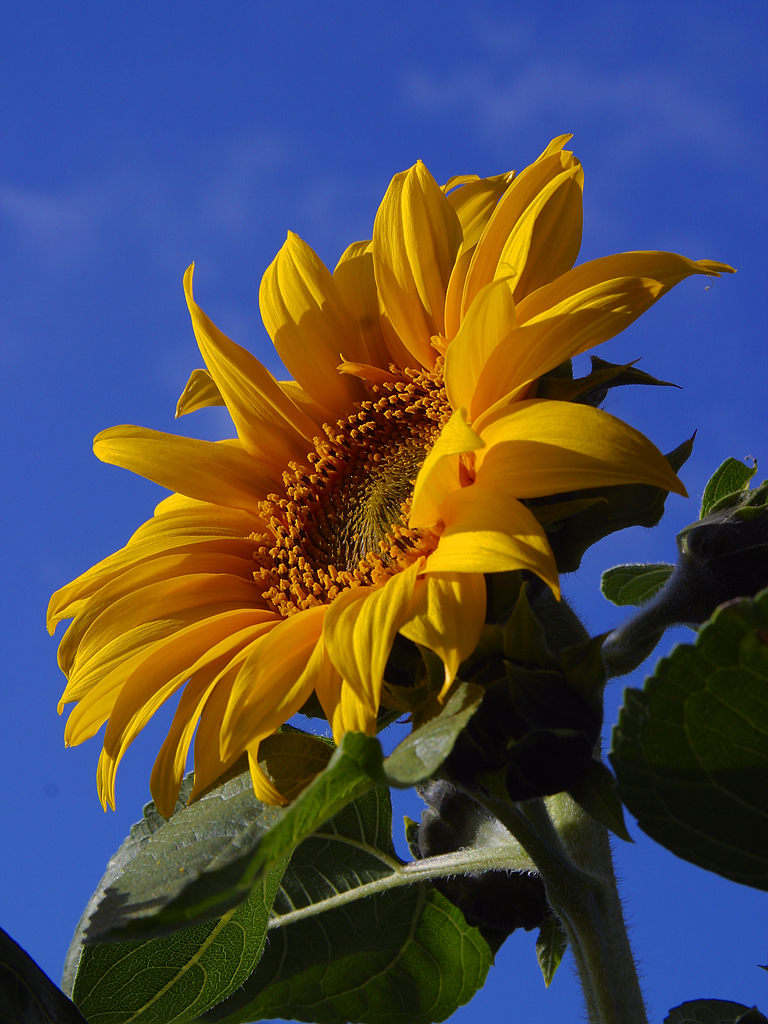 Common sunflowerHelianthus annuus
A tall annual plant grown for its large yellow flower heads and edible seeds
🇨🇦 Canada and 4 more · Wildflower
Common sunflowerHelianthus annuus
A tall annual plant grown for its large yellow flower heads and edible seeds
🇨🇦 Canada and 4 more · Wildflower
 Chrysanthemum菊花
Autumn-blooming flower with thousands of varieties, cherished in East Asia and beyond
🇨🇳 China and 6 more · Wildflower
Chrysanthemum菊花
Autumn-blooming flower with thousands of varieties, cherished in East Asia and beyond
🇨🇳 China and 6 more · Wildflower
 DandelionTaraxacum
A yellow-flowered perennial found in fields, lawns, and gardens worldwide
Taraxacum · Wildflower
DandelionTaraxacum
A yellow-flowered perennial found in fields, lawns, and gardens worldwide
Taraxacum · Wildflower
 Dahlia
A bushy perennial with tuberous roots and bright, star-shaped blooms
🇲🇽 Mexico and 1 more · Garden flower
Dahlia
A bushy perennial with tuberous roots and bright, star-shaped blooms
🇲🇽 Mexico and 1 more · Garden flower
More from Colombia
All the flowers of Colombia BromeliadsBromeliaceae
A family of tropical flowering plants from the Americas, including the pineapple
🇨🇱 Chile and 7 more · Wildflower
BromeliadsBromeliaceae
A family of tropical flowering plants from the Americas, including the pineapple
🇨🇱 Chile and 7 more · Wildflower
 Flamingo FlowerAnthurium andraeanum
A tropical plant with heart-shaped leaves and vivid red or pink spathes
🇨🇴 Colombia and 2 more · Garden flower
Flamingo FlowerAnthurium andraeanum
A tropical plant with heart-shaped leaves and vivid red or pink spathes
🇨🇴 Colombia and 2 more · Garden flower
 Black-eyed Susan vineThunbergia alata
A fast-growing climbing plant with bright flowers and a dark centre
🇨🇳 China and 7 more · Garden flower
Black-eyed Susan vineThunbergia alata
A fast-growing climbing plant with bright flowers and a dark centre
🇨🇳 China and 7 more · Garden flower
 Browallia
A small genus of blue and violet-flowered plants from the Americas
🇨🇴 Colombia and 3 more · Wildflower
Browallia
A small genus of blue and violet-flowered plants from the Americas
🇨🇴 Colombia and 3 more · Wildflower