
Genista
Shrubs and small trees with yellow, pea-like flowers called broom
Genista is a group of shrubs and small trees in the legume family, found in open areas of Europe and western Asia. Known as broom, these plants have brushy, sometimes spiny branches and many small yellow flowers, some with a sweet scent, and are grown for their early blooms.
- Genista is the original broom plant of Europe and western Asia.
- Its yellow flowers open explosively to spread pollen.
- The Plantagenet royal family took its name from Genista.
- Some species are grown for sweet-smelling, early spring blooms.
- The 'Porlock' cultivar has won a Royal Horticultural Society award.
What does Genista look like?
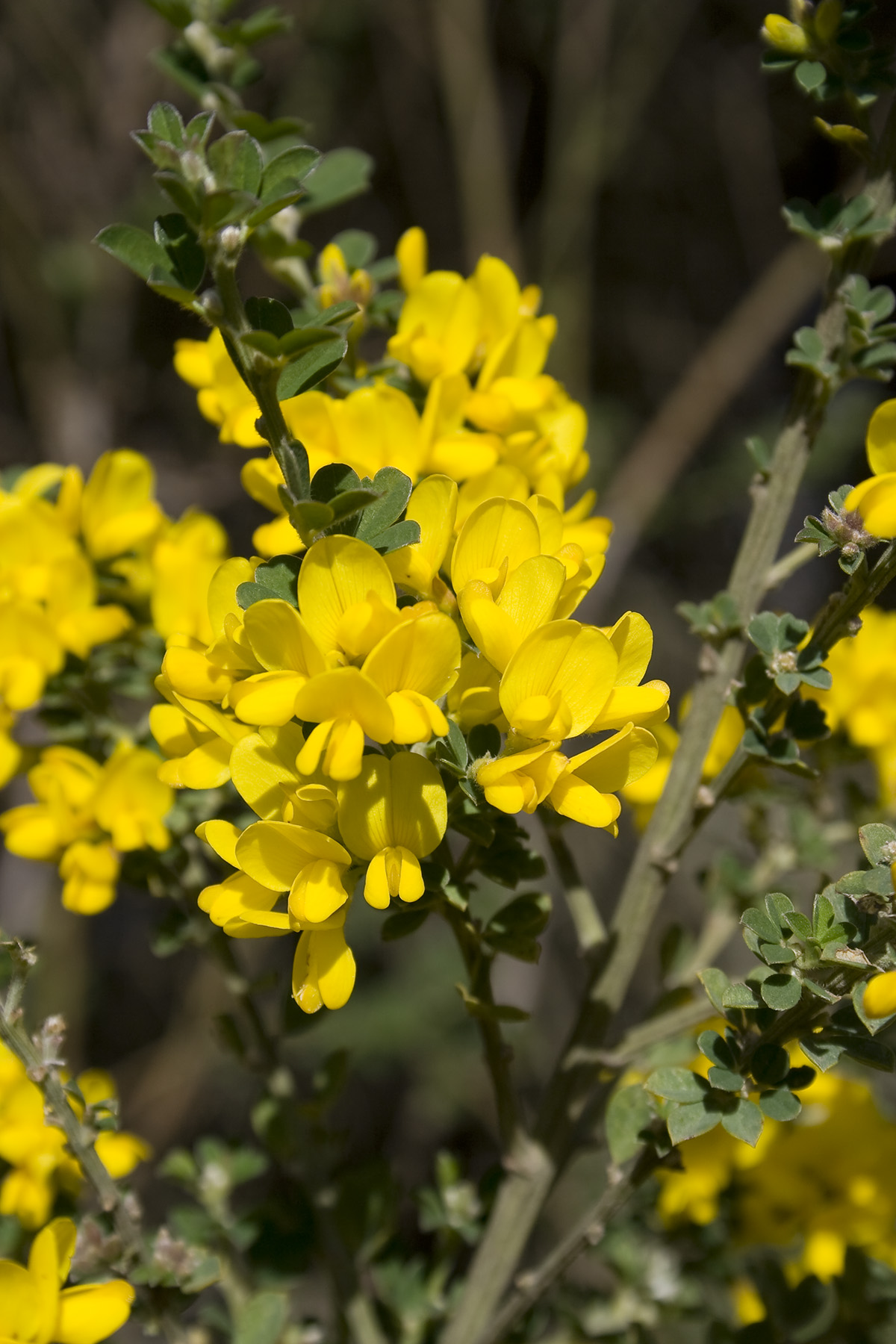
Genista includes mainly deciduous shrubs and small trees with brush-like, often spiny branches. The leaves are usually small, and the plants are covered in masses of small, bright yellow flowers shaped like pea blossoms. Some species have a light, sweet scent. The flowers often open with a sudden movement when touched by insects, releasing pollen. These plants are sometimes grown for their showy early-season blooms.
Where does Genista come from?
Genista grows wild in open places such as moorland and pasture across Europe and western Asia. The name 'broom' is shared with other related plants, but Genista is the original group. The English royal line Plantagenet took its name from this plant, showing its presence and importance in medieval England. Over time, several species have been cultivated for gardens, especially in the United Kingdom.
When and how Genista blooms
Genista blooms mainly in spring, producing many yellow flowers before or as the leaves appear. These shrubs prefer open, sunny spots and are often found in wild grasslands or moors. In gardens, they are chosen for their early and abundant flowering. Some varieties, like 'Porlock', are recognized for their garden value.
How Genista is used
People grow Genista mainly for its bright, early flowers and as ornamental shrubs in gardens. The genus has historical significance in England as the origin of the Plantagenet name. Some species are also valued for their ability to deter browsing animals with their spiny branches.
Kinds of Genista
There are 144 accepted species in the Genista genus, with many hybrids and some species whose status is still debated. The cultivar 'Porlock' has been awarded for its garden performance by the Royal Horticultural Society in the UK. Other genera, such as Cytisus and Chamaecytisus, are also called broom but are distinct from Genista.
What Genista means
Genista is linked to English history through the Plantagenet dynasty, whose name comes from the plant. The bright yellow broom flowers are a symbol of early spring in many parts of Europe. Some species are widely grown in gardens for their showy and sometimes fragrant blooms.
Questions people ask about Genista
Where does Genista come from?
Genista grows wild in open habitats like moorland and pasture across Europe and western Asia.
What does Genista look like?
It is a shrub or small tree with brush-like, sometimes spiny branches and many small, bright yellow, pea-shaped flowers.
What is Genista used for?
Genista is mainly grown in gardens for its early, abundant yellow blooms. It also has historical significance as the origin of the Plantagenet royal name.
Is Genista the same as broom?
Genista is the original broom, but other related plants like Cytisus and Chamaecytisus are also called broom.
Does Genista have any special meaning?
Yes, it is linked to the Plantagenet royal line in England, whose name comes from the plant.
Good reading and sources
- Genista 'Porlock'Royal Horticultural Society, Article
- USDA Plants DatabaseUS Department of Agriculture, Article
- Plants of the World OnlineRoyal Botanic Gardens, Kew, Plant database
- Where it has been recordedGBIF, Plant database
- Sightings and photos by naturalistsiNaturalist, Plant database
The facts on this page come from the Wikipedia article "Genista", written by its contributors and used under the CC BY-SA 4.0 licence, and from its Wikidata record (CC0). Phool rewrote the text in its own words, with AI assistance, and compares every page with the article to make sure no passage is copied. It may be reused under the same CC BY-SA 4.0 licence with a link back.
It may contain mistakes. It is not medical or foraging advice: many flowers are poisonous, and traditional uses are reported, not recommended. If something is wrong, tell us. Last refreshed 2026-10-03.
Others in the family Fabaceae
The whole family Acacia
Shrubs and trees with golden or cream puffball flowers, native mostly to Australia
🇦🇺 Australia and 6 more · Wildflower
Acacia
Shrubs and trees with golden or cream puffball flowers, native mostly to Australia
🇦🇺 Australia and 6 more · Wildflower
 Sensitive PlantMimosa pudica
A touch-sensitive plant whose leaves fold up when disturbed
🇧🇷 Brazil and 8 more · Wildflower
Sensitive PlantMimosa pudica
A touch-sensitive plant whose leaves fold up when disturbed
🇧🇷 Brazil and 8 more · Wildflower
 Black locustRobinia pseudoacacia
A tall, fragrant-flowered tree native to eastern North America
🇺🇸 United States and 7 more · Flowering tree
Black locustRobinia pseudoacacia
A tall, fragrant-flowered tree native to eastern North America
🇺🇸 United States and 7 more · Flowering tree
 LupinLupinus
Tall, spiky-flowered legumes grown for gardens, food, and soil health
🇺🇸 United States and 7 more · Wildflower
LupinLupinus
Tall, spiky-flowered legumes grown for gardens, food, and soil health
🇺🇸 United States and 7 more · Wildflower
More from the United Kingdom
All the flowers of the United Kingdom Narcissus
Spring-flowering bulbs with trumpet-shaped blooms in white, yellow, and orange
🇬🇧 United Kingdom and 7 more · Wildflower
Narcissus
Spring-flowering bulbs with trumpet-shaped blooms in white, yellow, and orange
🇬🇧 United Kingdom and 7 more · Wildflower
 HawthornCrataegus
A thorny shrub or tree with white or pink spring flowers and small edible fruits
🇮🇪 Ireland and 7 more · Wildflower
HawthornCrataegus
A thorny shrub or tree with white or pink spring flowers and small edible fruits
🇮🇪 Ireland and 7 more · Wildflower
 BlackthornPrunus spinosa
A spiny shrub with white spring flowers and tart blue-black fruit
🇬🇧 United Kingdom and 7 more · Wildflower
BlackthornPrunus spinosa
A spiny shrub with white spring flowers and tart blue-black fruit
🇬🇧 United Kingdom and 7 more · Wildflower
 Common poppyPapaver rhoeas
The vivid red wildflower of fields and remembrance
🇨🇳 China and 7 more · Wildflower
Common poppyPapaver rhoeas
The vivid red wildflower of fields and remembrance
🇨🇳 China and 7 more · Wildflower