
Gladiolus dalenii
A wild gladiolus with tall spikes of yellow to scarlet flowers
Gladiolus dalenii is a flowering plant in the iris family, found from eastern South Africa and Madagascar across tropical Africa to western Arabia. Its tall stems bear yellow to scarlet flowers, often with red streaks and a yellow throat. It is a key parent of many large-flowered gladiolus hybrids.
- Native from eastern South Africa and Madagascar to western Arabia
- Flowers are yellow to scarlet, often with red streaks and a yellow throat
- Main parent of large-flowered gladiolus hybrids
- Includes diploid, tetraploid, and hexaploid forms
What does Gladiolus dalenii look like?
Gladiolus dalenii grows upright, producing up to five tall flower spikes. Each spike is lined with flowers that range in color from yellow to scarlet, often showing red streaks over a yellow base and usually a yellow throat. The plant belongs to the iris family and is notable for its striking, multicolored blooms that stand out in both wild and cultivated settings.
Where does Gladiolus dalenii come from?
This species is native to a wide area, from eastern South Africa and Madagascar through tropical Africa and into western Arabia. It is one of the most widespread gladiolus species. Gladiolus dalenii is also unusual within its genus for having different chromosome numbers, including diploid, tetraploid, and hexaploid forms. Over time, it became the main parent for many of the large-flowered gladiolus hybrids grown in gardens.
When and how Gladiolus dalenii blooms
In cultivation, Gladiolus dalenii prefers a light, sandy soil that is neutral to slightly acidic, with a pH between 6.5 and 7. It grows best in a sunny, sheltered spot and needs a stony, gritty loam. The plant develops from a corm, sending up tall spikes that bloom with colorful flowers.


How Gladiolus dalenii is used
While Gladiolus dalenii itself is not widely noted for specific uses, it is important as the main parent of many grandiflora gladiolus hybrids, which are popular in gardens and floral displays. Its wild forms are valued for their beauty and genetic diversity.
Kinds of Gladiolus dalenii
Gladiolus dalenii is unusual among gladiolus species because it includes diploid, tetraploid, and hexaploid races. The hybrids bred from it, especially the large-flowered grandiflora types, are often tetraploid. This diversity makes it a key species for breeding new gladiolus varieties.
What Gladiolus dalenii means
Gladiolus dalenii is best known for its role in the development of garden gladiolus hybrids. Its wide distribution and genetic variety have made it important for horticulture. The plant itself is admired for its colorful spikes, but it does not have specific symbolic or cultural meanings noted in the sources.
Where Gladiolus dalenii is used and seen


Questions people ask about Gladiolus dalenii
Where does Gladiolus dalenii come from?
Gladiolus dalenii is native to eastern South Africa, Madagascar, tropical Africa, and western Arabia.
What does Gladiolus dalenii look like?
It has tall flower spikes with yellow to scarlet blooms, often streaked with red and usually showing a yellow throat.
Why is Gladiolus dalenii important to gardeners?
It is the main parent species for many large-flowered gladiolus hybrids grown in gardens.
Does Gladiolus dalenii have different forms?
Yes, it is unusual for including diploid, tetraploid, and hexaploid races within the species.
Good reading and sources
- USDA Plants DatabaseUS Department of Agriculture, Article
- Gladiolus daleniiRoyal Horticultural Society, Article
- Plants of the World OnlineRoyal Botanic Gardens, Kew, Plant database
- Where it has been recordedGBIF, Plant database
- Sightings and photos by naturalistsiNaturalist, Plant database
- Gladiolus dalenii on WikipediaEncyclopedia
- More photos on Wikimedia CommonsPhotos
- Wikidata recordOpen data
The facts on this page come from the Wikipedia article "Gladiolus dalenii", written by its contributors and used under the CC BY-SA 4.0 licence, and from its Wikidata record (CC0). Phool rewrote the text in its own words, with AI assistance, and compares every page with the article to make sure no passage is copied. It may be reused under the same CC BY-SA 4.0 licence with a link back.
It may contain mistakes. It is not medical or foraging advice: many flowers are poisonous, and traditional uses are reported, not recommended. If something is wrong, tell us. Last refreshed 2026-10-03.
Others in the family Iridaceae
The whole family Gladiolus
Tall, showy flower spikes grown from corms, known as sword lilies
Gladiolus · Garden flower
Gladiolus
Tall, showy flower spikes grown from corms, known as sword lilies
Gladiolus · Garden flower
 Iris
A large group of perennial flowers with striking, six-lobed blooms
Iris · Wildflower
Iris
A large group of perennial flowers with striking, six-lobed blooms
Iris · Wildflower
 Crocus
Small corm-grown flowers in white, yellow, orange or purple
🇹🇷 Turkey and 7 more · Wildflower
Crocus
Small corm-grown flowers in white, yellow, orange or purple
🇹🇷 Turkey and 7 more · Wildflower
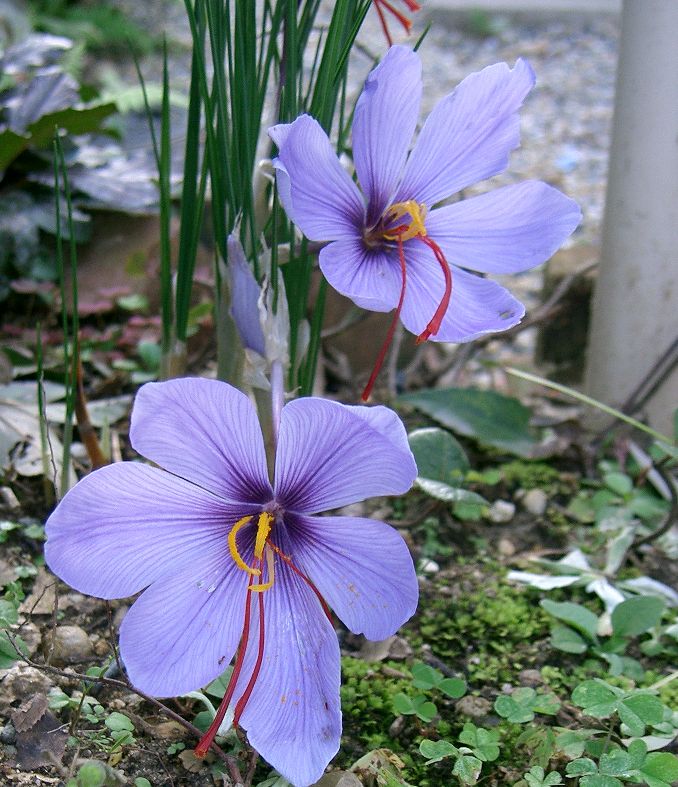 Saffron crocusCrocus sativus
The purple autumn flower whose red stigmas yield the spice saffron
🇨🇳 China and 1 more · Garden flower
Saffron crocusCrocus sativus
The purple autumn flower whose red stigmas yield the spice saffron
🇨🇳 China and 1 more · Garden flower