
Yellow lapacho
Handroanthus serratifolius, family Bignoniaceae
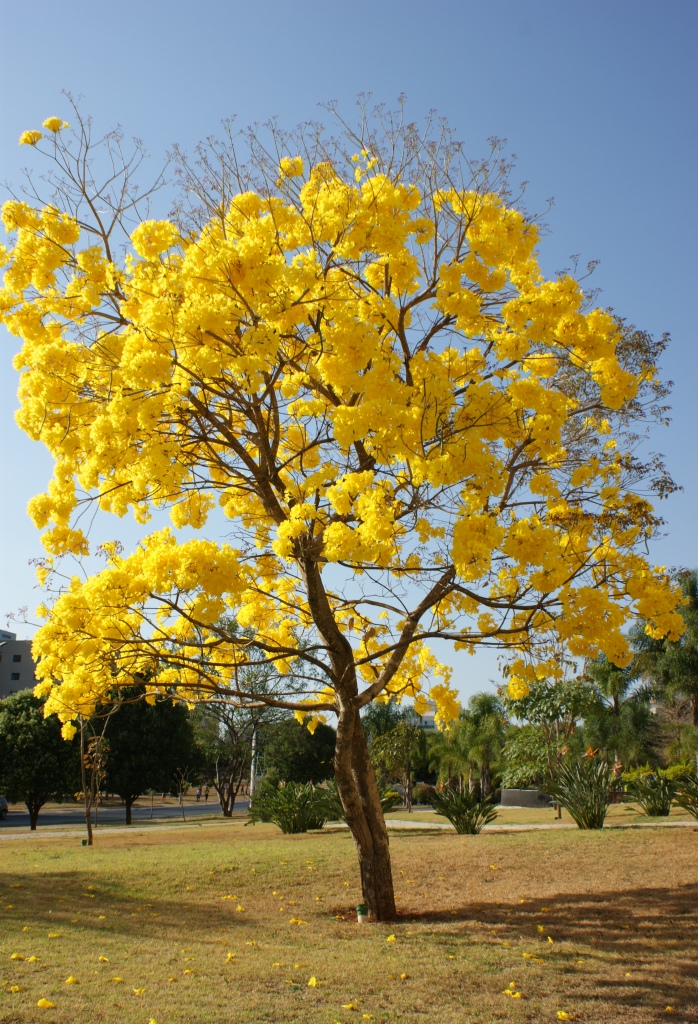
Brazil’s national flower, a tall tree with bright yellow blooms
Yellow lapacho is a towering tree native to Central and South America, especially Brazil. It is known for its short-lived, vivid yellow flowers that appear in early spring and for its very hard wood. The tree is celebrated as the national flower of Brazil.
- National flower of Brazil
- Blooms with bright yellow flowers for about a week in spring
- One of the largest and strongest tropical forest trees
- Wood is extremely hard and pest-resistant
What does Yellow lapacho look like?
Yellow lapacho is a large tree that can reach up to 46 meters in height, with a trunk base as wide as 2.1 meters. Its main feature is the display of bright yellow flowers that cover the tree for about a week in early spring. The tree's wood is extremely hard and dense, and its flowers are showy but short-lived.
Where does Yellow lapacho come from?
This tree is native to the forests of Brazil and extends into regions such as French Guiana, Bolivia, Paraguay, and northern Argentina. It grows in the cerrado, a type of savanna in Brazil, and is found in several Brazilian states. The tree has become a symbol of Brazil, where it is widely recognized and celebrated.
When and how Yellow lapacho blooms
Yellow lapacho blooms in September and October in Brazil, with flowers appearing for only about a week. The tree thrives in tropical climates and is found in both wild forests and cultivated areas. It is grown for its ornamental value and for its durable wood, which is harvested commercially.

How Yellow lapacho is used
The main use of yellow lapacho is as a national emblem of Brazil, where its yellow flowers are celebrated each spring. Its wood is valued in trade for its strength and resistance to fire and pests, sometimes sold as 'ironwood' or 'ipê'. The bark contains compounds like lapachol and quercetin.
Kinds of Yellow lapacho
The name 'ipê-amarelo' is used for this and similar yellow-flowering trees in the genus Handroanthus. The tree is sometimes confused with other species called lapacho or ipê, but Handroanthus serratifolius is the one recognized as Brazil’s national flower.
What Yellow lapacho means
Yellow lapacho, or ipê-amarelo, is a national symbol of Brazil. Its brief but striking yellow bloom is widely admired and marks the arrival of spring in many regions. The tree’s wood is also important in commerce. Its flowers are not tied to religious or festival use in the sources.
Questions people ask about Yellow lapacho
Where does yellow lapacho come from?
Yellow lapacho is native to Brazil and grows in forests across Central and South America, including regions in Argentina, Bolivia, and Paraguay.
What does the yellow lapacho tree look like?
It is a very tall tree, reaching up to 46 meters, with a thick trunk and bright yellow flowers that bloom briefly in early spring.
What is yellow lapacho used for?
It is mainly valued as Brazil’s national flower and for its extremely hard wood, which is traded commercially.
When does yellow lapacho flower?
In Brazil, yellow lapacho blooms in September and October, with flowers lasting about a week.
What does yellow lapacho symbolise?
Yellow lapacho, or ipê-amarelo, is a symbol of Brazil and is celebrated as the country’s national flower.
Good reading and sources
- USDA Plants DatabaseUS Department of Agriculture, Article
- IUCN Red List of Threatened SpeciesIUCN Red List, Article
- Plants of the World OnlineRoyal Botanic Gardens, Kew, Plant database
- Where it has been recordedGBIF, Plant database
- Sightings and photos by naturalistsiNaturalist, Plant database
- Handroanthus serratifolius on WikipediaEncyclopedia
- More photos on Wikimedia CommonsPhotos
- Wikidata recordOpen data
The facts on this page come from the Wikipedia article "Handroanthus serratifolius", written by its contributors and used under the CC BY-SA 4.0 licence, and from its Wikidata record (CC0). Phool rewrote the text in its own words, with AI assistance, and compares every page with the article to make sure no passage is copied. It may be reused under the same CC BY-SA 4.0 licence with a link back.
It may contain mistakes. It is not medical or foraging advice: many flowers are poisonous, and traditional uses are reported, not recommended. If something is wrong, tell us. Last refreshed 2026-10-03.
Others in the family Bignoniaceae
The whole family Pink trumpet-treeTabebuia rosea
A tall tree with pink to purple trumpet-shaped flowers, seen in parks and streets
🇲🇽 Mexico and 5 more · Flowering tree
Pink trumpet-treeTabebuia rosea
A tall tree with pink to purple trumpet-shaped flowers, seen in parks and streets
🇲🇽 Mexico and 5 more · Flowering tree
 Tabebuia
Tropical trees and shrubs grown for their large, showy blossoms
🇨🇺 Cuba and 5 more · Flowering tree
Tabebuia
Tropical trees and shrubs grown for their large, showy blossoms
🇨🇺 Cuba and 5 more · Flowering tree
 Millingtonia hortensis
Tall, fragrant-flowered tree known as tree jasmine or Indian cork tree
🇮🇳 India · Flowering tree
Millingtonia hortensis
Tall, fragrant-flowered tree known as tree jasmine or Indian cork tree
🇮🇳 India · Flowering tree
 Southern catalpaCatalpa bignonioides
A fast-growing American tree with showy white trumpet flowers
🇺🇸 United States · Flowering tree
Southern catalpaCatalpa bignonioides
A fast-growing American tree with showy white trumpet flowers
🇺🇸 United States · Flowering tree
More from Brazil
All the flowers of Brazil CactusCactaceae
Succulent plants with spines, native to the Americas
🇲🇽 Mexico and 7 more · Wildflower
CactusCactaceae
Succulent plants with spines, native to the Americas
🇲🇽 Mexico and 7 more · Wildflower
 Eucalyptus
The tall, aromatic trees and shrubs known as gum trees or eucalypts
🇦🇺 Australia and 7 more · Flowering tree
Eucalyptus
The tall, aromatic trees and shrubs known as gum trees or eucalypts
🇦🇺 Australia and 7 more · Flowering tree
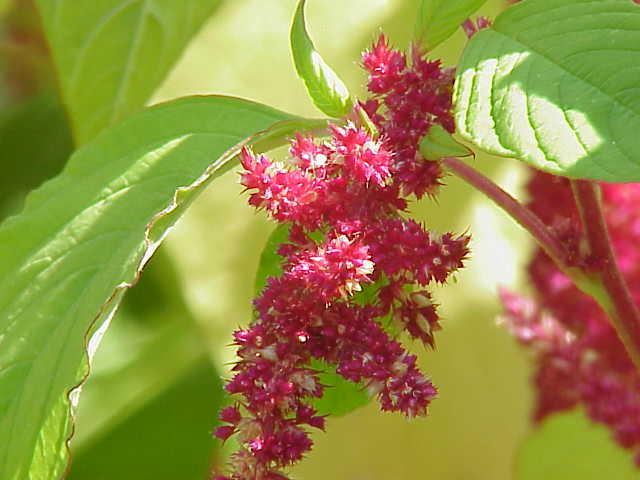 AmaranthAmaranthus
A tall, colourful plant grown for its flowers, leaves and edible seeds
🇲🇽 Mexico and 7 more · Wildflower
AmaranthAmaranthus
A tall, colourful plant grown for its flowers, leaves and edible seeds
🇲🇽 Mexico and 7 more · Wildflower
 Sensitive PlantMimosa pudica
A touch-sensitive plant whose leaves fold up when disturbed
🇧🇷 Brazil and 8 more · Wildflower
Sensitive PlantMimosa pudica
A touch-sensitive plant whose leaves fold up when disturbed
🇧🇷 Brazil and 8 more · Wildflower