
Porcelain flower
Hoya carnosa, family Apocynaceae
A climbing houseplant with star-shaped, sweet-scented waxy flowers
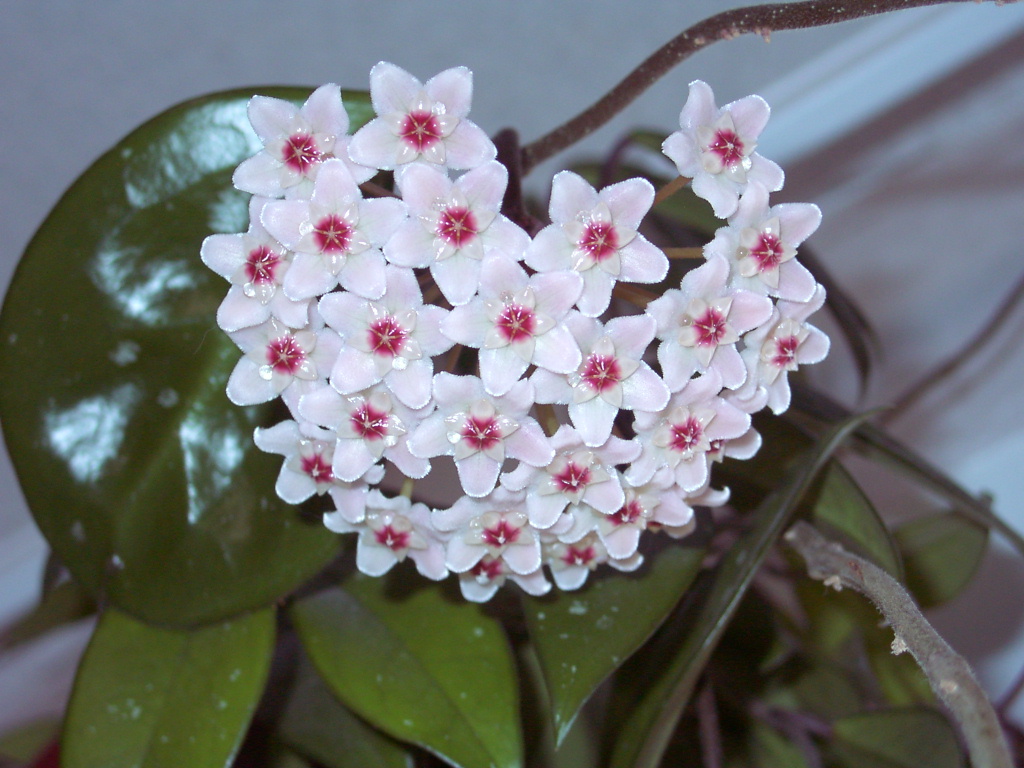
Porcelain flower is a twining plant from East Asia, often kept indoors for its glossy leaves and clusters of star-like, fragrant blooms. Its flowers, which look like they are made of wax, come in shades from pale to deep pink and release a strong scent at night.
- Native to southern China, Taiwan, Laos, and Japan
- Star-shaped flowers look like wax or porcelain
- Strongly scented blooms open from spring to late summer
- 'Hindu Rope' is a popular curly-leaved variety
- Known to help remove indoor air pollutants
What does Porcelain flower look like?
Porcelain flower is a climbing perennial with smooth, pale grey stems that can twine around supports. Its leaves are thick, shiny, and shaped like ovals or hearts, measuring up to 13 cm long. The plant produces clusters of star-shaped flowers, usually light pink but sometimes nearly white or dark pink, each about 1.5 to 2 cm across. The blooms have a waxy, almost porcelain-like look and are covered in fine hairs, giving them a soft sheen. At night, the flowers give off a strong, sweet scent and sometimes drip nectar.
Where does Porcelain flower come from?
Porcelain flower grows wild in southern China, Taiwan, Laos, and Japan, including the Ryukyu Islands. It has been cultivated for over two centuries and has become a popular houseplant worldwide. The plant was first described in the late 19th century and has since been bred into many forms, with variations in leaf shape and flower color. Its ability to grow as an epiphyte, clinging to trees in its native habitat, has made it adaptable to indoor conditions.
When and how Porcelain flower blooms
The plant flowers from spring through late summer, producing clusters of 10 to 50 blooms on the same stalk, which can flower year after year. Flowers grow from special spurs that should not be removed, as they keep producing new buds. Porcelain flower prefers bright, indirect light and well-draining soil. It can be started from stem cuttings or by air layering. The plant is often grown in hanging baskets or pots indoors.


How Porcelain flower is used
Porcelain flower is mainly kept as a decorative houseplant, valued for its attractive leaves and fragrant, long-lasting blooms. It is sometimes grown in gardens in mild climates. Studies have shown it can help clean indoor air. Its unique look and scent make it a favorite for indoor displays and collections.
Kinds of Porcelain flower
Many cultivars of porcelain flower exist, with differences in leaf shape and flower color. One well-known variety is 'Compacta', also called 'Hindu Rope', which has tightly curled leaves and a rope-like growth habit. This form was first noticed as a mutation in California and became popular in the United States in the late 1960s.
What Porcelain flower means
Porcelain flower has been grown in homes for generations, especially for its beauty and fragrance. It is recognized as a symbol of ornamental indoor gardening. In some places, it is valued for its ability to improve air quality. The plant's unusual flowers and easy care have made it a classic choice for plant enthusiasts.
Where Porcelain flower is used and seen

Questions people ask about Porcelain flower
Where does porcelain flower come from?
Porcelain flower, or Hoya carnosa, is native to southern China, Taiwan, Laos, and Japan, including the Ryukyu Islands. It grows in these regions as a climbing or twining plant, often as an epiphyte on trees.
What does the porcelain flower look like?
It has thick, glossy, oval or heart-shaped leaves and produces clusters of star-shaped flowers that are usually light pink, but can range from nearly white to deep pink. The flowers have a waxy appearance and a strong, sweet scent at night.
How is porcelain flower used?
Porcelain flower is mainly grown as a houseplant for its attractive leaves and fragrant blooms. It is also known for helping to purify indoor air, making it popular in homes and offices.
Are there different types of porcelain flower?
Yes, there are several cultivars with variations in leaf shape and flower color. The 'Compacta' or 'Hindu Rope' variety is especially popular for its tightly curled leaves and rope-like growth.
When does porcelain flower bloom?
It typically blooms from spring through late summer, producing clusters of flowers that last for several weeks on the same stalks each year.
Good reading and sources
- Encyclopaedia BritannicaArticle
- Hoya carnosaRoyal Horticultural Society, Article
- USDA Plants DatabaseUS Department of Agriculture, Article
- Plants of the World OnlineRoyal Botanic Gardens, Kew, Plant database
- Where it has been recordedGBIF, Plant database
- Sightings and photos by naturalistsiNaturalist, Plant database
The facts on this page come from the Wikipedia article "Hoya carnosa", written by its contributors and used under the CC BY-SA 4.0 licence, and from its Wikidata record (CC0). Phool rewrote the text in its own words, with AI assistance, and compares every page with the article to make sure no passage is copied. It may be reused under the same CC BY-SA 4.0 licence with a link back.
It may contain mistakes. It is not medical or foraging advice: many flowers are poisonous, and traditional uses are reported, not recommended. If something is wrong, tell us. Last refreshed 2026-10-03.
Others in the family Apocynaceae
The whole family OleanderNerium oleander
A showy, evergreen shrub with clusters of pink, white or red flowers
🇲🇦 Morocco and 8 more · Flowering shrub
OleanderNerium oleander
A showy, evergreen shrub with clusters of pink, white or red flowers
🇲🇦 Morocco and 8 more · Flowering shrub
 Plumeria
Fragrant tropical tree with waxy, five-petaled flowers in many colours
🇲🇽 Mexico and 6 more · Flowering tree
Plumeria
Fragrant tropical tree with waxy, five-petaled flowers in many colours
🇲🇽 Mexico and 6 more · Flowering tree
 Mandevilla
A tropical vine with large trumpet-shaped blooms in vivid colours
🇧🇷 Brazil and 2 more · Climber
Mandevilla
A tropical vine with large trumpet-shaped blooms in vivid colours
🇧🇷 Brazil and 2 more · Climber
 Pinwheel flowerTabernaemontana divaricata
A fragrant white-flowered shrub native to South and Southeast Asia
🇲🇲 Myanmar and 2 more · Flowering shrub
Pinwheel flowerTabernaemontana divaricata
A fragrant white-flowered shrub native to South and Southeast Asia
🇲🇲 Myanmar and 2 more · Flowering shrub
More from China
All the flowers of China PeachPrunus persica
A flowering fruit tree from China, grown for its pink blossoms and sweet fruit
🇨🇳 China and 7 more · Flowering tree
PeachPrunus persica
A flowering fruit tree from China, grown for its pink blossoms and sweet fruit
🇨🇳 China and 7 more · Flowering tree
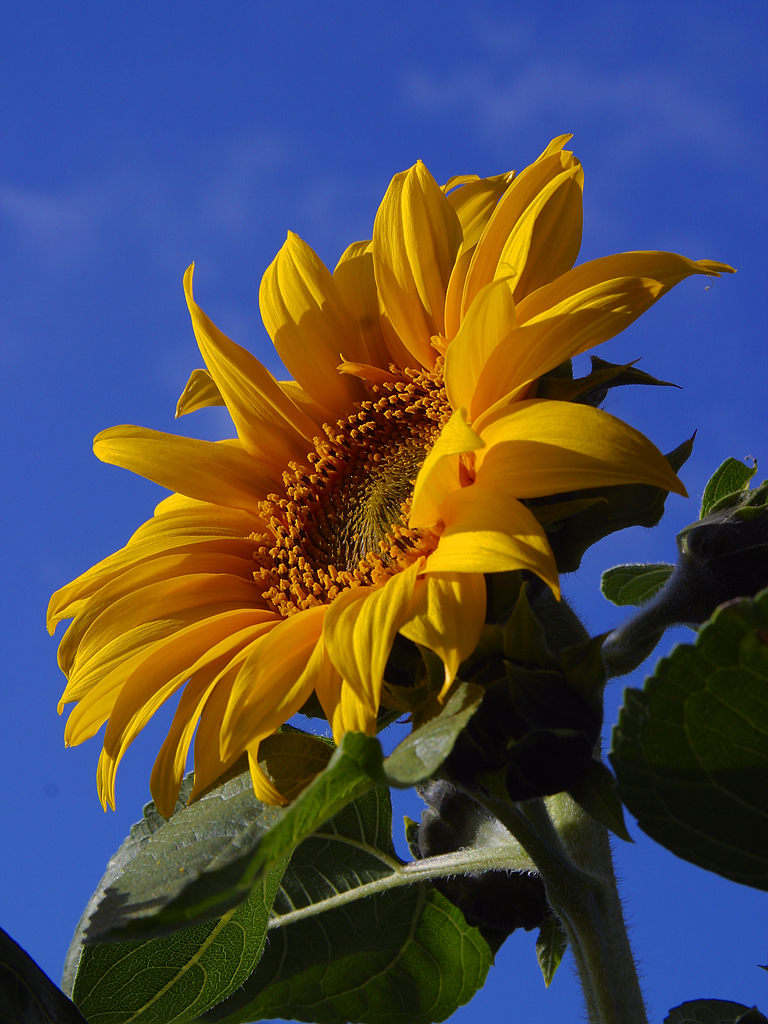 Common sunflowerHelianthus annuus
A tall annual plant grown for its large yellow flower heads and edible seeds
🇨🇦 Canada and 4 more · Wildflower
Common sunflowerHelianthus annuus
A tall annual plant grown for its large yellow flower heads and edible seeds
🇨🇦 Canada and 4 more · Wildflower
 PomegranatePunica granatum
A shrub with bright red flowers and a fruit full of edible seeds
🇮🇷 Iran and 9 more · Flowering shrub
PomegranatePunica granatum
A shrub with bright red flowers and a fruit full of edible seeds
🇮🇷 Iran and 9 more · Flowering shrub
 ApricotPrunus armeniaca
A small fruit tree with early white to pink blossoms and golden-orange fruit
🇨🇳 China and 6 more · Flowering tree
ApricotPrunus armeniaca
A small fruit tree with early white to pink blossoms and golden-orange fruit
🇨🇳 China and 6 more · Flowering tree