
Mandevilla
A tropical vine with large trumpet-shaped blooms in vivid colours
Mandevilla is a group of climbing plants known for their showy, often scented flowers in shades of red, pink, white, and yellow. Native to parts of the Americas, especially Brazil, these vines are popular in gardens for their ability to cover walls and trellises with lush foliage and bright blossoms.
- Native to the Americas, especially Brazil and Mexico
- Known for large, trumpet-shaped flowers in several colours
- Named after British gardener Henry Mandeville
- Popular climbing plant for gardens and patios
- Award-winning hybrids include 'Alice du Pont'
What does Mandevilla look like?
Mandevilla vines have twining stems and glossy green leaves. Their flowers are large and shaped like trumpets, appearing in a range of colours from deep red and pink to white and yellow. Some varieties give off a gentle fragrance. These plants can grow vigorously, often covering supports with dense foliage and blooms.
Where does Mandevilla come from?
The mandevilla genus is native to regions stretching from the southern United States through Mexico and Central America, into the Caribbean and South America. Many species are found in the forests near Rio de Janeiro, Brazil. The plant was named in honour of Henry Mandeville, a British diplomat and gardener, and was first described as a genus in 1840.
When and how Mandevilla blooms
Mandevilla vines thrive in warm, frost-free climates and need support to climb, such as a trellis or wall. They are often grown from cuttings or young plants. With enough sun and moisture, they produce flowers over a long season. Gardeners select from many hybrids to suit different colours and growth habits.


How Mandevilla is used
These vines are mainly grown for their decorative value in gardens and on patios. Their bright flowers and climbing habit make them popular for covering fences or as potted plants on balconies. Some hybrids are especially valued for their performance and have received awards for garden merit.
Kinds of Mandevilla
There are many species and cultivated varieties of mandevilla. Hybrids such as Mandevilla × amabilis and Mandevilla splendens are common in gardens. Certain cultivars, like 'Alice du Pont' and 'Sundaville Cream Pink', have been recognised for their outstanding qualities by horticultural societies.
What Mandevilla means
Mandevilla is admired for its vibrant flowers and is widely used in ornamental gardening. It does not have a strong role in symbolism or religious practice, but its beauty and climbing nature make it a favourite among gardeners. Some cultivars have received awards, highlighting their popularity and garden value.
Questions people ask about Mandevilla
Where does mandevilla come from?
Mandevilla is native to areas from the southern United States through Mexico, Central America, the West Indies, and into South America, with many species found in Brazil.
What does mandevilla look like?
It is a climbing vine with shiny green leaves and large, trumpet-shaped flowers that can be red, pink, white, or yellow. Some types have a light fragrance.
How is mandevilla used?
Mandevilla is mainly grown as an ornamental plant in gardens, on trellises, or in pots, valued for its colourful and long-lasting flowers.
Are there different kinds of mandevilla?
Yes, there are many species and hybrids. Some, like 'Alice du Pont' and 'Sundaville Cream Pink', are especially popular and have received gardening awards.
Does mandevilla have any special meaning?
Mandevilla is mainly appreciated for its beauty in gardens and does not have a widely known symbolic or religious meaning.
Good reading and sources
- Mandevilla × amabilis 'Alice du Pont'Royal Horticultural Society, Article
- USDA Plants DatabaseUS Department of Agriculture, Article
- Plants of the World OnlineRoyal Botanic Gardens, Kew, Plant database
- Where it has been recordedGBIF, Plant database
- Sightings and photos by naturalistsiNaturalist, Plant database
The facts on this page come from the Wikipedia article "Mandevilla", written by its contributors and used under the CC BY-SA 4.0 licence, and from its Wikidata record (CC0). Phool rewrote the text in its own words, with AI assistance, and compares every page with the article to make sure no passage is copied. It may be reused under the same CC BY-SA 4.0 licence with a link back.
It may contain mistakes. It is not medical or foraging advice: many flowers are poisonous, and traditional uses are reported, not recommended. If something is wrong, tell us. Last refreshed 2026-10-03.
Others in the family Apocynaceae
The whole family OleanderNerium oleander
A showy, evergreen shrub with clusters of pink, white or red flowers
🇲🇦 Morocco and 8 more · Flowering shrub
OleanderNerium oleander
A showy, evergreen shrub with clusters of pink, white or red flowers
🇲🇦 Morocco and 8 more · Flowering shrub
 Plumeria
Fragrant tropical tree with waxy, five-petaled flowers in many colours
🇲🇽 Mexico and 6 more · Flowering tree
Plumeria
Fragrant tropical tree with waxy, five-petaled flowers in many colours
🇲🇽 Mexico and 6 more · Flowering tree
 Pinwheel flowerTabernaemontana divaricata
A fragrant white-flowered shrub native to South and Southeast Asia
🇲🇲 Myanmar and 2 more · Flowering shrub
Pinwheel flowerTabernaemontana divaricata
A fragrant white-flowered shrub native to South and Southeast Asia
🇲🇲 Myanmar and 2 more · Flowering shrub
 Plumeria alba
A small tree with white, fragrant flowers and yellow centers
🇵🇷 Puerto Rico and 6 more · Flowering tree
Plumeria alba
A small tree with white, fragrant flowers and yellow centers
🇵🇷 Puerto Rico and 6 more · Flowering tree
More from Brazil
All the flowers of Brazil CactusCactaceae
Succulent plants with spines, native to the Americas
🇲🇽 Mexico and 7 more · Wildflower
CactusCactaceae
Succulent plants with spines, native to the Americas
🇲🇽 Mexico and 7 more · Wildflower
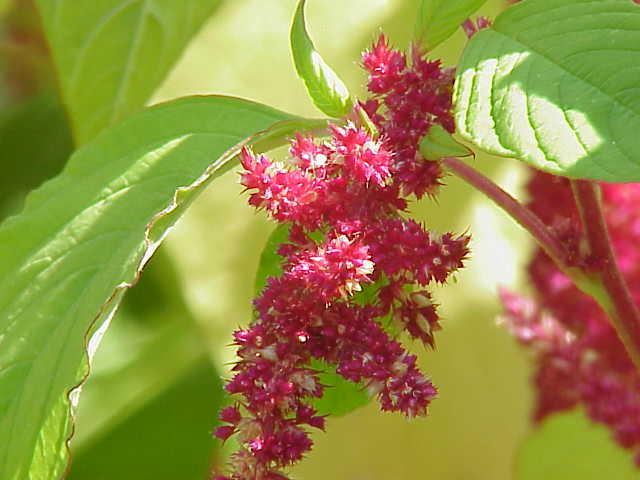 AmaranthAmaranthus
A tall, colourful plant grown for its flowers, leaves and edible seeds
🇲🇽 Mexico and 7 more · Wildflower
AmaranthAmaranthus
A tall, colourful plant grown for its flowers, leaves and edible seeds
🇲🇽 Mexico and 7 more · Wildflower
 Sensitive PlantMimosa pudica
A touch-sensitive plant whose leaves fold up when disturbed
🇧🇷 Brazil and 8 more · Wildflower
Sensitive PlantMimosa pudica
A touch-sensitive plant whose leaves fold up when disturbed
🇧🇷 Brazil and 8 more · Wildflower
 Passion fruitPassiflora edulis
A tropical vine grown for its sweet-sour, aromatic fruit
🇧🇷 Brazil and 6 more · Climber
Passion fruitPassiflora edulis
A tropical vine grown for its sweet-sour, aromatic fruit
🇧🇷 Brazil and 6 more · Climber