
Passion fruit
Passiflora edulis, family Passifloraceae
A tropical vine grown for its sweet-sour, aromatic fruit
Passion fruit is a climbing perennial vine native to southern Brazil, Paraguay, and northern Argentina. Its round or oval fruit, with yellow or purple skin and aromatic, juicy pulp, is widely grown in tropical and subtropical regions for eating fresh or making juice, desserts, and drinks.
- Native to southern Brazil, Paraguay, and northern Argentina
- Fruit is either purple or yellow when ripe
- Widely grown for its sweet, aromatic pulp and juice
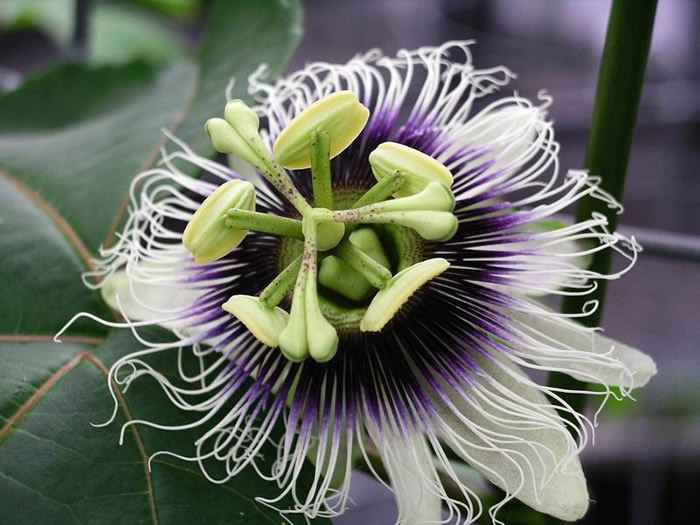
- Flowers have a unique structure with purple and white fringes
- Used in desserts, drinks, and as a fresh fruit
What does Passion fruit look like?
Passion fruit is a vigorous, climbing vine with tendrils and evergreen leaves. Its flowers are about 5–7.5 cm wide, with five green sepals and five white petals forming a fringed, showy bloom. The base of the flower is purple, and the flower has five stamens and a branched style. The fruit is round or oval, 4–7.5 cm across, with a smooth, leathery rind that is either dark purple with white specks or bright yellow. Inside, the fruit contains many brown seeds, each surrounded by juicy, aromatic pulp that tastes sweet and slightly acidic.
Where does Passion fruit come from?
Passion fruit is native to the region stretching from southern Brazil through Paraguay to northern Argentina. The name comes from missionaries in Brazil around 1700, who used the flower's structure to teach about the Passion of Christ, calling it 'flower of the five wounds.' The plant has since spread widely and is now cultivated in tropical and subtropical areas around the world.
When and how Passion fruit blooms
The vine grows best in warm, frost-free climates and is usually grown from seed or cuttings. It produces flowers singly at each node, and the fruit develops after pollination, which is often done by bees. The purple-fruited type is self-compatible, while the yellow type needs cross-pollination. The fruit matures to either purple or yellow, depending on the variety, and is harvested when fully ripe.



How Passion fruit is used
Passion fruit is eaten fresh, with the pulp scooped out and sometimes sprinkled with sugar. Its juice is popular for drinking on its own or mixed with other juices, and is also used in desserts, sauces, and syrups. In many countries, it flavors cakes, ice creams, and soft drinks. The fruit is valued for its aroma and sweet-sour taste and is a common ingredient in both home and commercial kitchens.
Kinds of Passion fruit
There are two main forms: the purple passion fruit (P. edulis f. edulis), which is smaller, less acidic, and has a richer aroma, and the yellow passion fruit (P. edulis f. flavicarpa), which is larger, more acidic, and often used as rootstock. The yellow variety is also used in breeding and is more common in tropical lowlands.
What Passion fruit means
The passion fruit's name and symbolism are linked to Christian missionary teaching in Brazil, where the flower's parts were seen as symbols of the Passion of Christ. The fruit is widely used in the cuisines of Brazil, Australia, New Zealand, the Caribbean, and Southeast Asia, and is a familiar flavor in drinks and desserts. In Brazil, it is called maracujá.
Questions people ask about Passion fruit
Where does passion fruit come from?
Passion fruit is native to southern Brazil, Paraguay, and northern Argentina, and is now grown in tropical and subtropical regions worldwide.
What does passion fruit look and taste like?
The fruit is round or oval, with a smooth purple or yellow rind. Inside, it has many brown seeds surrounded by juicy, aromatic pulp that tastes sweet and slightly acidic.
How is passion fruit used?
It is eaten fresh, used in juices, desserts, sauces, and syrups, and flavors many foods and drinks in countries like Brazil, Australia, and New Zealand.
Are there different types of passion fruit?
Yes, the main types are the purple passion fruit, which is smaller and sweeter, and the yellow passion fruit, which is larger and more acidic.
What does the name 'passion fruit' mean?
The name comes from missionaries in Brazil who used the flower's structure to teach about the Passion of Christ, calling it the 'flower of the five wounds.'
Good reading and sources
- Encyclopaedia BritannicaArticle
- HRS cultivating ‘passion fruit'The Hindu, Article
- Plants of the World OnlineRoyal Botanic Gardens, Kew, Plant database
- Where it has been recordedGBIF, Plant database
- Sightings and photos by naturalistsiNaturalist, Plant database
- Passiflora edulis on WikipediaEncyclopedia
- More photos on Wikimedia CommonsPhotos
- Wikidata recordOpen data
The facts on this page come from the Wikipedia article "Passiflora edulis", written by its contributors and used under the CC BY-SA 4.0 licence, and from its Wikidata record (CC0). Phool rewrote the text in its own words, with AI assistance, and compares every page with the article to make sure no passage is copied. It may be reused under the same CC BY-SA 4.0 licence with a link back.
It may contain mistakes. It is not medical or foraging advice: many flowers are poisonous, and traditional uses are reported, not recommended. If something is wrong, tell us. Last refreshed 2026-10-03.

More from Brazil
All the flowers of Brazil CactusCactaceae
Succulent plants with spines, native to the Americas
🇲🇽 Mexico and 7 more · Wildflower
CactusCactaceae
Succulent plants with spines, native to the Americas
🇲🇽 Mexico and 7 more · Wildflower
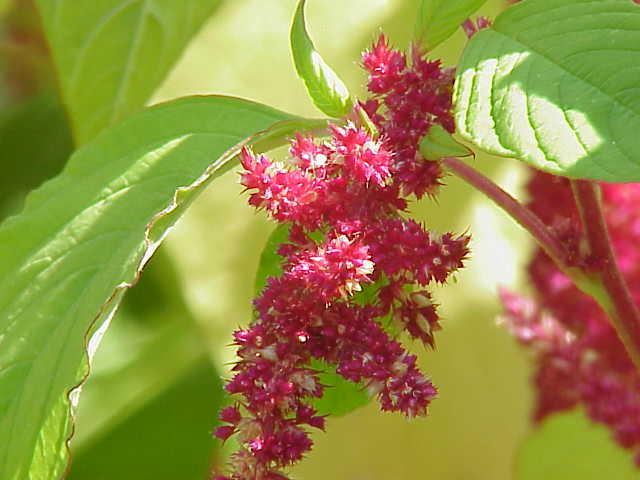 AmaranthAmaranthus
A tall, colourful plant grown for its flowers, leaves and edible seeds
🇲🇽 Mexico and 7 more · Wildflower
AmaranthAmaranthus
A tall, colourful plant grown for its flowers, leaves and edible seeds
🇲🇽 Mexico and 7 more · Wildflower
 Sensitive PlantMimosa pudica
A touch-sensitive plant whose leaves fold up when disturbed
🇧🇷 Brazil and 8 more · Wildflower
Sensitive PlantMimosa pudica
A touch-sensitive plant whose leaves fold up when disturbed
🇧🇷 Brazil and 8 more · Wildflower
 LupinLupinus
Tall, spiky-flowered legumes grown for gardens, food, and soil health
🇺🇸 United States and 7 more · Wildflower
LupinLupinus
Tall, spiky-flowered legumes grown for gardens, food, and soil health
🇺🇸 United States and 7 more · Wildflower