
Kerria japonica
In its own language: 山吹
A golden-flowered shrub from East Asia, grown for its spring bloom
Kerria japonica is a shrub with bright yellow flowers, native to China and Japan. It grows on mountain slopes and is widely planted in gardens for its spring blossoms. The plant is used in traditional medicine and has inspired poetry and color names in Japan.
- Native to mountain slopes in China and Japan
- Blooms with golden yellow flowers each spring
- Used in traditional Chinese medicine
- Mentioned in early Japanese poetry
- Popular double-flowered form called 'Pleniflora'
What does Kerria japonica look like?
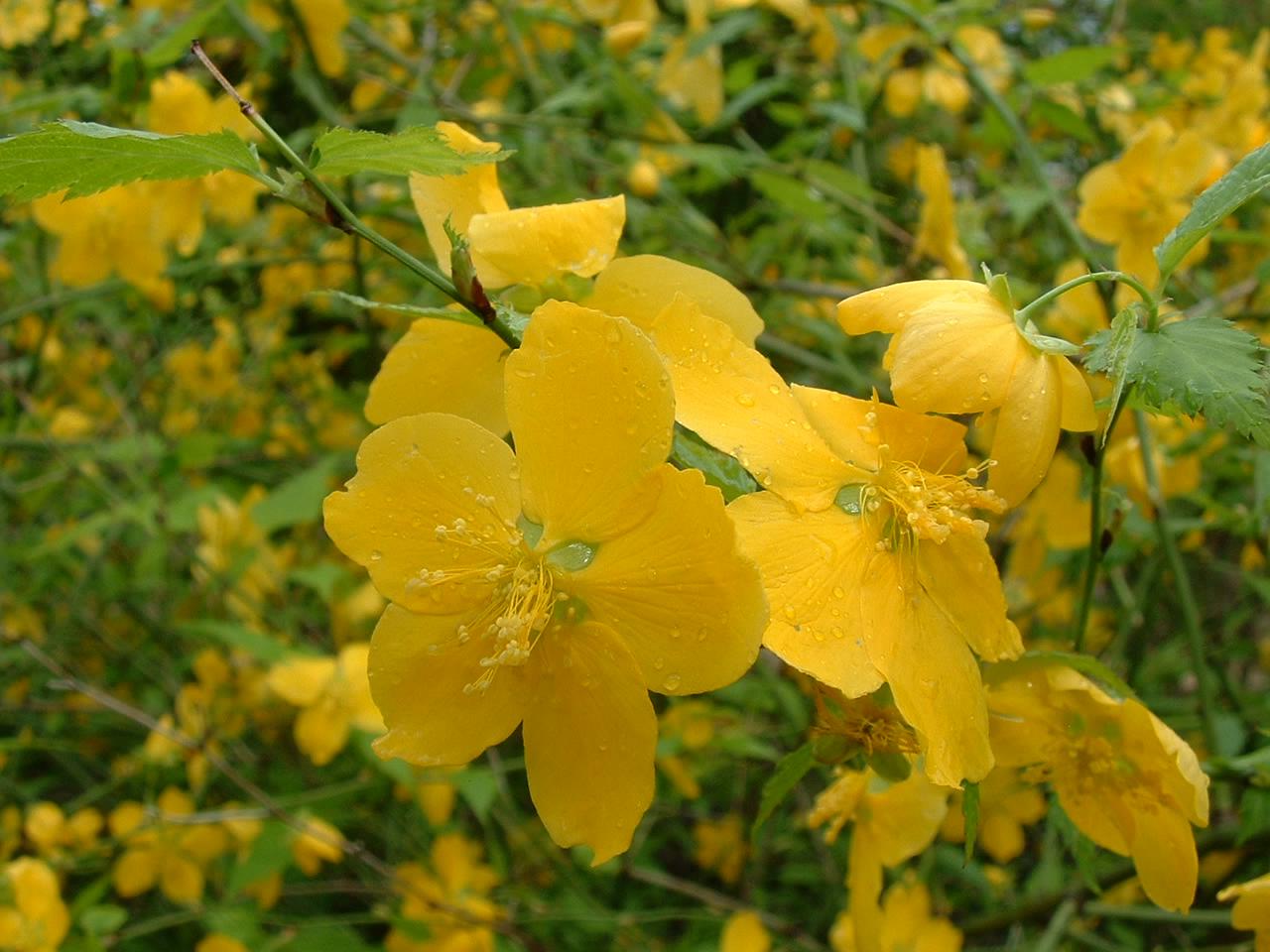
Kerria japonica is a deciduous shrub that can reach between 1 and 3 meters tall. Its slender, arching stems often lean over rocks or other plants. The leaves are simple, with sharply toothed edges, and grow alternately along the stems. In spring, the plant produces golden yellow flowers with five petals, spaced along the fresh green branches. The fruit is a small, dry seed case.
Where does Kerria japonica come from?
This plant is found in the wild on mountain slopes in China and Japan, where it forms thickets. It is the only species in its genus, named after William Kerr, a Scottish gardener who introduced a double-flowered variety to Europe. The plant has been grown in gardens for its bright flowers and has several names in different regions, reflecting its spread and popularity.
When and how Kerria japonica blooms
Kerria japonica blooms in spring, showing its yellow flowers before many other shrubs. It prefers some shade to keep its flower color rich and is usually pruned after flowering. Gardeners grow it from cuttings or by dividing established plants. The double-flowered 'Pleniflora' and 'Golden guinea' are popular cultivated forms.


How Kerria japonica is used
People plant Kerria japonica mainly for its cheerful spring flowers in gardens and parks. In China, parts of the plant are used in traditional remedies, such as decoctions for coughs and certain women's health issues. Its bright color and form have also made it a subject in poetry and art, especially in Japan.
Kinds of Kerria japonica
The best-known garden forms are 'Pleniflora', which has many petals and is called bachelor's buttons, and 'Golden guinea', both recognized for their ornamental value. The plant is sometimes called Yellow Rose of Texas in the southern United States, though it is not related to true roses.
What Kerria japonica means
Kerria japonica appears often in Japanese poetry, including the ancient Man'yōshū collection. Its yellow color inspired the Japanese term yamabuki-iro, used for a shade between orange and yellow. In China, the plant was praised by Qing Dynasty writers. Its cultural role is tied to both its beauty and its seasonal bloom.
Questions people ask about Kerria japonica
Where does Kerria japonica come from?
Kerria japonica grows wild on mountain slopes in China and Japan and has been introduced to gardens in many other places.
What does the flower look like?
It has bright yellow, five-petaled flowers that appear along green branches in spring. Some cultivated types have many petals.
Is Kerria japonica related to true roses?
Although it belongs to the rose family, Kerria japonica is not a true rose. It is the only species in its genus.
How is Kerria japonica used?
It is mainly grown for its spring flowers in gardens. In China, it has also been used in traditional medicine.
What does Kerria japonica symbolize?
In Japan, its golden color is celebrated in poetry and has given its name to a shade of yellow called yamabuki-iro.
Good reading and sources
- Kerria twig and leaf blight: Causes & ControlRoyal Horticultural Society, Article
- USDA Plants DatabaseUS Department of Agriculture, Article
- Plants of the World OnlineRoyal Botanic Gardens, Kew, Plant database
- Where it has been recordedGBIF, Plant database
- Sightings and photos by naturalistsiNaturalist, Plant database
- Kerria japonica on WikipediaEncyclopedia
- More photos on Wikimedia CommonsPhotos
- Wikidata recordOpen data
The facts on this page come from the Wikipedia article "Kerria japonica", written by its contributors and used under the CC BY-SA 4.0 licence, and from its Wikidata record (CC0). Phool rewrote the text in its own words, with AI assistance, and compares every page with the article to make sure no passage is copied. It may be reused under the same CC BY-SA 4.0 licence with a link back.
It may contain mistakes. It is not medical or foraging advice: many flowers are poisonous, and traditional uses are reported, not recommended. If something is wrong, tell us. Last refreshed 2026-10-03.
Others in the family Rosaceae
The whole family RoseRosa
Woody perennial plants with showy, often fragrant flowers in many colours
Rosa · Wildflower
RoseRosa
Woody perennial plants with showy, often fragrant flowers in many colours
Rosa · Wildflower
 AlmondPrunus amygdalus
A Mediterranean tree grown for its fragrant spring flowers and edible seeds
🇮🇷 Iran and 6 more · Flowering tree
AlmondPrunus amygdalus
A Mediterranean tree grown for its fragrant spring flowers and edible seeds
🇮🇷 Iran and 6 more · Flowering tree
 ApricotPrunus armeniaca
A small fruit tree with early white to pink blossoms and golden-orange fruit
🇨🇳 China and 6 more · Flowering tree
ApricotPrunus armeniaca
A small fruit tree with early white to pink blossoms and golden-orange fruit
🇨🇳 China and 6 more · Flowering tree
 Wild cherryPrunus avium
A tall flowering tree native to Europe, grown for its sweet fruit and spring blossom
🇮🇹 Italy and 6 more · Flowering tree
Wild cherryPrunus avium
A tall flowering tree native to Europe, grown for its sweet fruit and spring blossom
🇮🇹 Italy and 6 more · Flowering tree
More from China
All the flowers of China PeachPrunus persica
A flowering fruit tree from China, grown for its pink blossoms and sweet fruit
🇨🇳 China and 7 more · Flowering tree
PeachPrunus persica
A flowering fruit tree from China, grown for its pink blossoms and sweet fruit
🇨🇳 China and 7 more · Flowering tree
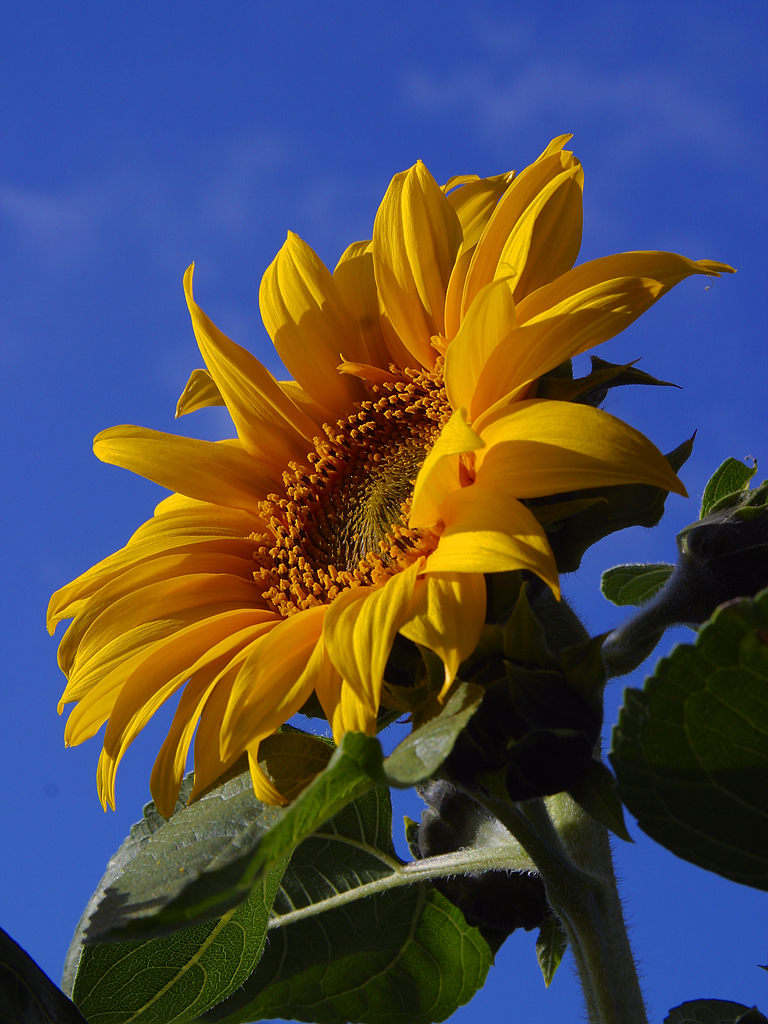 Common sunflowerHelianthus annuus
A tall annual plant grown for its large yellow flower heads and edible seeds
🇨🇦 Canada and 4 more · Wildflower
Common sunflowerHelianthus annuus
A tall annual plant grown for its large yellow flower heads and edible seeds
🇨🇦 Canada and 4 more · Wildflower
 PomegranatePunica granatum
A shrub with bright red flowers and a fruit full of edible seeds
🇮🇷 Iran and 9 more · Flowering shrub
PomegranatePunica granatum
A shrub with bright red flowers and a fruit full of edible seeds
🇮🇷 Iran and 9 more · Flowering shrub
 BirchBetula
Slender trees with papery bark found across the northern world
🇨🇳 China and 7 more · Wildflower
BirchBetula
Slender trees with papery bark found across the northern world
🇨🇳 China and 7 more · Wildflower