
Lilium bosniacum
In its own language: zlatni ljiljan
A yellow to orange wild lily native to Bosnia and Herzegovina
Lilium bosniacum is a wild lily found in Bosnia and Herzegovina, known locally as the golden lily. Its nodding, fragrant flowers are yellow to orange and have a waxy, Turk's cap shape. The flower is a national symbol and appears in many Bosnian emblems and flags.
- Native to Bosnia and Herzegovina
- Yellow to orange, fragrant, nodding flowers
- Symbol of medieval and modern Bosnian identity
- Featured on the national flag from 1992 to 1998
What does Lilium bosniacum look like?
Lilium bosniacum grows from an ovoid yellowish bulb about 6–7 cm across. Its stem can reach 30 to 90 cm tall and is lined with narrow, lance-shaped leaves that curve upwards at the tips and have slightly hairy edges. The plant produces one to six nodding, fragrant flowers in a cluster. Each flower is about 6 cm wide, with strongly curled petals forming a Turk's cap shape and a wax-like surface. The color ranges from yellow to orange and the flowers do not have spots.
Where does Lilium bosniacum come from?
This lily is native to Bosnia and Herzegovina. It has been the subject of much botanical debate, sometimes considered a separate species and other times grouped with related lilies like Lilium carniolicum. DNA studies show that this group is polyphyletic, meaning its members do not all share a single common ancestor. The species was formally described in 1909.
When and how Lilium bosniacum blooms
Lilium bosniacum blooms around July. It grows from bulbs and prefers the climate and soils found in its native region. The seeds have delayed hypogeal germination, meaning they sprout underground after a period of dormancy. The plant is found in the wild and is not widely cultivated outside its home range.

How Lilium bosniacum is used
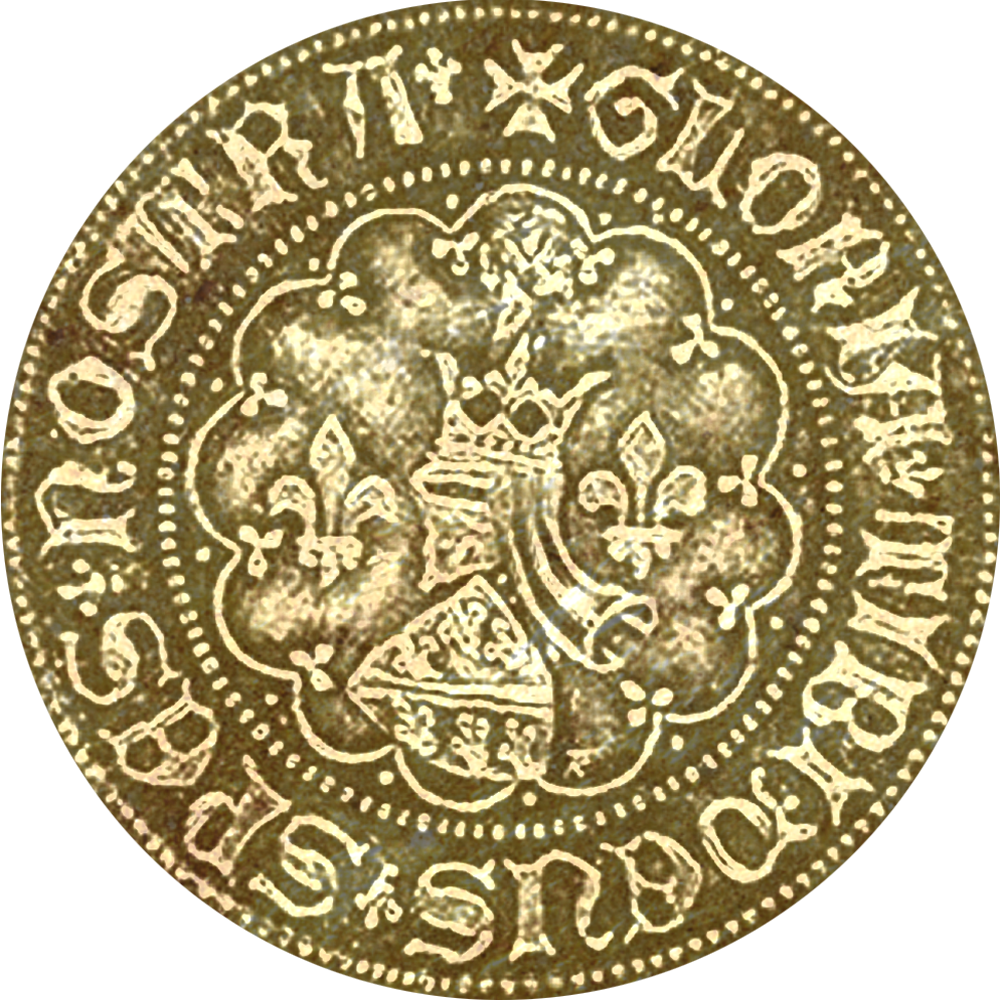
The golden lily is best known as a symbol rather than for garden or decorative use. It appears in national and regional emblems, especially as the fleur-de-lis in Bosnian heraldry. The flower was part of the national flag and coat of arms of Bosnia and Herzegovina in the 1990s and is still used in various official and cultural symbols.
Kinds of Lilium bosniacum
Lilium bosniacum has been considered both a distinct species and a variety of Lilium carniolicum. It is closely related to other Balkan lilies such as Lilium albanicum and Lilium jankae, but genetic studies show these lilies are not all closely related. The main distinguishing feature is its yellow to orange, spot-free flowers.
What Lilium bosniacum means
The golden lily is a powerful symbol in Bosnia and Herzegovina. It was the emblem of the medieval House of Kotromanić and later became a national symbol, especially during the 1990s. The fleur-de-lis, inspired by this flower, appears in many flags and coats of arms across the country and is associated with Bosniak identity.
Questions people ask about Lilium bosniacum
Where does Lilium bosniacum come from?
Lilium bosniacum is native to Bosnia and Herzegovina, where it grows wild. It is not widely found outside this region.
What does the golden lily look like?
It has nodding, fragrant flowers with strongly curled yellow to orange petals and a waxy texture. The plant grows up to 90 cm tall.
What is Lilium bosniacum used for?
The golden lily is mainly used as a national and cultural symbol in Bosnia and Herzegovina, appearing in flags and emblems.
What does the golden lily symbolise?
It symbolises Bosnian identity and heritage, especially for the Bosniak people. It was the emblem of the medieval Bosnian kingdom.
Good reading and sources
- Plants of the World OnlineRoyal Botanic Gardens, Kew, Plant database
- Where it has been recordedGBIF, Plant database
- Sightings and photos by naturalistsiNaturalist, Plant database
- Lilium bosniacum on WikipediaEncyclopedia
- More photos on Wikimedia CommonsPhotos
- Wikidata recordOpen data
The facts on this page come from the Wikipedia article "Lilium bosniacum", written by its contributors and used under the CC BY-SA 4.0 licence, and from its Wikidata record (CC0). Phool rewrote the text in its own words, with AI assistance, and compares every page with the article to make sure no passage is copied. It may be reused under the same CC BY-SA 4.0 licence with a link back.
It may contain mistakes. It is not medical or foraging advice: many flowers are poisonous, and traditional uses are reported, not recommended. If something is wrong, tell us. Last refreshed 2026-10-03.
Others in the family Liliaceae
The whole family TulipTulipa
Spring-blooming bulbs with showy, cup-shaped flowers in many colours
🇳🇱 Netherlands and 7 more · Wildflower
TulipTulipa
Spring-blooming bulbs with showy, cup-shaped flowers in many colours
🇳🇱 Netherlands and 7 more · Wildflower
 LilyLilium
Tall bulb flowers with large, colourful blooms in many gardens and cultures
Lilium · Wildflower
LilyLilium
Tall bulb flowers with large, colourful blooms in many gardens and cultures
Lilium · Wildflower
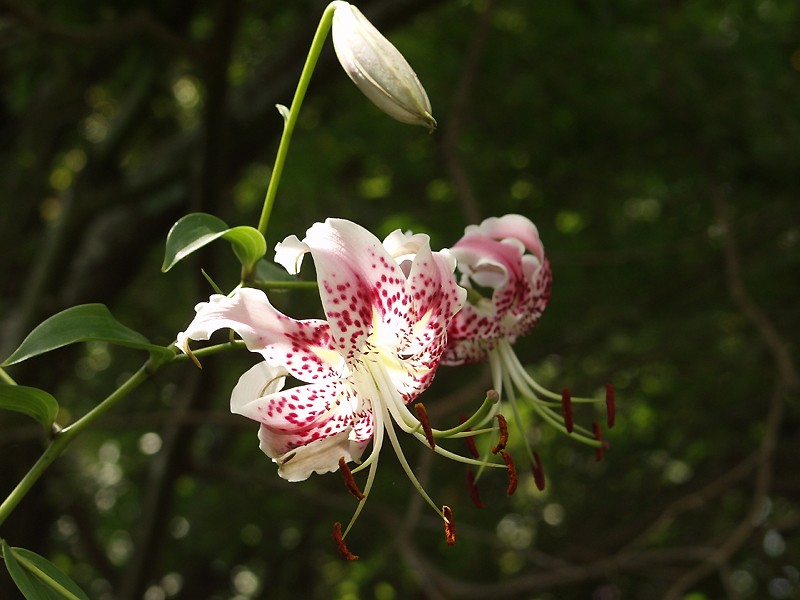 Lilium speciosum
A late-summer lily with fragrant white to pink flowers from East Asia
🇯🇵 Japan and 2 more · Wildflower
Lilium speciosum
A late-summer lily with fragrant white to pink flowers from East Asia
🇯🇵 Japan and 2 more · Wildflower
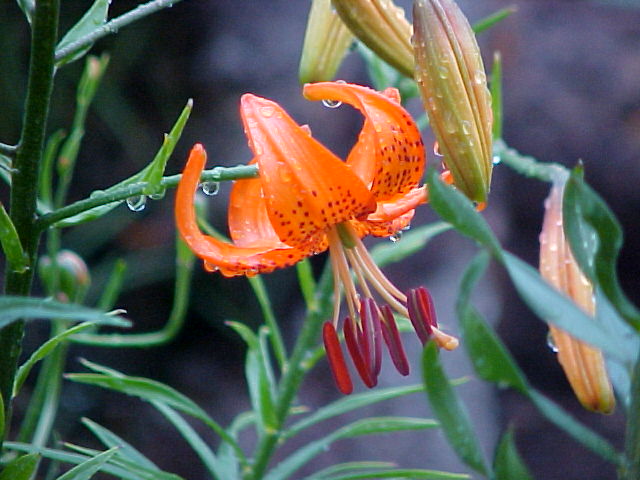 Lilium davidii
A tall Asian lily with edible bulbs and orange recurved flowers
🇨🇳 China and 1 more · Wildflower
Lilium davidii
A tall Asian lily with edible bulbs and orange recurved flowers
🇨🇳 China and 1 more · Wildflower
More from Bosnia and Herzegovina
All the flowers of Bosnia and Herzegovina Colchicum hungaricum
A rare early-spring flower of limestone slopes in Hungary and the Balkans
🇭🇺 Hungary and 5 more · Wildflower
Colchicum hungaricum
A rare early-spring flower of limestone slopes in Hungary and the Balkans
🇭🇺 Hungary and 5 more · Wildflower
 Illyrian irisIris pallida subsp. illyrica
A Balkan iris once valued for perfume and folk remedies
🇸🇮 Slovenia and 7 more · Wildflower
Illyrian irisIris pallida subsp. illyrica
A Balkan iris once valued for perfume and folk remedies
🇸🇮 Slovenia and 7 more · Wildflower
 SnowdropGalanthus nivalis
The small white bell-shaped flower that blooms in late winter
🇦🇱 Albania and 7 more · Bulb flower
SnowdropGalanthus nivalis
The small white bell-shaped flower that blooms in late winter
🇦🇱 Albania and 7 more · Bulb flower
 Decoration
Nowruzنوروز
Spring New Year festival marked by fire, greenery, and festive gatherings
🇮🇷 Iran and 9 more · Custom, March
Decoration
Nowruzنوروز
Spring New Year festival marked by fire, greenery, and festive gatherings
🇮🇷 Iran and 9 more · Custom, March