
Illyrian iris
Iris pallida subsp. illyrica, family Iridaceae
A Balkan iris once valued for perfume and folk remedies
The Illyrian iris is a flowering plant from the iris family, found across the Balkans. It grows up to 40 cm tall and blooms in late spring, with a history of use in ancient medicine and perfumery.
- Native to the Balkan Peninsula, especially Illyria
- Blooms in May and June
- Grows up to 40 cm tall
- Used by Illyrians and Romans for traditional remedies
- Sometimes classified as a subspecies of Iris pallida
What does Illyrian iris look like?
This iris reaches about 40 cm in height and grows from a perennial rootstock. Its leaves are narrow and upright, typical of many irises. The flowers appear in late spring, though the sources do not describe their exact colour or scent. The plant is suited to sunny spots with well-drained, fertile soil and is often seen in borders or rock gardens.
Where does Illyrian iris come from?
The Illyrian iris is native to the Balkan Peninsula, especially the lands once known as Illyria. Today it grows wild in countries such as Slovenia, Croatia, Albania, Kosovo, Bosnia and Herzegovina, Montenegro, Serbia, and North Macedonia. Its name comes from this ancient region. Botanists have debated its classification, sometimes listing it as a subspecies of Iris pallida or as a synonym.
When and how Illyrian iris blooms
Flowering takes place in May and June. The plant prefers full sun and soil that is dry to moderately moist and fertile. It is typically grown in borders or rock gardens. Seed production is rare, with only about ten seeds maturing in autumn. Most plants are propagated by dividing the rootstock.
How Illyrian iris is used
In ancient times, the Illyrian iris was valued for its medicinal properties. The Illyrians and Romans used it to treat boils, headaches, and as an anti-perspirant. It was also believed to have abortive effects. Parts of the plant were used in making perfumes.
Kinds of Illyrian iris
There is ongoing discussion among botanists about its status. Some treat it as a distinct species, while others consider it a subspecies or synonym of the Dalmatian iris (Iris pallida).
What Illyrian iris means
The plant’s historical uses in medicine and perfumery link it to the traditions of the Illyrians and Romans. While not tied to any particular festival or symbol, its role in ancient remedies and its regional identity give it cultural significance in the Balkans.
Where Illyrian iris is used and seen
 BouquetA creative arrangement of flowers, given or displayed for many occasions
 The Daffodil FestivalPierce County’s spring parade and daffodil celebration since 1934
 Hakone Botanical Garden of WetlandsA garden of wetland and alpine plants in Hakone, Japan
 Parc floral de ParisA botanical garden and flower park in the Bois de Vincennes, Paris
 Parc Floral de la SourceA large public garden in Orléans built around the source of the Loiret river
 KeukenhofA vast Dutch flower garden famous for its spring tulip displays
 KanzashiTraditional Japanese hair ornaments, often crafted as folded silk flowers
 HanafudaJapanese playing cards with flower designs used for traditional games
Questions people ask about Illyrian iris
Where does the Illyrian iris come from?
This iris is native to the Balkan Peninsula, especially the area once called Illyria. It grows wild in countries such as Slovenia, Croatia, Albania, Kosovo, Bosnia and Herzegovina, Montenegro, Serbia, and North Macedonia.
What was the Illyrian iris used for?
People in ancient Illyria and Rome used this plant for treating boils, headaches, and as an anti-perspirant. It was also believed to have abortive properties and was used in making perfumes.
What does the Illyrian iris look like?
It is a perennial plant that grows up to 40 cm tall. The leaves are narrow and upright, and it blooms in late spring. The sources do not specify the flower’s colour.
How is the Illyrian iris classified?
Botanists have not reached a consensus. Some consider it a subspecies of Iris pallida, while others see it as a separate species or a synonym.
Good reading and sources
- Plants of the World OnlineRoyal Botanic Gardens, Kew, Plant database
- Where it has been recordedGBIF, Plant database
- Iris illyrica on WikipediaEncyclopedia
- More photos on Wikimedia CommonsPhotos
- Wikidata recordOpen data
The facts on this page come from the Wikipedia article "Iris illyrica", written by its contributors and used under the CC BY-SA 4.0 licence, and from its Wikidata record (CC0). Phool rewrote the text in its own words, with AI assistance, and compares every page with the article to make sure no passage is copied. It may be reused under the same CC BY-SA 4.0 licence with a link back.
It may contain mistakes. It is not medical or foraging advice: many flowers are poisonous, and traditional uses are reported, not recommended. If something is wrong, tell us. Last refreshed 2026-10-03.
Others in the family Iridaceae
The whole family Gladiolus
Tall, showy flower spikes grown from corms, known as sword lilies
Gladiolus · Garden flower
Gladiolus
Tall, showy flower spikes grown from corms, known as sword lilies
Gladiolus · Garden flower
 Iris
A large group of perennial flowers with striking, six-lobed blooms
Iris · Wildflower
Iris
A large group of perennial flowers with striking, six-lobed blooms
Iris · Wildflower
 Crocus
Small corm-grown flowers in white, yellow, orange or purple
🇹🇷 Turkey and 7 more · Wildflower
Crocus
Small corm-grown flowers in white, yellow, orange or purple
🇹🇷 Turkey and 7 more · Wildflower
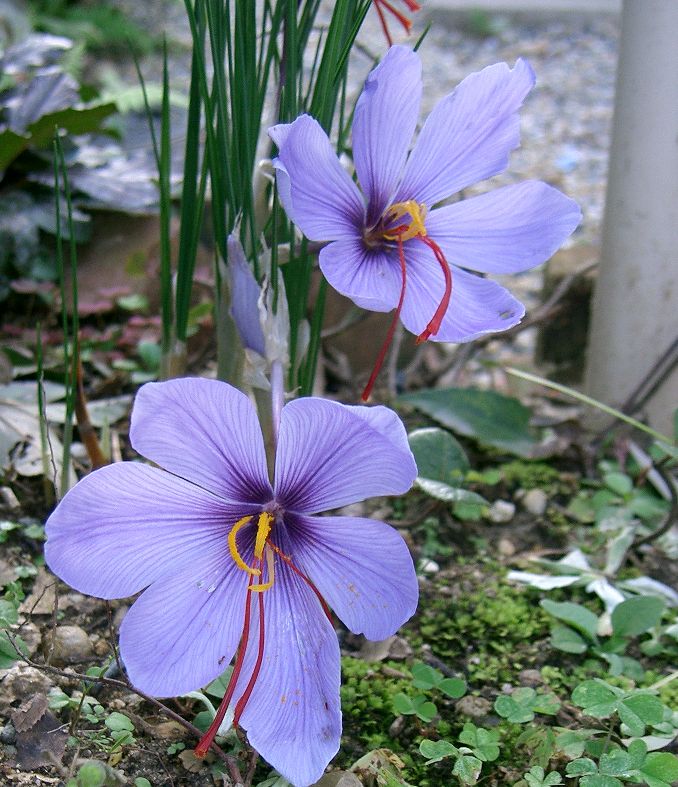 Saffron crocusCrocus sativus
The purple autumn flower whose red stigmas yield the spice saffron
🇨🇳 China and 1 more · Garden flower
Saffron crocusCrocus sativus
The purple autumn flower whose red stigmas yield the spice saffron
🇨🇳 China and 1 more · Garden flower
More from Slovenia
All the flowers of Slovenia Dog roseRosa canina
A wild climbing rose with pale pink flowers and bright red hips
🇮🇪 Ireland and 7 more · Wildflower
Dog roseRosa canina
A wild climbing rose with pale pink flowers and bright red hips
🇮🇪 Ireland and 7 more · Wildflower
 CarnationDianthus caryophyllus
A fragrant flower with ruffled petals, grown worldwide for decoration and meaning
🇨🇳 China and 7 more · Garden flower
CarnationDianthus caryophyllus
A fragrant flower with ruffled petals, grown worldwide for decoration and meaning
🇨🇳 China and 7 more · Garden flower
 EdelweissLeontopodium nivale
A woolly white star-shaped flower of the European mountains
🇦🇹 Austria and 5 more · Wildflower
EdelweissLeontopodium nivale
A woolly white star-shaped flower of the European mountains
🇦🇹 Austria and 5 more · Wildflower
 Small-leaved LimeTilia cordata
A tall, fragrant-flowered tree native to much of Europe
🇨🇿 Czech Republic and 6 more · Flowering tree
Small-leaved LimeTilia cordata
A tall, fragrant-flowered tree native to much of Europe
🇨🇿 Czech Republic and 6 more · Flowering tree