
Orange lily
Lilium bulbiferum, family Liliaceae
A bright orange European lily with spotted flowers and stem bulbils
The orange lily is a perennial plant native to Europe, known for its vivid yellow-orange, spotted blooms. It grows in mountain meadows and hillsides, and produces small bulbs along its stem. The plant is scentless and can be found from Spain to Ukraine. It is toxic to cats and holds cultural meaning in Northern Ireland.
- Produces bright orange, spotted flowers in late spring and early summer
- Forms small bulbils along its stem for easy propagation
- Native to mountain meadows and hillsides across much of Europe
- Highly toxic to cats if ingested or if pollen is licked from fur
What does Orange lily look like?
The orange lily grows from an underground bulb and stands between 20 and 90 cm tall, sometimes reaching up to 120 cm. Its leaves are narrow and pointed, and the upright stem holds one to five flowers. Each flower is bright yellow-orange with reddish-brown spots, about 4–6 cm long, and has six upright petals. The flowers are scentless, and the plant produces small bulbs along the stem in some varieties.
Where does Orange lily come from?
This lily is native to a wide stretch of Europe, from Spain through Finland and Ukraine. It thrives in sunny, grassy places on hillsides and in mountain meadows, often where the soil contains lime. The species name 'bulbiferum' refers to the plant’s habit of forming extra bulbs on its stem, which help it spread. Over time, local forms have been described in regions like the Maritime Alps and near Naples.
When and how Orange lily blooms
The orange lily flowers from May to July. It prefers warm, sunny spots and can grow in both calcareous and slightly acidic soils, often at elevations between 500 and 1,900 meters. The plant can be propagated by collecting the small stem bulbs, called bulbils, which fall to the ground and mature over a few years. These bulbils can also be removed by hand and planted elsewhere.


How Orange lily is used
People grow the orange lily in gardens for its striking flowers. It is also used as a symbol in Northern Ireland. However, the plant is highly toxic to cats, and even small amounts can be fatal if ingested or if pollen is licked from their fur. Caution is advised in homes and gardens with cats.
Kinds of Orange lily
There are two main forms: one in western Europe (var. croceum) and one in the east (var. bulbiferum), with the eastern type always producing stem bulbils. Smaller plants from the Maritime Alps and larger ones from near Naples are now seen as local forms of the western variety.
What Orange lily means
The orange lily carries symbolic meaning in Northern Ireland, where it is associated with the Orange Order. Its bright color and bold appearance have made it a recognizable emblem in that context. The plant’s toxicity to cats is also well known, making it a plant to avoid for pet owners.
Questions people ask about Orange lily
Where does the orange lily come from?
The orange lily is native to a broad area of Europe, stretching from Spain to Finland and Ukraine. It grows wild in mountain meadows and on hillsides, often in sunny spots with calcareous or slightly acidic soil.
What does the orange lily look like?
This plant has upright stems with narrow, pointed leaves and produces one to five bright yellow-orange flowers with reddish-brown spots. The flowers are about 4–6 cm long and have six upright petals. Some plants also grow small bulbs along their stems.
Is the orange lily dangerous to pets?
Yes, the orange lily is extremely toxic to cats. Even a small amount of pollen or plant material can be fatal if ingested, so it should not be kept in homes or gardens where cats are present.
How is the orange lily used in culture?
The orange lily is used as a symbol in Northern Ireland, where it is associated with the Orange Order. Its bright flowers make it a notable emblem in that context.
How does the orange lily spread in the wild?
The plant produces small bulbils along its upper stem, especially in the eastern variety. These bulbils drop to the ground and grow into new plants over a few years, helping the lily spread in its natural habitat.
Good reading and sources
- USDA Plants DatabaseUS Department of Agriculture, Article
- Plants of the World OnlineRoyal Botanic Gardens, Kew, Plant database
- Where it has been recordedGBIF, Plant database
- Sightings and photos by naturalistsiNaturalist, Plant database
- Lilium bulbiferum on WikipediaEncyclopedia
- More photos on Wikimedia CommonsPhotos
- Wikidata recordOpen data
The facts on this page come from the Wikipedia article "Lilium bulbiferum", written by its contributors and used under the CC BY-SA 4.0 licence, and from its Wikidata record (CC0). Phool rewrote the text in its own words, with AI assistance, and compares every page with the article to make sure no passage is copied. It may be reused under the same CC BY-SA 4.0 licence with a link back.
It may contain mistakes. It is not medical or foraging advice: many flowers are poisonous, and traditional uses are reported, not recommended. If something is wrong, tell us. Last refreshed 2026-10-03.
Others in the family Liliaceae
The whole family TulipTulipa
Spring-blooming bulbs with showy, cup-shaped flowers in many colours
🇳🇱 Netherlands and 7 more · Wildflower
TulipTulipa
Spring-blooming bulbs with showy, cup-shaped flowers in many colours
🇳🇱 Netherlands and 7 more · Wildflower
 LilyLilium
Tall bulb flowers with large, colourful blooms in many gardens and cultures
Lilium · Wildflower
LilyLilium
Tall bulb flowers with large, colourful blooms in many gardens and cultures
Lilium · Wildflower
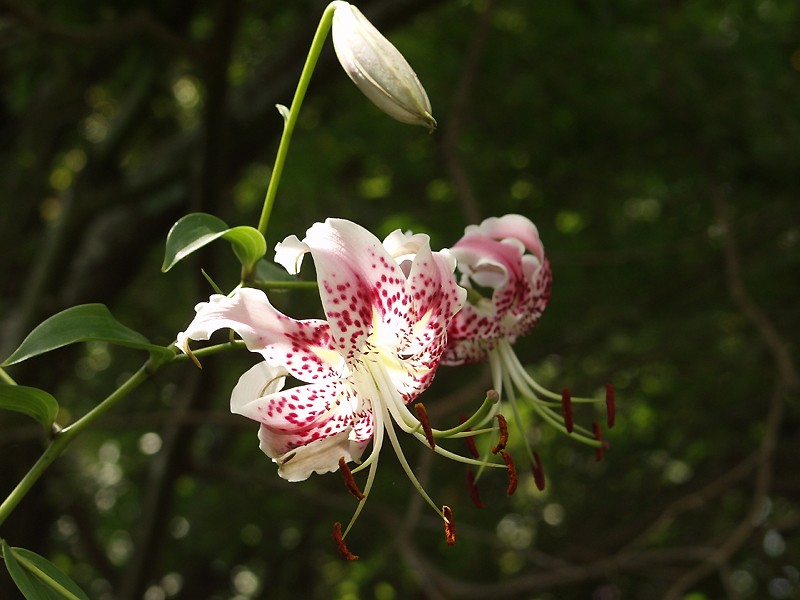 Lilium speciosum
A late-summer lily with fragrant white to pink flowers from East Asia
🇯🇵 Japan and 2 more · Wildflower
Lilium speciosum
A late-summer lily with fragrant white to pink flowers from East Asia
🇯🇵 Japan and 2 more · Wildflower
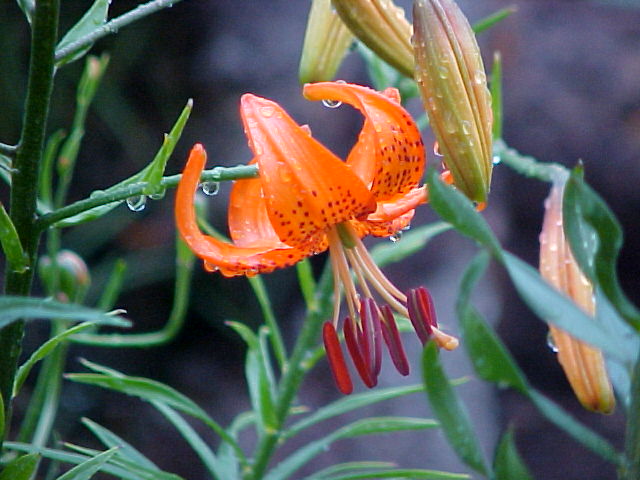 Lilium davidii
A tall Asian lily with edible bulbs and orange recurved flowers
🇨🇳 China and 1 more · Wildflower
Lilium davidii
A tall Asian lily with edible bulbs and orange recurved flowers
🇨🇳 China and 1 more · Wildflower
More from Spain
All the flowers of Spain PeachPrunus persica
A flowering fruit tree from China, grown for its pink blossoms and sweet fruit
🇨🇳 China and 7 more · Flowering tree
PeachPrunus persica
A flowering fruit tree from China, grown for its pink blossoms and sweet fruit
🇨🇳 China and 7 more · Flowering tree
 AlmondPrunus amygdalus
A Mediterranean tree grown for its fragrant spring flowers and edible seeds
🇮🇷 Iran and 6 more · Flowering tree
AlmondPrunus amygdalus
A Mediterranean tree grown for its fragrant spring flowers and edible seeds
🇮🇷 Iran and 6 more · Flowering tree
 ApricotPrunus armeniaca
A small fruit tree with early white to pink blossoms and golden-orange fruit
🇨🇳 China and 6 more · Flowering tree
ApricotPrunus armeniaca
A small fruit tree with early white to pink blossoms and golden-orange fruit
🇨🇳 China and 6 more · Flowering tree
 RosemarySalvia rosmarinus
A fragrant evergreen shrub with needle-like leaves and purple, blue, or white flowers
🇪🇸 Spain and 5 more · Flowering shrub
RosemarySalvia rosmarinus
A fragrant evergreen shrub with needle-like leaves and purple, blue, or white flowers
🇪🇸 Spain and 5 more · Flowering shrub