
Lilium pyrenaicum
A mountain lily with yellow to red Turk's-cap flowers and a musky scent
Lilium pyrenaicum is a tall lily from the mountains of the Pyrenees and east to the Caucasus. It grows up to 1.3 metres, with up to 12 nodding, strongly recurved flowers in yellow, orange, or red, and gives off a musky scent that some find unpleasant.
- Native to the Pyrenees and the Caucasus mountains
- Flowers are yellow, orange, or red and strongly recurved
- Grows up to 1.3 metres tall
- Has a strong musky scent, sometimes considered unpleasant
What does Lilium pyrenaicum look like?
Lilium pyrenaicum is a perennial lily that can reach up to 1.3 metres in height. Its flowers are shaped like a Turk's-cap, meaning the petals curve sharply back towards the stem. Each plant can carry up to 12 flowers, which hang down and come in shades of yellow, orange, or red. The flowers have a strong, musky scent that some people find unpleasant.
Where does Lilium pyrenaicum come from?
This lily is native to the montane regions of the Pyrenees, mainly in Spain, and its range extends eastwards into the Caucasus. It grows wild in these mountainous areas. The plant has been known and described in European botanical works, and its common names reflect both its region and the shape of its flowers.
When and how Lilium pyrenaicum blooms
Lilium pyrenaicum grows from a bulb and is adapted to mountain climates. It thrives in the wild in upland areas, where it can take advantage of cool, well-drained soils. The plant produces its tall stems and flowers during the growing season, with each bulb able to send up a stem bearing multiple flowers.

How Lilium pyrenaicum is used
There are no specific uses mentioned in the sources for Lilium pyrenaicum. It is mainly noted for its presence in the wild and its distinctive flowers. The plant is of interest to botanists and gardeners who appreciate mountain species.
Kinds of Lilium pyrenaicum
The sources do not mention any named varieties or cultivars of Lilium pyrenaicum. Its main variation is in flower colour, which can range from yellow through orange to red.
What Lilium pyrenaicum means
Lilium pyrenaicum is known for its striking Turk's-cap flowers and is sometimes called the Pyrenean lily or yellow martagon lily. Its presence in the wild is notable in the Pyrenees and the Caucasus, but the sources do not mention any particular symbolism or cultural significance.
Questions people ask about Lilium pyrenaicum
Where does Lilium pyrenaicum come from?
Lilium pyrenaicum is native to the montane regions of the Pyrenees, mainly in Spain, and its range extends eastwards into the Caucasus.
What do the flowers of Lilium pyrenaicum look like?
The flowers are shaped like a Turk's-cap, with petals that curve sharply back. They hang down and come in yellow, orange, or red.
Does Lilium pyrenaicum have a scent?
Yes, the flowers have a strong musky scent, which some people find unpleasant.
How tall does Lilium pyrenaicum grow?
This lily can reach up to 1.3 metres in height and may bear up to 12 flowers on a single stem.
Is Lilium pyrenaicum used for anything special?
The sources do not mention any particular uses. It is mainly valued for its distinctive flowers and as a wild mountain species.
Good reading and sources
- Plants of the World OnlineRoyal Botanic Gardens, Kew, Plant database
- Where it has been recordedGBIF, Plant database
- Sightings and photos by naturalistsiNaturalist, Plant database
- Lilium pyrenaicum on WikipediaEncyclopedia
- More photos on Wikimedia CommonsPhotos
- Wikidata recordOpen data
The facts on this page come from the Wikipedia article "Lilium pyrenaicum", written by its contributors and used under the CC BY-SA 4.0 licence, and from its Wikidata record (CC0). Phool rewrote the text in its own words, with AI assistance, and compares every page with the article to make sure no passage is copied. It may be reused under the same CC BY-SA 4.0 licence with a link back.
It may contain mistakes. It is not medical or foraging advice: many flowers are poisonous, and traditional uses are reported, not recommended. If something is wrong, tell us. Last refreshed 2026-10-03.
Others in the family Liliaceae
The whole family TulipTulipa
Spring-blooming bulbs with showy, cup-shaped flowers in many colours
🇳🇱 Netherlands and 7 more · Wildflower
TulipTulipa
Spring-blooming bulbs with showy, cup-shaped flowers in many colours
🇳🇱 Netherlands and 7 more · Wildflower
 LilyLilium
Tall bulb flowers with large, colourful blooms in many gardens and cultures
Lilium · Wildflower
LilyLilium
Tall bulb flowers with large, colourful blooms in many gardens and cultures
Lilium · Wildflower
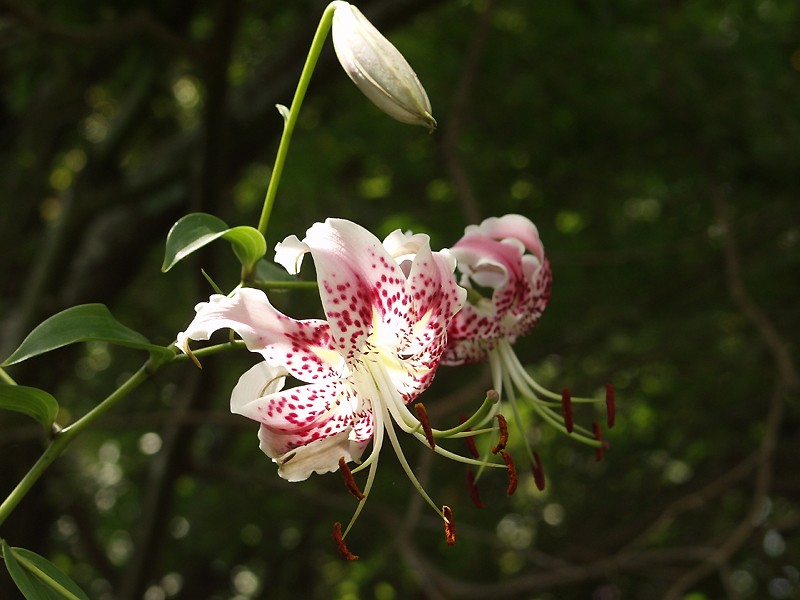 Lilium speciosum
A late-summer lily with fragrant white to pink flowers from East Asia
🇯🇵 Japan and 2 more · Wildflower
Lilium speciosum
A late-summer lily with fragrant white to pink flowers from East Asia
🇯🇵 Japan and 2 more · Wildflower
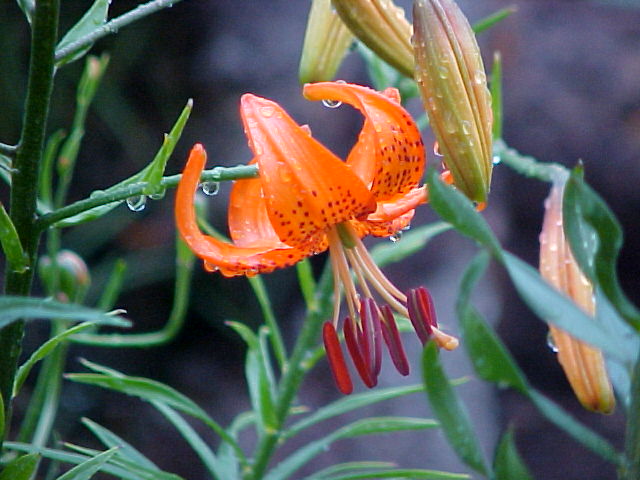 Lilium davidii
A tall Asian lily with edible bulbs and orange recurved flowers
🇨🇳 China and 1 more · Wildflower
Lilium davidii
A tall Asian lily with edible bulbs and orange recurved flowers
🇨🇳 China and 1 more · Wildflower
More from Spain
All the flowers of Spain AlmondPrunus amygdalus
A Mediterranean tree grown for its fragrant spring flowers and edible seeds
🇮🇷 Iran and 6 more · Flowering tree
AlmondPrunus amygdalus
A Mediterranean tree grown for its fragrant spring flowers and edible seeds
🇮🇷 Iran and 6 more · Flowering tree
 Narcissus
Spring-flowering bulbs with trumpet-shaped blooms in white, yellow, and orange
🇬🇧 United Kingdom and 7 more · Wildflower
Narcissus
Spring-flowering bulbs with trumpet-shaped blooms in white, yellow, and orange
🇬🇧 United Kingdom and 7 more · Wildflower
 HawthornCrataegus
A thorny shrub or tree with white or pink spring flowers and small edible fruits
🇮🇪 Ireland and 7 more · Wildflower
HawthornCrataegus
A thorny shrub or tree with white or pink spring flowers and small edible fruits
🇮🇪 Ireland and 7 more · Wildflower
 OleanderNerium oleander
A showy, evergreen shrub with clusters of pink, white or red flowers
🇲🇦 Morocco and 8 more · Flowering shrub
OleanderNerium oleander
A showy, evergreen shrub with clusters of pink, white or red flowers
🇲🇦 Morocco and 8 more · Flowering shrub