
Sweet alyssum
Lobularia maritima, family Brassicaceae
A low, honey-scented flower for gardens and coastal groundcover
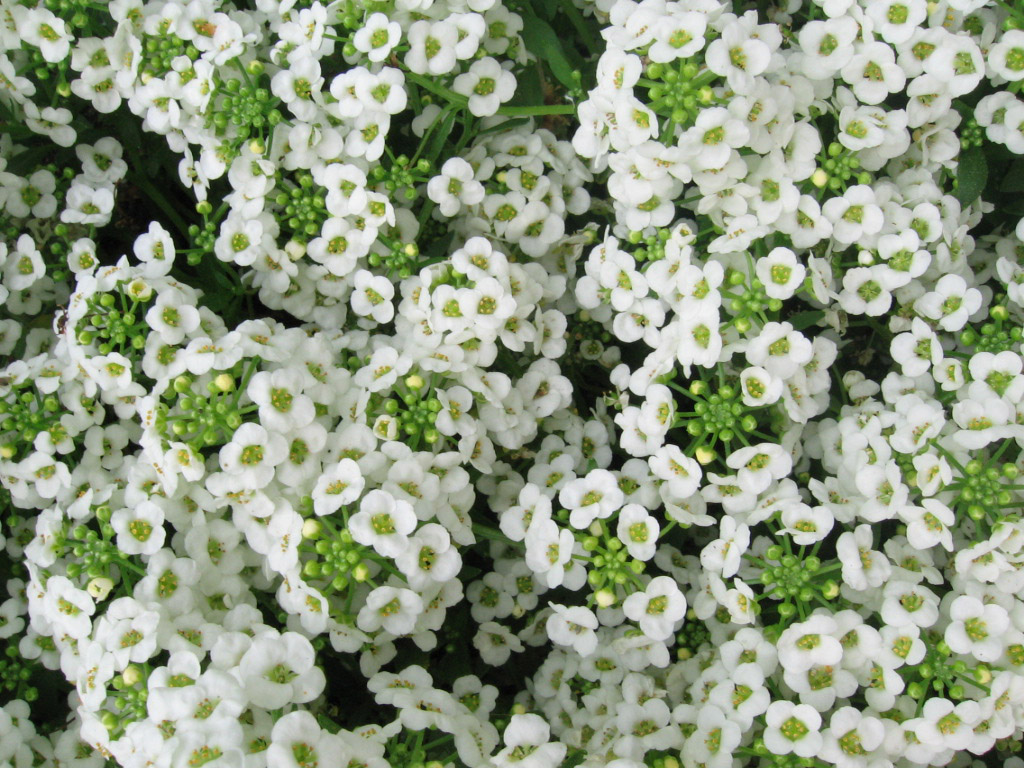
Sweet alyssum is a small, spreading plant with dense clusters of tiny, sweet-smelling flowers. Native to the Mediterranean and Macaronesia, it is now grown widely in gardens for its long-lasting blooms and groundcover use. Its flowers can be white, pink, purple, or yellow, and attract bees and butterflies.
- Flowers are sweet-scented and honey-like, attracting bees and butterflies
- Native to the Mediterranean and Macaronesia, now grown worldwide
- Blooms in white, pink, purple, yellow, lilac, and rose-red
- Used as groundcover and edible in salads or cooked dishes
What does Sweet alyssum look like?
Sweet alyssum is a low, spreading plant, usually 5 to 30 cm tall and up to 30 cm wide. Its stems branch out and carry clusters of small, sweet-scented flowers, each about 5 mm across. The blooms are most often white, but can also be pink, purple, yellow, lilac, or rose-red. The leaves are small, narrow, and hairy, and the plant gives off a honey-like fragrance that attracts bees and butterflies.
Where does Sweet alyssum come from?
Lobularia maritima comes from the Mediterranean Basin and the Macaronesia region, including the Canary Islands, Madeira, and Cape Verde. It often grows wild on sandy beaches, dunes, and rocky slopes, but has spread widely and now grows in temperate regions around the world. Its name refers to its small seedpods and its coastal habitat. There are local forms, such as an endemic subspecies in the Columbretes Islands.
When and how Sweet alyssum blooms
Sweet alyssum is usually planted in early spring. It thrives in partial shade and can grow in sandy or calcareous soils, even in cracks in paving or walls. The plant is drought- and heat-tolerant, and while usually grown as an annual, it can reseed itself in mild climates. Flowers appear throughout the growing season, or all year in frost-free areas. Trimming spent blooms encourages more flowers.



How Sweet alyssum is used
Gardeners use sweet alyssum as a groundcover, in borders, or to fill gaps in paving and walls. Its honey-scented flowers attract pollinators, making it useful in wildlife gardens. The petals, leaves, and young stems can be eaten raw or cooked. It is especially valued in coastal gardens for its resilience and long flowering period.
Kinds of Sweet alyssum
Many horticultural varieties exist, with flower colors ranging from white to purple and pink. Some cultivars have received awards for garden merit. Plants with darker flowers tend to perform better in cooler weather. There is also a unique subspecies native to the Columbretes Islands.
What Sweet alyssum means
Sweet alyssum is widely grown for its fragrance and ease of care. Its name comes from Greek, referencing its small pods and a historical belief in its use against rabies. It is not tied to any particular symbolism or religious use, but is popular in gardens worldwide for its long bloom and ability to attract pollinators.
Questions people ask about Sweet alyssum
Where does sweet alyssum come from?
Sweet alyssum is native to the Mediterranean Basin and Macaronesia, including the Canary Islands, Madeira, and Cape Verde. It has spread widely and now grows in temperate regions around the world.
What does sweet alyssum look and smell like?
It is a low, spreading plant with dense clusters of tiny flowers, usually white but also pink, purple, yellow, or lilac. The flowers have a strong, honey-like fragrance.
How is sweet alyssum used?
It is grown as a groundcover in gardens, in borders, and in cracks in paving or walls. The flowers attract pollinators, and the petals, leaves, and young stems can be eaten raw or cooked.
When does sweet alyssum flower?
It blooms throughout the growing season, from spring to autumn, and can flower year-round in areas without frost.
Does sweet alyssum have any symbolic or religious meaning?
There is no specific symbolism or religious use tied to sweet alyssum, but its name refers to historical beliefs about its medicinal use.
Good reading and sources
- Lobularia maritimaRoyal Horticultural Society, Article
- Plants of the World OnlineRoyal Botanic Gardens, Kew, Plant database
- Where it has been recordedGBIF, Plant database
- Sightings and photos by naturalistsiNaturalist, Plant database
- Lobularia maritima on WikipediaEncyclopedia
- More photos on Wikimedia CommonsPhotos
- Wikidata recordOpen data
The facts on this page come from the Wikipedia article "Lobularia maritima", written by its contributors and used under the CC BY-SA 4.0 licence, and from its Wikidata record (CC0). Phool rewrote the text in its own words, with AI assistance, and compares every page with the article to make sure no passage is copied. It may be reused under the same CC BY-SA 4.0 licence with a link back.
It may contain mistakes. It is not medical or foraging advice: many flowers are poisonous, and traditional uses are reported, not recommended. If something is wrong, tell us. Last refreshed 2026-10-03.
Others in the family Brassicaceae
The whole family RapeseedBrassica napus
A yellow-flowered crop grown for its oil-rich seeds and protein meal
🇨🇳 China and 7 more · Wildflower
RapeseedBrassica napus
A yellow-flowered crop grown for its oil-rich seeds and protein meal
🇨🇳 China and 7 more · Wildflower
 Brown mustardBrassica juncea
A leafy mustard plant grown for greens, seeds, and oil across Asia and beyond
🇨🇳 China and 7 more · Wildflower
Brown mustardBrassica juncea
A leafy mustard plant grown for greens, seeds, and oil across Asia and beyond
🇨🇳 China and 7 more · Wildflower
 Whitlow grassDraba
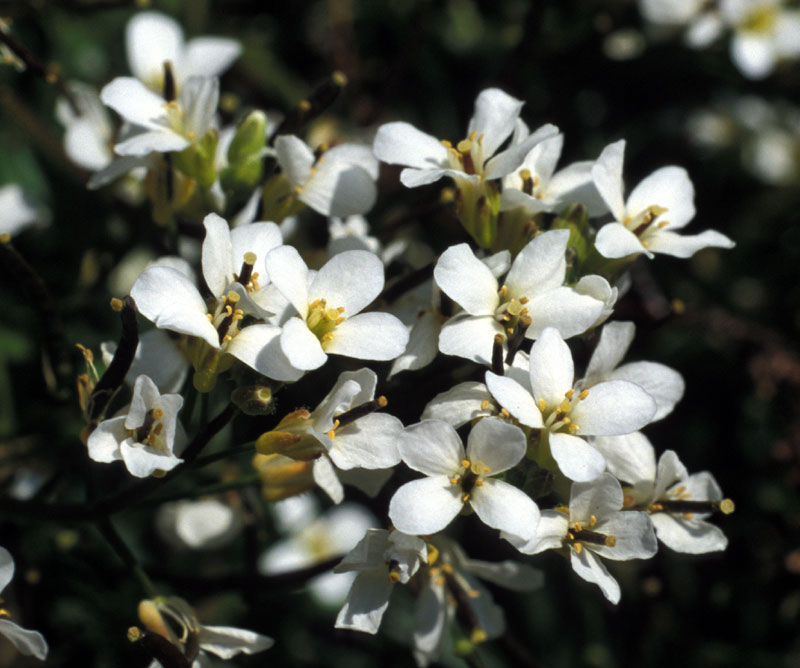
A large group of small flowering plants, not true grasses
Draba · Wildflower
Whitlow grassDraba
A large group of small flowering plants, not true grasses
Draba · Wildflower
 Sea kaleCrambe maritima
Salt-loving coastal plant with edible white-flowered shoots
🇬🇧 United Kingdom and 7 more · Wildflower
Sea kaleCrambe maritima
Salt-loving coastal plant with edible white-flowered shoots
🇬🇧 United Kingdom and 7 more · Wildflower

