
Malus
The genus of apples and crabapples with spring blossoms and autumn fruit
Malus is a group of small deciduous trees and shrubs in the rose family, known for apples and crabapples. Native to temperate regions of the Northern Hemisphere, these trees have showy spring flowers and bear fruit that ranges from sour wild apples to sweet cultivated varieties.
- Malus includes apples, crabapples, and wild apples
- Flowers are white, pink, or red and bloom in spring
- Fruit size ranges from small wild crabapples to large cultivated apples
- Crabapples are used as rootstocks and pollinizers in orchards
- Seeds contain cyanide compounds and are toxic if eaten
What does Malus look like?
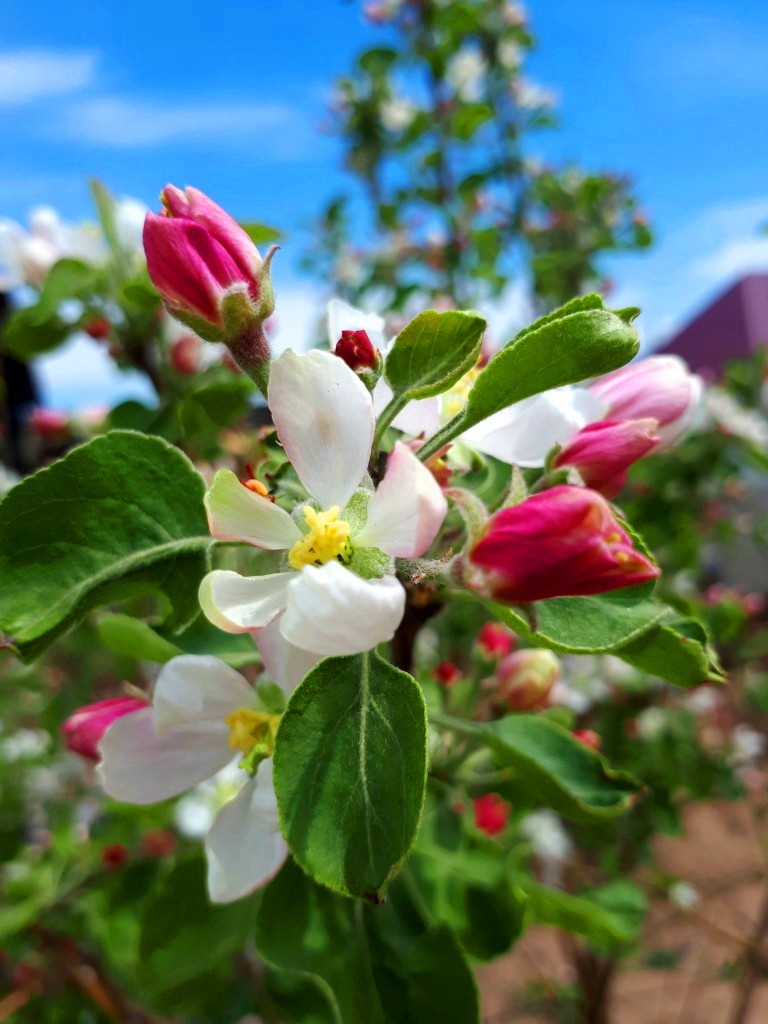
Malus trees are small to medium-sized, typically reaching 4 to 12 metres in height. They have a dense, twiggy crown and simple, serrated leaves. In spring, clusters of five-petalled flowers appear, ranging in colour from white to pink or red. The fruit, known as an apple or crabapple, is round and varies in size from small wild types to large cultivated apples. The seeds inside the fruit contain cyanide compounds.
Where does Malus come from?
Malus is native to the temperate regions of the Northern Hemisphere. Fossil records show the genus has existed since the Eocene, with ancient species found in North America, Russia, and China. Over time, Malus species have hybridized freely, leading to a wide variety of apples and crabapples. The domesticated apple, along with many wild and ornamental forms, all belong to this genus.
When and how Malus blooms
Malus trees bloom in spring, after accumulating enough warmth. Most species require cross-pollination by insects, especially bees, though some cultivars can self-pollinate. Crabapples are often grown as ornamental trees for their blossoms and persistent fruit, and are also used as rootstocks to improve cultivated apples. The trees thrive in temperate climates and are grown from seed or by grafting.


How Malus is used
Crabapples are valued for their spring flowers and colourful autumn fruit, making them popular in gardens and as bonsai. The fruit is usually too sour to eat raw but is used in jellies, as a condiment, and sometimes in cider. Crabapples are also used as pollinizers in apple orchards. The wood is prized for its slow-burning, fragrant smoke and for making tool handles.
Kinds of Malus
The genus includes about 32–57 species and many hybrids. Cultivated apples (Malus domestica) and various crabapples differ in fruit size, taste, and ornamental qualities. Some crabapple cultivars have won horticultural awards for their garden value. Fossil species show the genus has a long evolutionary history, with forms once native to North America, Russia, China, and Romania.
What Malus means
Malus trees are widely grown for their beauty and fruit. Crabapples are important in ornamental horticulture and are sometimes used as emblems or symbols. In some Southeast Asian cultures, the fruit is eaten with spices as a sour treat. The wood has been valued for toolmaking and smoking foods. Seeds are toxic due to cyanide compounds.
Where Malus is used and seen
 Holden ArboretumA vast botanical garden and arboretum in Kirtland, Ohio
 Eastwoodhill ArboretumNew Zealand’s national arboretum with thousands of trees from around the world
 EspalierTrained flat against a wall or trellis, in patterns that save space and bear fruit
 Garden of NinfaA romantic English-style garden among medieval ruins in central Italy
 Haft-sinA table of seven symbolic items for Nowruz, the Persian New Year
 NowruzSpring New Year festival marked by fire, greenery, and festive gatherings
 Descanso GardensA 150-acre botanical garden in La Cañada Flintridge, California
Questions people ask about Malus
Where does Malus come from?
Malus is native to the temperate regions of the Northern Hemisphere, with fossil evidence from North America, Russia, and China showing its ancient origins.
What do Malus flowers look like?
Malus flowers have five petals and grow in clusters, with colours ranging from white to pink or red. They appear in spring and attract bees for pollination.
Are all Malus fruits edible?
While all Malus fruits are technically edible, most wild crabapples are very sour and not usually eaten raw. Some are used for jellies, condiments, or cider.
Are Malus seeds safe to eat?
No, Malus seeds contain cyanide compounds and are toxic if consumed in quantity.
How are Malus trees used in gardens?
Malus trees are popular for their spring blossoms and colourful autumn fruit. They are grown as ornamental trees, used in bonsai, and as pollinizers or rootstocks in apple orchards.
Good reading and sources
- Malus 'Adirondack'Royal Horticultural Society, Article
- USDA Plants DatabaseUS Department of Agriculture, Article
- Plants of the World OnlineRoyal Botanic Gardens, Kew, Plant database
- Where it has been recordedGBIF, Plant database
- Sightings and photos by naturalistsiNaturalist, Plant database
The facts on this page come from the Wikipedia article "Malus", written by its contributors and used under the CC BY-SA 4.0 licence, and from its Wikidata record (CC0). Phool rewrote the text in its own words, with AI assistance, and compares every page with the article to make sure no passage is copied. It may be reused under the same CC BY-SA 4.0 licence with a link back.
It may contain mistakes. It is not medical or foraging advice: many flowers are poisonous, and traditional uses are reported, not recommended. If something is wrong, tell us. Last refreshed 2026-10-03.
Others in the family Rosaceae
The whole family RoseRosa
Woody perennial plants with showy, often fragrant flowers in many colours
Rosa · Wildflower
RoseRosa
Woody perennial plants with showy, often fragrant flowers in many colours
Rosa · Wildflower
 PeachPrunus persica
A flowering fruit tree from China, grown for its pink blossoms and sweet fruit
🇨🇳 China and 7 more · Flowering tree
PeachPrunus persica
A flowering fruit tree from China, grown for its pink blossoms and sweet fruit
🇨🇳 China and 7 more · Flowering tree
 AlmondPrunus amygdalus
A Mediterranean tree grown for its fragrant spring flowers and edible seeds
🇮🇷 Iran and 6 more · Flowering tree
AlmondPrunus amygdalus
A Mediterranean tree grown for its fragrant spring flowers and edible seeds
🇮🇷 Iran and 6 more · Flowering tree
 ApricotPrunus armeniaca
A small fruit tree with early white to pink blossoms and golden-orange fruit
🇨🇳 China and 6 more · Flowering tree
ApricotPrunus armeniaca
A small fruit tree with early white to pink blossoms and golden-orange fruit
🇨🇳 China and 6 more · Flowering tree