
Meconopsis gakyidiana
In its own language: ཚེར་སྔོན་མེ་ཏོག
A blue poppy from Bhutan’s high mountain slopes, now its national flower
Meconopsis gakyidiana is a blue poppy found in the high-altitude regions of Bhutan, southern Tibet, and parts of India. Its bowl-shaped flowers shift from purple to blue, and it is celebrated as Bhutan’s national flower.
- National flower of Bhutan
- Bowl-shaped blue or purple flowers, rarely dark red
- Found in high-altitude pastures and shrubby slopes
- Named for the Dzongkha word for happiness
What does Meconopsis gakyidiana look like?
This plant forms loose tufts with short underground stems and upright flower stalks. Its leaves are yellow-green and spaced along the stem. The blossoms are bowl-shaped, with petals that curve inward, and their color usually shifts from purple to blue, sometimes showing a pale blue with purple hints. On rare occasions, the flowers can be dark red. The flower’s center has orange-tipped parts and a long style.
Where does Meconopsis gakyidiana come from?
Meconopsis gakyidiana grows wild in the mountains of Bhutan, parts of southern Tibet, and nearby areas of India. It was once mistaken for a different blue poppy, Meconopsis grandis, until botanists from Bhutan and Japan clarified its identity in 2017. The species name comes from the Dzongkha word for happiness, reflecting Bhutan’s focus on well-being. Collections from the 1930s had been misidentified until this recent research.
When and how Meconopsis gakyidiana blooms
This blue poppy thrives at elevations between 3,700 and 4,300 meters. It grows in open areas with shrubs, grassy pastures, and sometimes along stone walls in grazing lands. Occasionally, it appears at the edge of subalpine forests, often in groups with other tall plants. Its preferred habitat is cool and moist, typical of high mountain regions.
How Meconopsis gakyidiana is used
Meconopsis gakyidiana is most important as a symbol for Bhutan, where it is the national flower. It is not widely grown as a garden plant, but it is recognized for its beauty and connection to the country’s cultural identity. The flower is linked to Bhutan’s philosophy of Gross National Happiness.
Kinds of Meconopsis gakyidiana
Besides Meconopsis gakyidiana, two other blue poppy species—Meconopsis merakensis and Meconopsis elongata—were described from Bhutan. Meconopsis gakyidiana is similar to Meconopsis baileyi but can be told apart by its bowl-shaped flowers and orange-colored parts inside the flower.
What Meconopsis gakyidiana means
This blue poppy stands as a national emblem for Bhutan, chosen to represent the country’s values and happiness. Its name and status reflect Bhutan’s unique approach to development and well-being. The flower is closely tied to the regions of Merak, Sagteng, and Haa, and is a point of national pride.
Where Meconopsis gakyidiana is used and seen

Questions people ask about Meconopsis gakyidiana
Where does Meconopsis gakyidiana come from?
It is native to the high mountains of Bhutan, southern Tibet, and parts of western Arunachal Pradesh in India, growing at elevations from 3,700 to 4,300 meters.
What does the flower look like?
The plant has yellow-green leaves and produces bowl-shaped flowers that usually change from purple to blue, sometimes with pale blue and purple tones. Rarely, the flowers can be dark red.
Why is Meconopsis gakyidiana important in Bhutan?
It is the national flower of Bhutan and symbolizes the country’s focus on happiness and well-being. The species name is inspired by Bhutan’s philosophy of Gross National Happiness.
How was this species identified?
For many years, it was mistaken for another blue poppy, but in 2017, botanists from Bhutan and Japan recognized it as a distinct species after studying old collections and living plants.
Are there other similar blue poppies in Bhutan?
Yes, two other species, Meconopsis merakensis and Meconopsis elongata, were described from Bhutan along with Meconopsis gakyidiana.
Good reading and sources
- Plants of the World OnlineRoyal Botanic Gardens, Kew, Plant database
- Where it has been recordedGBIF, Plant database
- Sightings and photos by naturalistsiNaturalist, Plant database
- Meconopsis gakyidiana on WikipediaEncyclopedia
- More photos on Wikimedia CommonsPhotos
- Wikidata recordOpen data
The facts on this page come from the Wikipedia article "Meconopsis gakyidiana", written by its contributors and used under the CC BY-SA 4.0 licence, and from its Wikidata record (CC0). Phool rewrote the text in its own words, with AI assistance, and compares every page with the article to make sure no passage is copied. It may be reused under the same CC BY-SA 4.0 licence with a link back.
It may contain mistakes. It is not medical or foraging advice: many flowers are poisonous, and traditional uses are reported, not recommended. If something is wrong, tell us. Last refreshed 2026-10-03.
Others in the family Papaveraceae
The whole family Opium poppyPapaver somniferum
A tall annual poppy grown for seeds, opium, and striking garden flowers
🇨🇳 China and 2 more · Wildflower
Opium poppyPapaver somniferum
A tall annual poppy grown for seeds, opium, and striking garden flowers
🇨🇳 China and 2 more · Wildflower
 Common poppyPapaver rhoeas
The vivid red wildflower of fields and remembrance
🇨🇳 China and 7 more · Wildflower
Common poppyPapaver rhoeas
The vivid red wildflower of fields and remembrance
🇨🇳 China and 7 more · Wildflower
 PoppyPapaver
A group of colourful wild and garden flowers with capsule fruits and many seeds
Papaver · Wildflower
PoppyPapaver
A group of colourful wild and garden flowers with capsule fruits and many seeds
Papaver · Wildflower
 Papaver bracteatum
Tall poppy with striking red blooms and a dark spot at the petal base
Papaver bracteatum · Wildflower
Papaver bracteatum
Tall poppy with striking red blooms and a dark spot at the petal base
Papaver bracteatum · Wildflower
More from Bhutan
All the flowers of Bhutan Iris tectorum鸢尾
A blue or white iris once grown on rooftops in China and Japan
🇨🇳 China and 5 more · Wildflower
Iris tectorum鸢尾
A blue or white iris once grown on rooftops in China and Japan
🇨🇳 China and 5 more · Wildflower
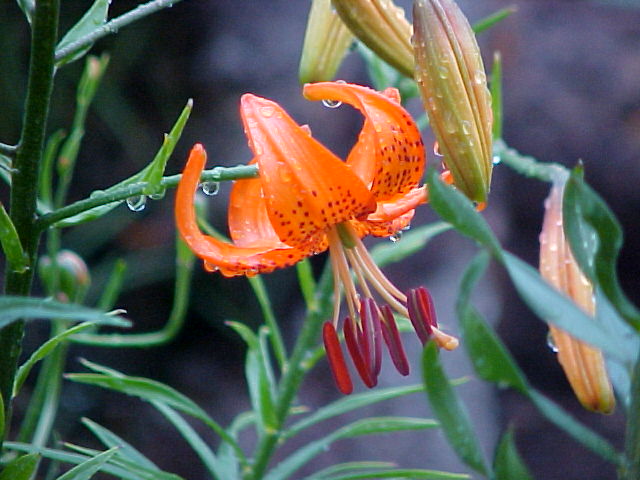 Lilium davidii
A tall Asian lily with edible bulbs and orange recurved flowers
🇨🇳 China and 1 more · Wildflower
Lilium davidii
A tall Asian lily with edible bulbs and orange recurved flowers
🇨🇳 China and 1 more · Wildflower
 StelleraStellera chamaejasme
A poisonous alpine flower of Central and East Asia, grown for its showy heads
🇨🇳 China and 5 more · Wildflower
StelleraStellera chamaejasme
A poisonous alpine flower of Central and East Asia, grown for its showy heads
🇨🇳 China and 5 more · Wildflower
 Prickly blue poppyMeconopsis horridula
A spiny blue poppy from the high Himalayas and western China
🇮🇳 India and 4 more · Wildflower
Prickly blue poppyMeconopsis horridula
A spiny blue poppy from the high Himalayas and western China
🇮🇳 India and 4 more · Wildflower