
Orange jasmine
Murraya paniculata, family Rutaceae
A fragrant shrub or small tree with white flowers and orange-red berries
Orange jasmine is a shrub or small tree with glossy green leaves and clusters of scented white or cream flowers. Native to parts of Asia and Australia, it is often grown as an ornamental hedge or garden plant and produces oval orange-red berries that attract birds.
- Produces clusters of fragrant white or cream flowers
- Native to Asia and northern Australia
- Berries are orange-red and attract birds
- Can be invasive in some regions
- Used as a hedge or ornamental shrub
What does Orange jasmine look like?
Orange jasmine is a shrub or small tree that can reach up to 7 meters tall, though it often stays smaller. Its bark is smooth and pale, and the leaves are made up of several glossy, oval to elliptical leaflets. The plant produces clusters of white or cream flowers with a strong fragrance, followed by oval berries that turn orange-red as they ripen. The seeds inside are covered in fine hairs.
Where does Orange jasmine come from?
This plant grows naturally in rainforests and vine thickets, sometimes near beaches. Its native area stretches from Pakistan and India through Sri Lanka, southern China, Taiwan, the Philippines, and the Ryūkyū and Mariana Islands, down to Malaysia, Indonesia, New Guinea, and northern Australia. The species was first described in the 17th century in the Dutch East Indies and formally named by Carl Linnaeus in 1767, with its current name given by William Jack in 1820.
When and how Orange jasmine blooms
Orange jasmine flowers from spring through autumn in the northern hemisphere, and nearly all year in Australia. It grows well in many soil types, including clay, sand, and loam, and is often planted as a hedge or ornamental shrub. The plant can be grown from seeds, which are spread by birds, or from cuttings taken from soft stems.


How Orange jasmine is used
People plant orange jasmine in gardens and parks for its fragrant flowers and attractive foliage. The flowers attract bees, while the bright berries draw in fruit-eating birds. In some areas, it is used for hedges and screens. However, in places like southeast Queensland, cultivated forms can become invasive.
Kinds of Orange jasmine
In Queensland, the wild form is considered distinct from the commonly grown 'Exotica' variety, which is known for its invasive tendencies. The species is also called by different names in various regions, such as 'kamuníng' in the Philippines.
What Orange jasmine means
Orange jasmine is valued for its beauty and scent in gardens across its native and introduced range. It serves as a host plant for certain insect pests that affect citrus crops. In some places, it is considered a weed due to its ability to spread beyond gardens. The plant does not have a widely noted symbolic or religious meaning in the sources.
Questions people ask about Orange jasmine
Where does orange jasmine come from?
Orange jasmine is native to South Asia, Southeast Asia, southern China, and northern Australia, growing in rainforests and vine thickets across this wide region.
What does orange jasmine look like?
It is a shrub or small tree with glossy, dark green leaves, clusters of white or cream, strongly scented flowers, and oval berries that turn orange-red when ripe.
How is orange jasmine used?
It is commonly grown as an ornamental plant or hedge in gardens and parks. Its fragrant flowers attract bees, and its berries are eaten by birds.
Is orange jasmine invasive?
In some areas, such as southeast Queensland in Australia, cultivated forms of orange jasmine can spread quickly and become invasive.
Does orange jasmine have any special meaning or use in culture?
The sources do not mention any particular symbolic or religious significance for orange jasmine, but it is valued for its ornamental qualities.
Good reading and sources
- Plants of the World OnlineRoyal Botanic Gardens, Kew, Plant database
- Where it has been recordedGBIF, Plant database
- Sightings and photos by naturalistsiNaturalist, Plant database
- Murraya paniculata on WikipediaEncyclopedia
- More photos on Wikimedia CommonsPhotos
- Wikidata recordOpen data
The facts on this page come from the Wikipedia article "Murraya paniculata", written by its contributors and used under the CC BY-SA 4.0 licence, and from its Wikidata record (CC0). EveryPhool rewrote the text in its own words, with AI assistance, and compares every page with the article to make sure no passage is copied. It may be reused under the same CC BY-SA 4.0 licence with a link back.
It may contain mistakes. It is not medical or foraging advice: many flowers are poisonous, and traditional uses are reported, not recommended. If something is wrong, tell us. Last refreshed 2026-10-03.
Others in the family Rutaceae
The whole family Bitter orangeCitrus × aurantium
The citrus tree behind Seville orange marmalade and Neroli oil
🇨🇳 China and 6 more · Flowering tree
Bitter orangeCitrus × aurantium
The citrus tree behind Seville orange marmalade and Neroli oil
🇨🇳 China and 6 more · Flowering tree
 BaelAegle marmelos
A spiny tree with fragrant yellow-green flowers and hard-shelled aromatic fruit
🇮🇳 India and 6 more · Flowering tree
BaelAegle marmelos
A spiny tree with fragrant yellow-green flowers and hard-shelled aromatic fruit
🇮🇳 India and 6 more · Flowering tree
 Tachibana orangeCitrus × tachibana
A wild mandarin orange found in the forests of Japan
🇯🇵 Japan and 1 more · Wildflower
Tachibana orangeCitrus × tachibana
A wild mandarin orange found in the forests of Japan
🇯🇵 Japan and 1 more · Wildflower
 Philotheca
A group of Australian shrubs with delicate five-petalled flowers
🇦🇺 Australia · Flowering shrub
Philotheca
A group of Australian shrubs with delicate five-petalled flowers
🇦🇺 Australia · Flowering shrub
More from China
All the flowers of China RoseRosa
Prickly flowering shrubs grown across the world for fragrant blossoms and rose hips
🇨🇳 China and 7 more · Flowering shrub
RoseRosa
Prickly flowering shrubs grown across the world for fragrant blossoms and rose hips
🇨🇳 China and 7 more · Flowering shrub
 PeachPrunus persica
A flowering fruit tree from China, grown for its pink blossoms and sweet fruit
🇨🇳 China and 7 more · Flowering tree
PeachPrunus persica
A flowering fruit tree from China, grown for its pink blossoms and sweet fruit
🇨🇳 China and 7 more · Flowering tree
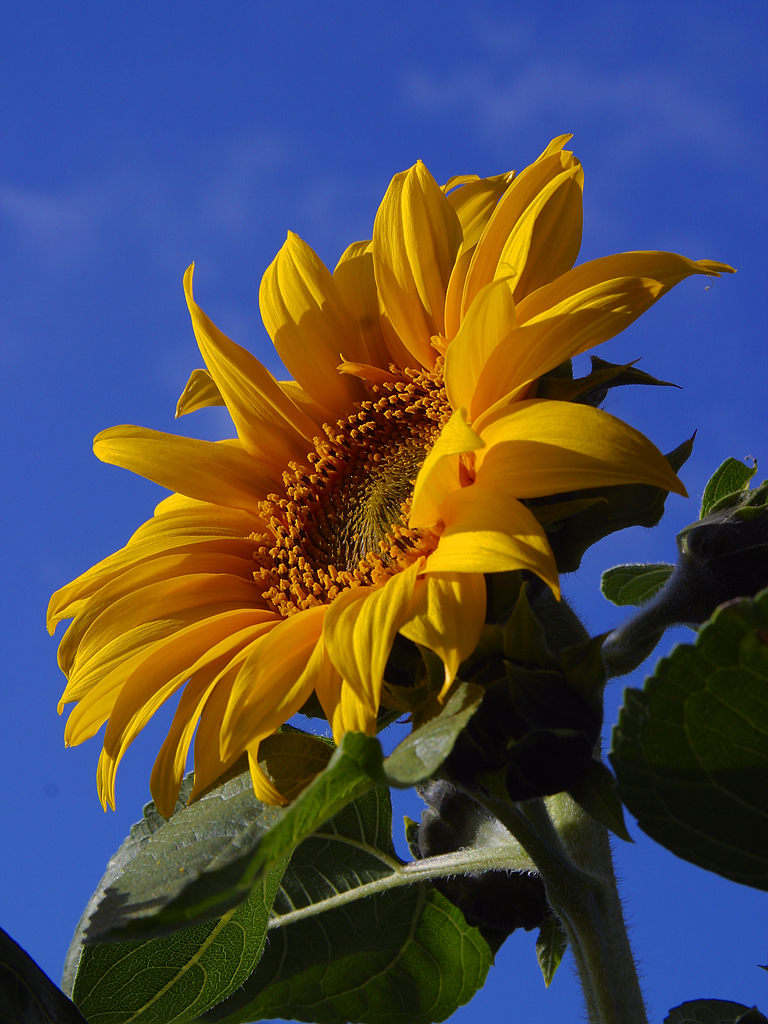 Common sunflowerHelianthus annuus
A tall annual plant grown for its large yellow flower heads and edible seeds
🇨🇦 Canada and 4 more · Wildflower
Common sunflowerHelianthus annuus
A tall annual plant grown for its large yellow flower heads and edible seeds
🇨🇦 Canada and 4 more · Wildflower
 PomegranatePunica granatum
A shrub with bright red flowers and a fruit full of edible seeds
🇮🇷 Iran and 9 more · Flowering shrub
PomegranatePunica granatum
A shrub with bright red flowers and a fruit full of edible seeds
🇮🇷 Iran and 9 more · Flowering shrub