
Paulownia
In its own language: 泡桐
A fast-growing East Asian tree with pale violet foxglove-like flowers
Paulownia is a genus of fast-growing hardwood trees native to East Asia, especially China and Japan. It bears large heart-shaped leaves and clusters of pale violet, tubular flowers that appear before the leaves in spring.
- Named after Anna Pavlovna, Dutch queen consort and Russian grand duchess
- Produces up to 20 million tiny winged seeds yearly
- Flowers appear before leaves in spring, pale violet and tubular
- Used for soundboards in Chinese, Japanese, and Korean string instruments
- Featured on Japan’s government crest and in hanafuda cards for December
What does Paulownia look like?
Paulownia trees grow very quickly and can reach over 30 metres tall. They have large, heart-shaped leaves covered in soft hairs. In early spring, before the leaves emerge, they produce upright clusters of pale violet, tubular flowers resembling foxgloves. Each flower has a two-lipped shape and guides for pollinators inside.
Where does Paulownia come from?
The genus originates in East Asia and is widespread in China. It was named after Anna Pavlovna, queen consort of the Netherlands and daughter of Tsar Paul I of Russia, hence both 'Paulownia' and its nickname 'princess tree'. Fossils show it once grew in North America and southern Europe during warmer geological periods.
When and how Paulownia blooms
Paulownia blooms in spring, often before its leaves appear. It thrives in full sun and needs well-drained soil; it does not tolerate wet ground. The tree produces millions of tiny winged seeds, but these only establish well on bare or sterile soils, such as after wildfires. Most cultivated trees come from root cuttings or nursery seedlings.


How Paulownia is used
In China, it is planted along roads and in agroforestry systems. In Japan, its wood makes instrument soundboards, storage boxes, and clogs. The tree appears on Japan’s government crest and features in the hanafuda card game for December. Its lightweight, stable timber is also used for surfboards, skis, and electric guitars.
Kinds of Paulownia
Several species exist, including Paulownia tomentosa, the most commonly referenced, and others like P. kawakamii, which has a uniquely bilobed stigma. Some forms may be hybrids or regional variants, though taxonomic counts range from seven to seventeen species depending on classification.
What Paulownia means
Paulownia holds official status in Japan, where its emblem represents the prime minister and cabinet. It is culturally linked to the mythical phoenix, either because it regrows after cutting or because legend says the phoenix rests only in this tree. It also appears in traditional art, music, and seasonal customs.
Where Paulownia is used and seen

Questions people ask about Paulownia
Where does Paulownia come from?
It is native to East Asia and widespread across China, with cultural importance in Japan and Korea.
What does Paulownia symbolize?
In Japan, it is a national symbol used by the government; it is also linked to the phoenix through folklore.
When does Paulownia flower?
It blooms in spring, often before its large leaves emerge, producing pale violet tubular flowers.
Is Paulownia wood useful?
Yes, it is light, strong, warp-resistant, and used for musical instruments, boxes, surfboards, and furniture.
Is Paulownia invasive?
Some U.S. authorities consider it invasive due to escaped plantings, but it is not seen as invasive in Europe.
Good reading and sources
- USDA Plants DatabaseUS Department of Agriculture, Article
- Plants of the World OnlineRoyal Botanic Gardens, Kew, Plant database
- Where it has been recordedGBIF, Plant database
- Sightings and photos by naturalistsiNaturalist, Plant database
The facts on this page come from the Wikipedia article "Paulownia", written by its contributors and used under the CC BY-SA 4.0 licence, and from its Wikidata record (CC0). Phool rewrote the text in its own words, with AI assistance, and compares every page with the article to make sure no passage is copied. It may be reused under the same CC BY-SA 4.0 licence with a link back.
It may contain mistakes. It is not medical or foraging advice: many flowers are poisonous, and traditional uses are reported, not recommended. If something is wrong, tell us. Last refreshed 2026-10-03.

More from China
All the flowers of China PeachPrunus persica
A flowering fruit tree from China, grown for its pink blossoms and sweet fruit
🇨🇳 China and 7 more · Flowering tree
PeachPrunus persica
A flowering fruit tree from China, grown for its pink blossoms and sweet fruit
🇨🇳 China and 7 more · Flowering tree
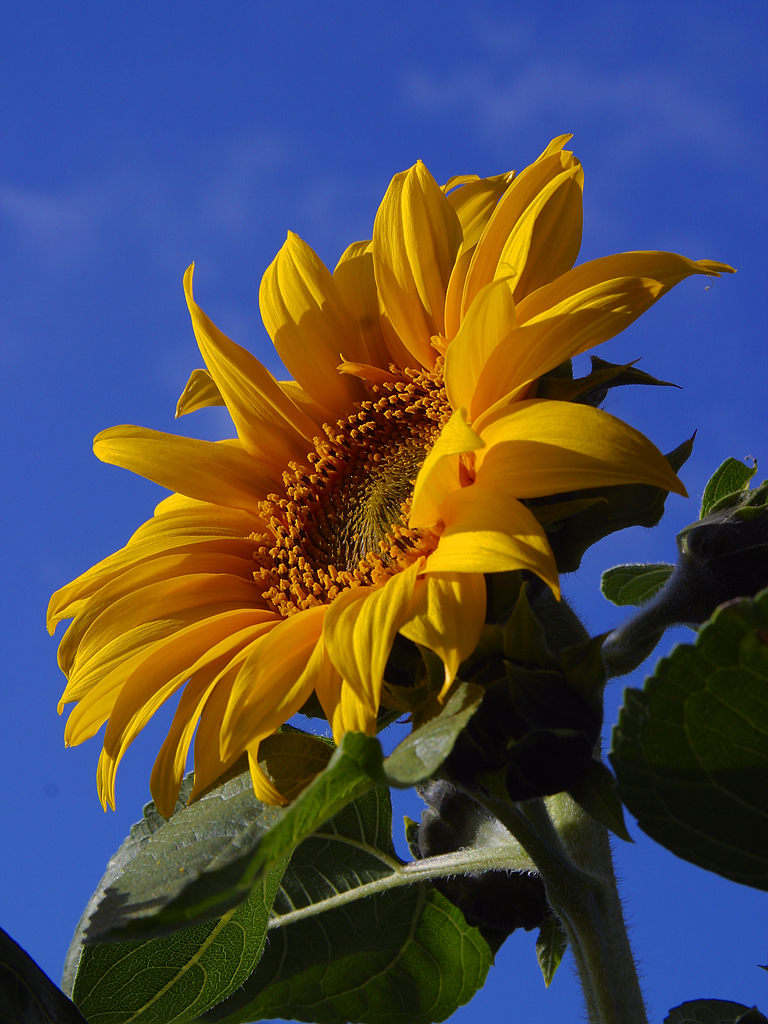 Common sunflowerHelianthus annuus
A tall annual plant grown for its large yellow flower heads and edible seeds
🇨🇦 Canada and 4 more · Wildflower
Common sunflowerHelianthus annuus
A tall annual plant grown for its large yellow flower heads and edible seeds
🇨🇦 Canada and 4 more · Wildflower
 PomegranatePunica granatum
A shrub with bright red flowers and a fruit full of edible seeds
🇮🇷 Iran and 9 more · Flowering shrub
PomegranatePunica granatum
A shrub with bright red flowers and a fruit full of edible seeds
🇮🇷 Iran and 9 more · Flowering shrub
 BirchBetula
Slender trees with papery bark found across the northern world
🇨🇳 China and 7 more · Wildflower
BirchBetula
Slender trees with papery bark found across the northern world
🇨🇳 China and 7 more · Wildflower