
Black poplar
Populus nigra, family Salicaceae
A tall riverside pioneer tree bearing wind-pollinated catkins
The black poplar is a large deciduous tree native across Europe, north Africa, and parts of Asia. Recognised by its triangular leaves and flowering catkins, it is planted widely in parks and river valleys.
- Tall deciduous pioneer tree reaching up to 40 metres in moist lowland soil.
- Dioecious species bearing male and female catkins on separate individual trees.
- The iconic upright Lombardy poplar arose as a male clone in 17th-century Italy.
- Northwestern European subspecies betulifolia is rare, with only around 600 known female trees.
What does Black poplar look like?
Black poplars are tall deciduous trees typically growing between twenty and thirty metres high, though exceptional specimens can reach forty metres. Their broad trunks feature thick, deeply furrowed grey-brown bark, sometimes swelling beyond three metres across in ancient specimens. The foliage consists of diamond-shaped or triangular leaves that are bright green on both sides. Separate male and female flowers appear as hanging catkins on different individual trees. Because the species is dioecious, wind carries pollen from male trees to fertilise female blooms across damp lowland landscapes.
Where does Black poplar come from?
The species spans a vast natural range across Europe, northwest Africa, the Caucasus, the Middle East, and central to southwest Asia, reaching east into Kazakhstan and China. It naturally colonises open, low-lying ground with damp soil. As a fast-growing pioneer tree, it establishes readily along waterways and moist floodplains. Over centuries, gardeners and foresters selected specific wild forms, spreading distinctive clones throughout western Europe and the Mediterranean basin.
When and how Black poplar blooms
In the wild, black poplars thrive on moist, low-lying soils where open ground allows rapid early growth. Because pollen travels on the breeze, successful seed production relies on both male and female trees growing near one another. Cultivated varieties and landscape clones do not rely on seed; instead, growers propagate them easily by taking stem cuttings. These cuttings take root swiftly, establishing vigorous young trees suited to damp ground or rural avenues.


How Black poplar is used
People cultivate black poplars across rural landscapes, town avenues, and parklands. Selected narrow varieties serve as architectural windbreaks or upright garden features. The species also holds a traditional role as a medicinal plant. In modern times, conservationists monitor wild populations to protect rare local strains, particularly female trees that maintain genetic diversity in dwindling riparian habitats.
Kinds of Black poplar
Several distinct subspecies and cultivars exist. The smooth-barked variety afghanica grows in southwest Asia and the Balkans. In northwest Europe, the native subspecies betulifolia features downy leaf veins and a leaning trunk; it is notably scarce in Britain and Ireland. The famous fastigiate Lombardy poplar 'Italica', selected in northern Italy during the seventeenth century, forms a slender, upright crown. Other notable clones include 'Manchester', 'Gigantea', and the hardier 'Plantierensis' group bred in France.
What Black poplar means
In Great Britain and Ireland, the native subspecies betulifolia has become one of the rarest local trees, with only about seven thousand surviving specimens and a critically low number of female trees. Historical cultivars like 'Afghanica' spread widely through southeast Europe during the Ottoman Empire period. Today, specific local populations face severe threats from fungal pathogens such as poplar scab disease.
Questions people ask about Black poplar
Where does the black poplar come from?
The black poplar is native across a wide expanse including Europe, northwest Africa, the Middle East, and central and southwest Asia, stretching as far east as Kazakhstan and China. It naturally inhabits damp floodplains and low-lying ground.
How does the black poplar reproduce?
Male and female flowers develop on separate individual trees as catkins. The wind carries pollen from male catkins to female trees across open ground. Cultivated forms are usually multiplied by taking branch cuttings.
What is the Lombardy poplar?
The Lombardy poplar is a fastigiate, upright cultivar of black poplar named 'Italica'. First selected in seventeenth-century northern Italy, this slender male clone is planted widely across warm, dry summer regions.
Why is the British and Irish black poplar so rare?
The northwestern subspecies betulifolia survives as only about 7,000 documented trees across Britain and Ireland. Of those, only around 600 are confirmed female trees, limiting natural reproduction in the wild.
Good reading and sources
- Encyclopaedia BritannicaArticle
- IUCN Red List of Threatened SpeciesIUCN Red List, Article
- Plants of the World OnlineRoyal Botanic Gardens, Kew, Plant database
- Where it has been recordedGBIF, Plant database
- Sightings and photos by naturalistsiNaturalist, Plant database
- Populus nigra on WikipediaEncyclopedia
- More photos on Wikimedia CommonsPhotos
- Wikidata recordOpen data
The facts on this page come from the Wikipedia article "Populus nigra", written by its contributors and used under the CC BY-SA 4.0 licence, and from its Wikidata record (CC0). EveryPhool rewrote the text in its own words, with AI assistance, and compares every page with the article to make sure no passage is copied. It may be reused under the same CC BY-SA 4.0 licence with a link back.
It may contain mistakes. It is not medical or foraging advice: many flowers are poisonous, and traditional uses are reported, not recommended. If something is wrong, tell us. Last refreshed 2026-10-04.
Others in the family Salicaceae
The whole family WillowSalix
Deciduous trees and shrubs with early spring catkin flowers
Salix · Wildflower
WillowSalix
Deciduous trees and shrubs with early spring catkin flowers
Salix · Wildflower
 White willowSalix alba
A pale-leaved riverbank tree with spring catkins and flexible stems used for baskets
🇨🇦 Canada and 1 more · Flowering tree
White willowSalix alba
A pale-leaved riverbank tree with spring catkins and flexible stems used for baskets
🇨🇦 Canada and 1 more · Flowering tree
 Goat willowSalix caprea
A wild willow with soft, silvery spring catkins that turn golden or green
🇨🇳 China and 7 more · Flowering tree
Goat willowSalix caprea
A wild willow with soft, silvery spring catkins that turn golden or green
🇨🇳 China and 7 more · Flowering tree
 Weeping willowSalix babylonica
A fast-growing tree with long, drooping branches and narrow green leaves
🇨🇳 China · Flowering tree
Weeping willowSalix babylonica
A fast-growing tree with long, drooping branches and narrow green leaves
🇨🇳 China · Flowering tree
More from China
All the flowers of China RoseRosa
Prickly flowering shrubs grown across the world for fragrant blossoms and rose hips
🇨🇳 China and 7 more · Flowering shrub
RoseRosa
Prickly flowering shrubs grown across the world for fragrant blossoms and rose hips
🇨🇳 China and 7 more · Flowering shrub
 PeachPrunus persica
A flowering fruit tree from China, grown for its pink blossoms and sweet fruit
🇨🇳 China and 7 more · Flowering tree
PeachPrunus persica
A flowering fruit tree from China, grown for its pink blossoms and sweet fruit
🇨🇳 China and 7 more · Flowering tree
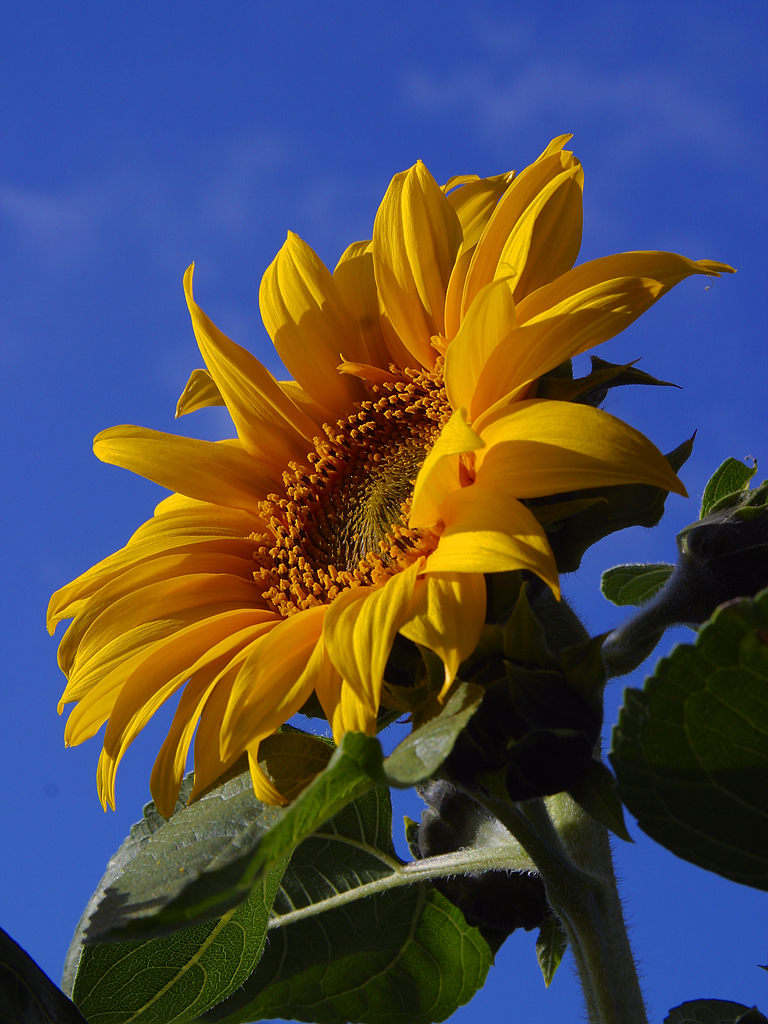 Common sunflowerHelianthus annuus
A tall annual plant grown for its large yellow flower heads and edible seeds
🇨🇦 Canada and 4 more · Wildflower
Common sunflowerHelianthus annuus
A tall annual plant grown for its large yellow flower heads and edible seeds
🇨🇦 Canada and 4 more · Wildflower
 PomegranatePunica granatum
A shrub with bright red flowers and a fruit full of edible seeds
🇮🇷 Iran and 9 more · Flowering shrub
PomegranatePunica granatum
A shrub with bright red flowers and a fruit full of edible seeds
🇮🇷 Iran and 9 more · Flowering shrub