
Goat willow
Salix caprea, family Salicaceae
A wild willow with soft, silvery spring catkins that turn golden or green
Goat willow is a deciduous shrub or compact tree native to Europe and western and central Asia. Before its broad leaves emerge in early spring, it produces soft, silvery catkins that are gathered for cut flower displays and used in Palm Sunday customs.
- Silvery catkins open in early spring on separate male and female plants before the leaves appear.
- Male catkins turn golden-yellow with pollen, whereas female catkins mature to a pale green.
- Fresh catkin stems serve in place of olive branches on Palm Sunday in several European nations.
- The wood is brittle and crackles violently in fires, making it poor timber and firewood.
What does Goat willow look like?
Goat willow grows as a deciduous bush or compact tree, usually reaching eight to ten metres in height. It carries broader leaves than most related willows. Each leaf is dull green with sparse hairs on the upper surface and a grey, woolly underside. In early spring, before any foliage opens, the branches produce soft, silky, silvery catkins between three and seven centimetres long. Because male and female catkins grow on separate plants, they mature differently. Male catkins turn bright yellow when shedding their pollen, while female catkins develop a pale green hue. After fertilization, the female catkins form small capsules containing tiny seeds cushioned in fine, cottony fluff that helps them travel on the breeze.
Where does Goat willow come from?
Goat willow is native across Europe as well as western and central Asia, including parts of China and Russia. Its botanical species name, caprea, is the Latin word for goat. This scientific name and the familiar English name both likely stem from a 1546 herbal written by Hieronymus Bock. That work included the earliest known drawing of the plant, which showed a goat nibbling on its branches. Historically, rural communities frequently gathered the foliage to feed browsing goats and other livestock.
When and how Goat willow blooms
Goat willow flourishes in damp riverside and lakeshore habitats, but it also colonises drier ground where soil disturbance creates open earth. Its minuscule seeds need bare earth to take root. Unlike many other willows, pure goat willow does not strike roots easily from hardwood cuttings. Gardeners instead propagate it from greenwood cuttings, which form low, creeping thickets. Ornamental weeping cultivars are typically created by grafting stems onto upright rootstocks of other willow species at the desired height.


How Goat willow is used
People frequently grow goat willow to cut its blossoming catkin stems for decorative displays indoors. Its bark yields both salicin and tannin for traditional extraction. Across northern Europe, makers traditionally carve flutes from branch cuttings. The wood is brittle and crackles sharply when burned, making it unsuitable for timber or fuel. In nature, browsing mammals consume the leaves, and several moth and butterfly caterpillars feed on the plant.
Kinds of Goat willow
Two main wild varieties grow in different environments. The lowland form, Salix caprea var. caprea, has larger leaves with persistent base stipules that stay on until autumn. The mountain form, Salix caprea var. sphacelata, grows in the Alps, Carpathians, and northern mountains, bearing smaller leaves with dense silky hairs on both sides. Garden selections include the male weeping cultivar 'Kilmarnock' and the female weeping clone 'Weeping Sally'.
What Goat willow means
In Christian communities throughout Germany, Poland, Ukraine, Hungary, northern Slovakia, and Finland, freshly opened catkins are used during church rituals on Palm Sunday, serving in place of traditional olive branches. The plant shares its cultural role as a beloved spring cut flower with the closely related American pussy willow.
Days and festivals
Questions people ask about Goat willow
Where does goat willow grow in the wild?
Goat willow is native across Europe and western and central Asia, including China and Russia. It grows along damp riverbanks and lake edges as well as in drier spots where soil has been disturbed.
What are goat willow catkins used for?
The silky catkins are widely gathered as cut stems for spring decoration. In several European countries, including Germany, Poland, and Finland, freshly opened catkins are used in place of olive branches on Palm Sunday.
Why is it called goat willow?
The Latin epithet caprea means goat. The common and botanical names likely derive from a 1546 herbal by Hieronymus Bock, which featured an illustration of a goat browsing on the branches.
How do you tell male and female goat willows apart?
Because goat willow is dioecious, male and female catkins grow on separate trees. When mature, male catkins turn bright yellow as they release pollen, while female catkins remain a soft, pale green.
Good reading and sources
- IUCN Red List of Threatened SpeciesIUCN Red List, Article
- Plants of the World OnlineRoyal Botanic Gardens, Kew, Plant database
- Where it has been recordedGBIF, Plant database
- Sightings and photos by naturalistsiNaturalist, Plant database
The facts on this page come from the Wikipedia article "Salix caprea", written by its contributors and used under the CC BY-SA 4.0 licence, and from its Wikidata record (CC0). EveryPhool rewrote the text in its own words, with AI assistance, and compares every page with the article to make sure no passage is copied. It may be reused under the same CC BY-SA 4.0 licence with a link back.
It may contain mistakes. It is not medical or foraging advice: many flowers are poisonous, and traditional uses are reported, not recommended. If something is wrong, tell us. Last refreshed 2026-10-04.
Others in the family Salicaceae
The whole family WillowSalix
Deciduous trees and shrubs with early spring catkin flowers
Salix · Wildflower
WillowSalix
Deciduous trees and shrubs with early spring catkin flowers
Salix · Wildflower
 White willowSalix alba
A pale-leaved riverbank tree with spring catkins and flexible stems used for baskets
🇨🇦 Canada and 1 more · Flowering tree
White willowSalix alba
A pale-leaved riverbank tree with spring catkins and flexible stems used for baskets
🇨🇦 Canada and 1 more · Flowering tree
 Black poplarPopulus nigra
A tall riverside pioneer tree bearing wind-pollinated catkins
🇨🇳 China and 4 more · Flowering tree
Black poplarPopulus nigra
A tall riverside pioneer tree bearing wind-pollinated catkins
🇨🇳 China and 4 more · Flowering tree
 Weeping willowSalix babylonica
A fast-growing tree with long, drooping branches and narrow green leaves
🇨🇳 China · Flowering tree
Weeping willowSalix babylonica
A fast-growing tree with long, drooping branches and narrow green leaves
🇨🇳 China · Flowering tree
More from China
All the flowers of China RoseRosa
Prickly flowering shrubs grown across the world for fragrant blossoms and rose hips
🇨🇳 China and 7 more · Flowering shrub
RoseRosa
Prickly flowering shrubs grown across the world for fragrant blossoms and rose hips
🇨🇳 China and 7 more · Flowering shrub
 PeachPrunus persica
A flowering fruit tree from China, grown for its pink blossoms and sweet fruit
🇨🇳 China and 7 more · Flowering tree
PeachPrunus persica
A flowering fruit tree from China, grown for its pink blossoms and sweet fruit
🇨🇳 China and 7 more · Flowering tree
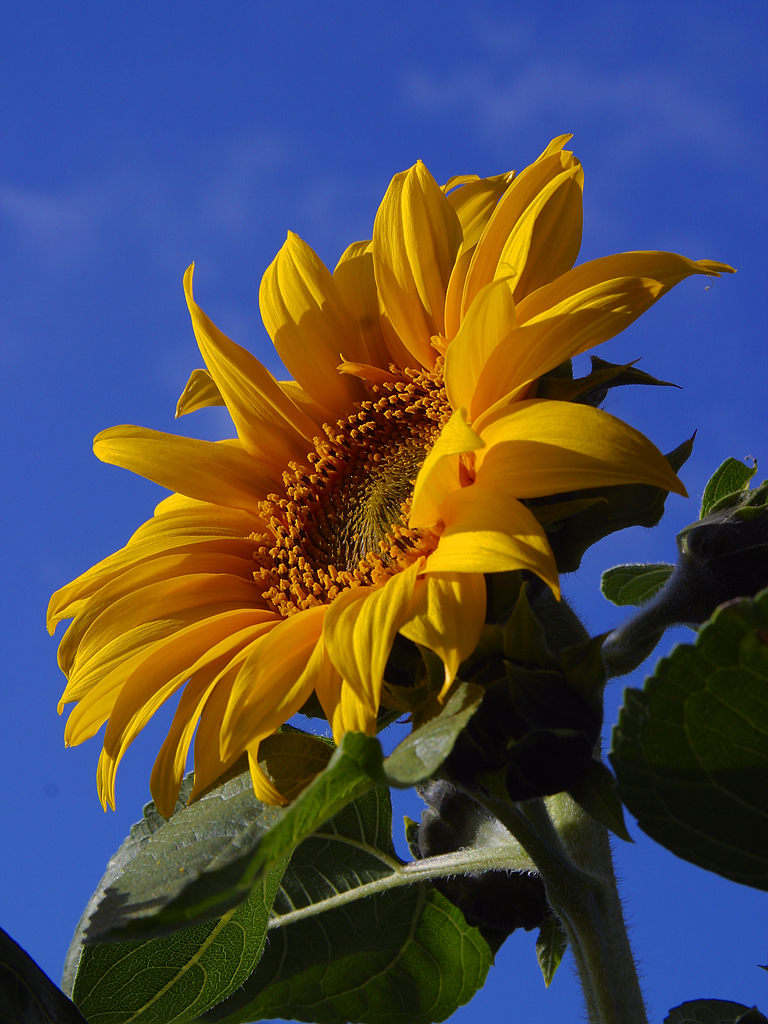 Common sunflowerHelianthus annuus
A tall annual plant grown for its large yellow flower heads and edible seeds
🇨🇦 Canada and 4 more · Wildflower
Common sunflowerHelianthus annuus
A tall annual plant grown for its large yellow flower heads and edible seeds
🇨🇦 Canada and 4 more · Wildflower
 PomegranatePunica granatum
A shrub with bright red flowers and a fruit full of edible seeds
🇮🇷 Iran and 9 more · Flowering shrub
PomegranatePunica granatum
A shrub with bright red flowers and a fruit full of edible seeds
🇮🇷 Iran and 9 more · Flowering shrub