
Protea roupelliae
A small tree or shrub from southern Africa with striking flower heads
Protea roupelliae, or silver sugarbush, is a small tree or shrub native to eastern South Africa and Zimbabwe. It grows in grasslands and hilly areas, producing distinctive flowers that attract birds and insects, and is sometimes planted in gardens for its appearance and wildlife value.
- Native to eastern South Africa and Zimbabwe
- Named after flower painter Arabella Elizabeth Roupell
- Flowers attract birds, bees, and beetles
- Two subspecies with different sizes and habitats
What does Protea roupelliae look like?
Protea roupelliae is a woody plant that can appear as a small tree or a shrub, reaching between three and eight metres tall depending on the subspecies. Its flower heads are large and showy, typical of the Protea genus, and are known for attracting a variety of birds and insects. The leaves and overall shape give it a distinctive look among grassland plants.
Where does Protea roupelliae come from?
This species is part of the Proteaceae family, which is mostly found in the Southern Hemisphere. Protea roupelliae grows wild in eastern South Africa, especially on quartzite ridges and in hilly grasslands, and extends north into Zimbabwe. The plant was named in honour of Arabella Elizabeth Roupell, who painted local flowers in Cape Town during the 1800s.
When and how Protea roupelliae blooms
Protea roupelliae can flower at any time, but most blooms appear after the summer rains, especially in February and April. It grows in a range of soils and altitudes, from lowlands up to 2400 metres, though one subspecies prefers quartzite soils at higher elevations. The plant is sometimes cultivated in gardens for its appearance and for the wildlife it attracts.


How Protea roupelliae is used
People plant Protea roupelliae in gardens to enjoy its unique flowers and to support local wildlife, especially birds and insects. In the wild, it is an important part of grassland ecosystems, offering food for pollinators. The plant does not have a major role in ceremonies or festivals according to the sources.
Kinds of Protea roupelliae
There are two subspecies: P. roupelliae hamiltonii, which is a small shrublet up to 0.3 metres tall and found only on certain quartzite soils, and P. roupelliae roupelliae, which can grow into a small tree up to 8 metres and is more widespread and adaptable.
What Protea roupelliae means
Protea roupelliae was named to commemorate Arabella Elizabeth Roupell, a flower painter in 19th-century Cape Town. The plant is valued for its role in supporting pollinators like bees, beetles, sunbirds, and Gurney's sugarbird. It is part of the rich diversity of the Proteaceae family, which is notable in southern Africa.
Where Protea roupelliae is used and seen

Questions people ask about Protea roupelliae
Where does Protea roupelliae come from?
Protea roupelliae is native to grasslands and hilly areas in eastern South Africa and Zimbabwe, especially around Johannesburg and the Waterberg Biosphere.
What does Protea roupelliae look like?
It is a small tree or shrub with large, showy flower heads and distinctive leaves. The plant can grow from three to eight metres tall, depending on the subspecies.
How is Protea roupelliae used?
It is planted in gardens for its attractive flowers and to draw wildlife such as birds and insects. In the wild, it is important for pollinators.
Does Protea roupelliae have any special meaning?
The plant was named to honour Arabella Elizabeth Roupell, who painted flowers in Cape Town. It is valued for its ecological role rather than for symbolism.
When does Protea roupelliae flower?
It can bloom at any time of year, but most flowers appear in February and April after the summer rains in southern Africa.
Good reading and sources
- IUCN Red List of Threatened SpeciesIUCN Red List, Article
- Plants of the World OnlineRoyal Botanic Gardens, Kew, Plant database
- Where it has been recordedGBIF, Plant database
- Sightings and photos by naturalistsiNaturalist, Plant database
- Protea roupelliae on WikipediaEncyclopedia
- More photos on Wikimedia CommonsPhotos
- Wikidata recordOpen data
The facts on this page come from the Wikipedia article "Protea roupelliae", written by its contributors and used under the CC BY-SA 4.0 licence, and from its Wikidata record (CC0). Phool rewrote the text in its own words, with AI assistance, and compares every page with the article to make sure no passage is copied. It may be reused under the same CC BY-SA 4.0 licence with a link back.
It may contain mistakes. It is not medical or foraging advice: many flowers are poisonous, and traditional uses are reported, not recommended. If something is wrong, tell us. Last refreshed 2026-10-03.
Others in the family Proteaceae
The whole family Bull banksiaBanksia grandis
A tall, fire-resistant tree with large lobed leaves and pale yellow flower spikes
🇦🇺 Australia · Flowering tree
Bull banksiaBanksia grandis
A tall, fire-resistant tree with large lobed leaves and pale yellow flower spikes
🇦🇺 Australia · Flowering tree
 Grevillea 'Robyn Gordon'Grevillea ‘Robyn Gordon’
A red-flowered Australian shrub named for a gardener’s daughter
🇦🇺 Australia · Flowering shrub
Grevillea 'Robyn Gordon'Grevillea ‘Robyn Gordon’
A red-flowered Australian shrub named for a gardener’s daughter
🇦🇺 Australia · Flowering shrub
 Protea neriifolia
A South African shrub with cone-shaped flower heads and hairy-tipped bracts
🇿🇦 South Africa and 3 more · Wildflower
Protea neriifolia
A South African shrub with cone-shaped flower heads and hairy-tipped bracts
🇿🇦 South Africa and 3 more · Wildflower
 Swamp banksiaBanksia robur
A tough coastal shrub with large serrated leaves and green-gold flower spikes
🇦🇺 Australia · Wildflower
Swamp banksiaBanksia robur
A tough coastal shrub with large serrated leaves and green-gold flower spikes
🇦🇺 Australia · Wildflower
More from South Africa
All the flowers of South Africa Eucalyptus
The tall, aromatic trees and shrubs known as gum trees or eucalypts
🇦🇺 Australia and 7 more · Flowering tree
Eucalyptus
The tall, aromatic trees and shrubs known as gum trees or eucalypts
🇦🇺 Australia and 7 more · Flowering tree
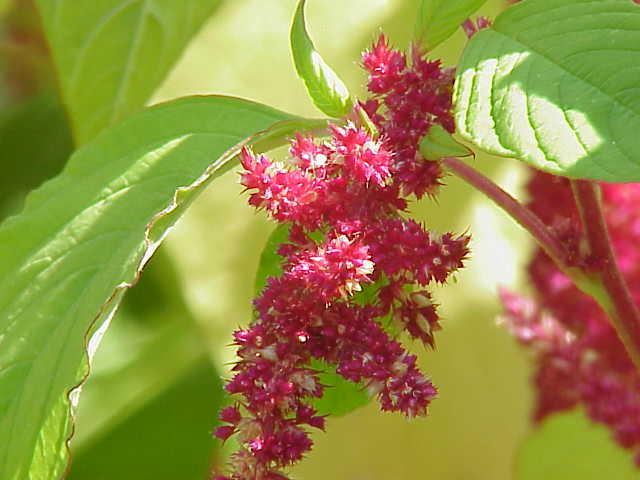 AmaranthAmaranthus
A tall, colourful plant grown for its flowers, leaves and edible seeds
🇲🇽 Mexico and 7 more · Wildflower
AmaranthAmaranthus
A tall, colourful plant grown for its flowers, leaves and edible seeds
🇲🇽 Mexico and 7 more · Wildflower
 Acacia
Shrubs and trees with golden or cream puffball flowers, native mostly to Australia
🇦🇺 Australia and 6 more · Wildflower
Acacia
Shrubs and trees with golden or cream puffball flowers, native mostly to Australia
🇦🇺 Australia and 6 more · Wildflower
 Sensitive PlantMimosa pudica
A touch-sensitive plant whose leaves fold up when disturbed
🇧🇷 Brazil and 8 more · Wildflower
Sensitive PlantMimosa pudica
A touch-sensitive plant whose leaves fold up when disturbed
🇧🇷 Brazil and 8 more · Wildflower