
Chestnut rose
Rosa roxburghii, family Rosaceae
In its own language: 十六夜薔薇
A prickly shrub with chestnut-like hips and pink flowers
Chestnut rose is a thorny, spreading shrub native to parts of China and Japan. It bears pink single or double flowers and distinctive burred fruit resembling chestnuts, grown both ornamentally and for its vitamin-rich hips.
- Fruit contains 5–7% vitamin C by weight
- Hips resemble chestnuts, giving the plant its common name
- Grown commercially on 170,000 ha in China, mostly in Guizhou
- Named after Scottish botanist William Roxburgh
- Seed hairs can irritate the mouth and digestive tract
What does Chestnut rose look like?
Chestnut rose grows as a loose, thorny shrub that can reach up to 8 metres but is often shorter. Its flowers are pink, either single or double, measuring 4–6 cm across. The fruit is round, covered in bristly burrs like a chestnut, with thin flesh around many seeds.
Where does Chestnut rose come from?
This rose comes from temperate eastern Asia, especially China and Japan. It was first documented in China in the early 1800s and later sent to the Calcutta Botanical Garden around 1824. It was named after William Roxburgh, a Scottish botanist who worked in India.
When and how Chestnut rose blooms
In the wild, it thrives on mountain slopes, forest edges, stream banks, and even between rice paddies where water is plentiful. It grows at elevations from 500 to 2,500 metres. Commercial cultivation in China, especially Guizhou, covers over 170,000 hectares for its fruit.


How Chestnut rose is used
People grow chestnut rose as an ornamental plant and as a dense, prickly hedge. Its fruit is eaten raw or cooked for its tart-sweet flavour and high vitamin C content. In China, the dried hips are processed into powder used as a food supplement.
Kinds of Chestnut rose
Three forms are recognised: one with double or semi-double reddish-pink blooms, another with simple pink flowers, and a Japanese type with pale pink or lilac single flowers. It is sometimes sold as 'Plena', usually a medium pink double form.
What Chestnut rose means
In Japan, it is called izayoibara, meaning 'sixteen-night rose', referring to a petal gap that makes the bloom look notched. Though long cultivated in China, it remains uncommon in European gardens. It belongs to the Microphyllae section of roses.
Questions people ask about Chestnut rose
Where does chestnut rose come from?
It is native to eastern Asia, particularly central and southern China, Tibet, and Japan, growing wild in mountains, thickets, and along streams.
What is chestnut rose used for?
Its fruit is eaten for its sweet-sour taste and high vitamin C content, and it is also grown as an ornamental shrub or prickly hedge.
Why is it called chestnut rose?
Because its fruit is covered in bristly burrs that closely resemble chestnuts in appearance.
Is the fruit safe to eat?
The flesh is edible, but fine hairs around the seeds can irritate the mouth and gut if swallowed.
What does the flower look like?
Flowers are pink, 4–6 cm wide, and may be single, semi-double, or fully double, depending on the form.
Good reading and sources
- Rosa roxburghii (S)Royal Horticultural Society, Article
- USDA Plants DatabaseUS Department of Agriculture, Article
- Plants of the World OnlineRoyal Botanic Gardens, Kew, Plant database
- Where it has been recordedGBIF, Plant database
- Sightings and photos by naturalistsiNaturalist, Plant database
- Rosa roxburghii on WikipediaEncyclopedia
- More photos on Wikimedia CommonsPhotos
- Wikidata recordOpen data
The facts on this page come from the Wikipedia article "Rosa roxburghii", written by its contributors and used under the CC BY-SA 4.0 licence, and from its Wikidata record (CC0). Phool rewrote the text in its own words, with AI assistance, and compares every page with the article to make sure no passage is copied. It may be reused under the same CC BY-SA 4.0 licence with a link back.
It may contain mistakes. It is not medical or foraging advice: many flowers are poisonous, and traditional uses are reported, not recommended. If something is wrong, tell us. Last refreshed 2026-10-03.
Others in the family Rosaceae
The whole family RoseRosa
Woody perennial plants with showy, often fragrant flowers in many colours
Rosa · Wildflower
RoseRosa
Woody perennial plants with showy, often fragrant flowers in many colours
Rosa · Wildflower
 AlmondPrunus amygdalus
A Mediterranean tree grown for its fragrant spring flowers and edible seeds
🇮🇷 Iran and 6 more · Flowering tree
AlmondPrunus amygdalus
A Mediterranean tree grown for its fragrant spring flowers and edible seeds
🇮🇷 Iran and 6 more · Flowering tree
 ApricotPrunus armeniaca
A small fruit tree with early white to pink blossoms and golden-orange fruit
🇨🇳 China and 6 more · Flowering tree
ApricotPrunus armeniaca
A small fruit tree with early white to pink blossoms and golden-orange fruit
🇨🇳 China and 6 more · Flowering tree
 Wild cherryPrunus avium
A tall flowering tree native to Europe, grown for its sweet fruit and spring blossom
🇮🇹 Italy and 6 more · Flowering tree
Wild cherryPrunus avium
A tall flowering tree native to Europe, grown for its sweet fruit and spring blossom
🇮🇹 Italy and 6 more · Flowering tree
More from China
All the flowers of China PeachPrunus persica
A flowering fruit tree from China, grown for its pink blossoms and sweet fruit
🇨🇳 China and 7 more · Flowering tree
PeachPrunus persica
A flowering fruit tree from China, grown for its pink blossoms and sweet fruit
🇨🇳 China and 7 more · Flowering tree
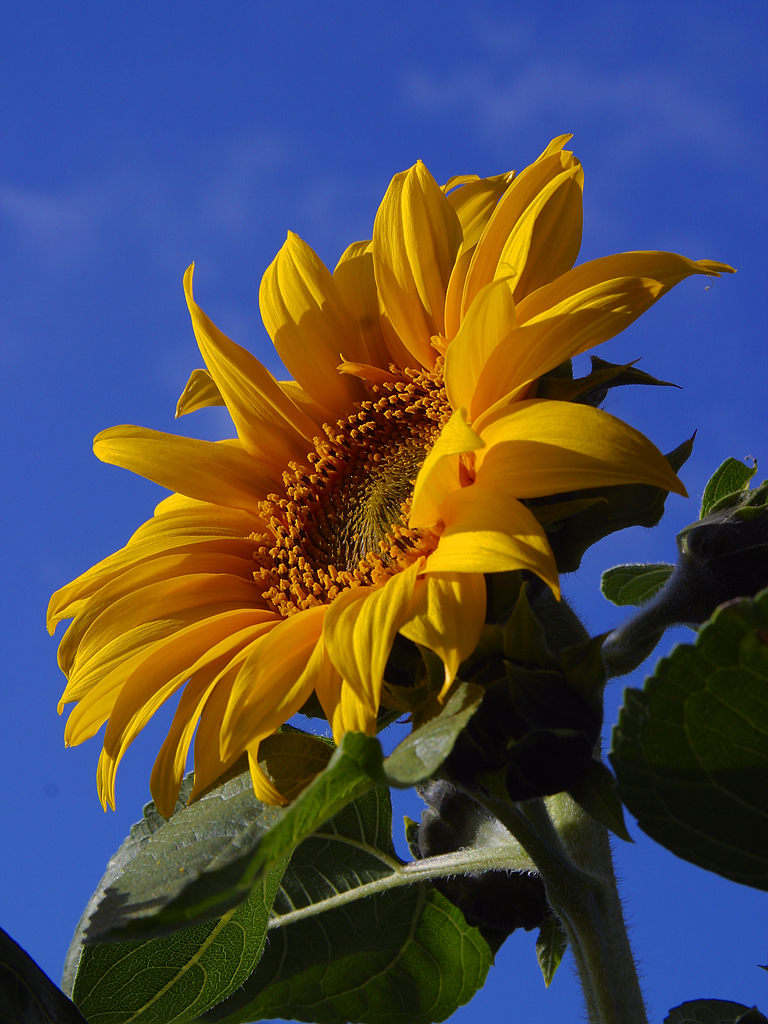 Common sunflowerHelianthus annuus
A tall annual plant grown for its large yellow flower heads and edible seeds
🇨🇦 Canada and 4 more · Wildflower
Common sunflowerHelianthus annuus
A tall annual plant grown for its large yellow flower heads and edible seeds
🇨🇦 Canada and 4 more · Wildflower
 PomegranatePunica granatum
A shrub with bright red flowers and a fruit full of edible seeds
🇮🇷 Iran and 9 more · Flowering shrub
PomegranatePunica granatum
A shrub with bright red flowers and a fruit full of edible seeds
🇮🇷 Iran and 9 more · Flowering shrub
 BirchBetula
Slender trees with papery bark found across the northern world
🇨🇳 China and 7 more · Wildflower
BirchBetula
Slender trees with papery bark found across the northern world
🇨🇳 China and 7 more · Wildflower