
Painted daisy
Tanacetum coccineum, family Asteraceae
A colourful daisy grown for gardens and natural insect repellent
Painted daisy is a perennial flower native to rocky mountain slopes from Eastern Europe to Central Asia. Its blooms come in pink, red, or white with yellow centres, and it is grown worldwide for its beauty and for its use as a natural insecticide.
- Blooms in pink, red, or white with yellow centres
- Native to rocky slopes from Eastern Europe to Central Asia
- Used to make Persian powder, a natural insecticide
- Grown as a garden and cut flower worldwide
What does Painted daisy look like?
Painted daisy is a perennial plant that grows between 20 and 60 cm tall. Its leaves are mostly smooth, with lower leaves being larger and deeply divided into narrow lobes, while upper leaves are smaller and less divided. Each stem holds a single flower head, showing pink, red, or white petals around a flat yellow centre. Some flowers are single, while others are double with extra petals.
Where does Painted daisy come from?
This species is native to rocky mountain slopes in hot and humid parts of Eastern Europe and Central Asia, including Iran, Kazakhstan, Tajikistan, Turkey, Uzbekistan, Russia, and the Caucasus. Over time, it has been introduced to gardens in many other countries, such as France, Germany, India, Italy, and the United Kingdom, where it is valued for both its ornamental and insecticidal qualities.
When and how Painted daisy blooms
Painted daisy is grown as a garden ornamental and as a cut flower. It thrives in hot, humid climates and rocky soils. The plant can be propagated from seed. Both single and double flower forms are available, with double forms having more petals. It is also grown for its insect-repelling properties, used in companion planting.
How Painted daisy is used
Gardeners grow painted daisy for its colourful blooms and as a cut flower. In the Middle East, its dried parts are made into Persian powder, a traditional insecticide used to treat lice. In Turkey, decoctions from the plant are used in folk medicine, including attempts to treat sterility.
Kinds of Painted daisy
There are several subspecies of Tanacetum coccineum, including subsp. carneum, subsp. chamaemelifolium, and subsp. coccineum. Flowers can be found in single or double forms, with double types having more petals. Garden varieties are often selected for brighter colours and fuller blooms.
What Painted daisy means
Painted daisy is valued in gardens for its bright colours and pest-repelling qualities. Its insecticidal powder, known as Persian powder, has a long tradition of use in the Middle East. In Turkey, it is part of traditional medicine. The plant is grown worldwide as an ornamental and for its practical uses.
Questions people ask about Painted daisy
Where does painted daisy come from?
Painted daisy is native to rocky mountain slopes in Eastern Europe and Central Asia, including countries like Iran, Kazakhstan, Tajikistan, Turkey, Uzbekistan, and Russia.
What does the painted daisy look like?
It is a perennial plant 20–60 cm tall with smooth, divided leaves and single flower heads. The flowers have pink, red, or white petals with a flat yellow centre, and can be single or double.
How is painted daisy used?
It is grown as a garden ornamental and cut flower. Its dried parts are used to make Persian powder, a traditional insecticide, and it is also used in folk medicine in some regions.
What does painted daisy symbolise or mean?
The sources do not mention any particular symbolism for painted daisy, but it is valued for its bright appearance and practical uses.
Are there different types of painted daisy?
Yes, there are several subspecies and both single and double flower forms. Garden varieties are often bred for brighter colours and fuller blooms.
Good reading and sources
- Encyclopaedia BritannicaArticle
- USDA Plants DatabaseUS Department of Agriculture, Article
- Plants of the World OnlineRoyal Botanic Gardens, Kew, Plant database
- Where it has been recordedGBIF, Plant database
- Sightings and photos by naturalistsiNaturalist, Plant database
- Tanacetum coccineum on WikipediaEncyclopedia
- More photos on Wikimedia CommonsPhotos
- Wikidata recordOpen data
The facts on this page come from the Wikipedia article "Tanacetum coccineum", written by its contributors and used under the CC BY-SA 4.0 licence, and from its Wikidata record (CC0). Phool rewrote the text in its own words, with AI assistance, and compares every page with the article to make sure no passage is copied. It may be reused under the same CC BY-SA 4.0 licence with a link back.
It may contain mistakes. It is not medical or foraging advice: many flowers are poisonous, and traditional uses are reported, not recommended. If something is wrong, tell us. Last refreshed 2026-10-03.
Others in the family Asteraceae
The whole family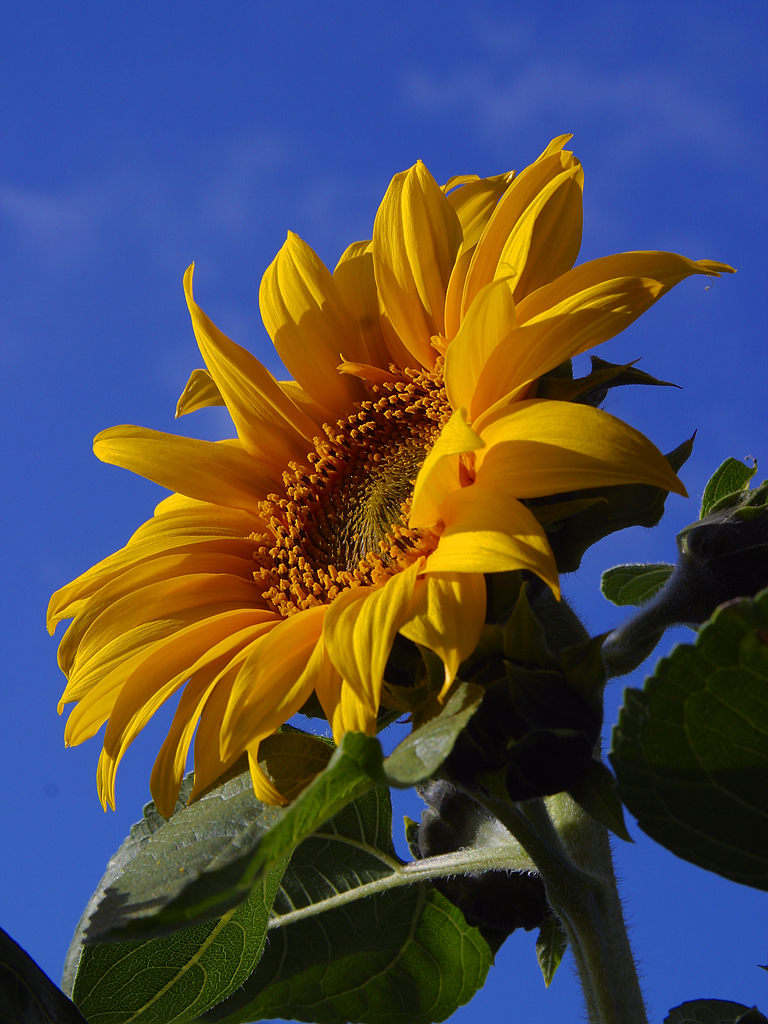 Common sunflowerHelianthus annuus
A tall annual plant grown for its large yellow flower heads and edible seeds
🇨🇦 Canada and 4 more · Wildflower
Common sunflowerHelianthus annuus
A tall annual plant grown for its large yellow flower heads and edible seeds
🇨🇦 Canada and 4 more · Wildflower
 Chrysanthemum菊花
Autumn-blooming flower with thousands of varieties, cherished in East Asia and beyond
🇨🇳 China and 6 more · Wildflower
Chrysanthemum菊花
Autumn-blooming flower with thousands of varieties, cherished in East Asia and beyond
🇨🇳 China and 6 more · Wildflower
 Asteraceae
The vast family of daisies, asters, and sunflowers with star-like flower heads
Asteraceae · Wildflower
Asteraceae
The vast family of daisies, asters, and sunflowers with star-like flower heads
Asteraceae · Wildflower
 DandelionTaraxacum
A yellow-flowered perennial found in fields, lawns, and gardens worldwide
Taraxacum · Wildflower
DandelionTaraxacum
A yellow-flowered perennial found in fields, lawns, and gardens worldwide
Taraxacum · Wildflower
More from Iran
All the flowers of Iran PeachPrunus persica
A flowering fruit tree from China, grown for its pink blossoms and sweet fruit
🇨🇳 China and 7 more · Flowering tree
PeachPrunus persica
A flowering fruit tree from China, grown for its pink blossoms and sweet fruit
🇨🇳 China and 7 more · Flowering tree
 PomegranatePunica granatum
A shrub with bright red flowers and a fruit full of edible seeds
🇮🇷 Iran and 9 more · Flowering shrub
PomegranatePunica granatum
A shrub with bright red flowers and a fruit full of edible seeds
🇮🇷 Iran and 9 more · Flowering shrub
 AlmondPrunus amygdalus
A Mediterranean tree grown for its fragrant spring flowers and edible seeds
🇮🇷 Iran and 6 more · Flowering tree
AlmondPrunus amygdalus
A Mediterranean tree grown for its fragrant spring flowers and edible seeds
🇮🇷 Iran and 6 more · Flowering tree
 ApricotPrunus armeniaca
A small fruit tree with early white to pink blossoms and golden-orange fruit
🇨🇳 China and 6 more · Flowering tree
ApricotPrunus armeniaca
A small fruit tree with early white to pink blossoms and golden-orange fruit
🇨🇳 China and 6 more · Flowering tree