
White trillium
Trillium grandiflorum, family Melanthiaceae
A woodland perennial with three-petalled white flowers in spring
White trillium is a perennial wildflower found in forests of eastern North America, especially in rich woods from northern Quebec to Georgia and west to Minnesota. Its large, three-petalled white blooms appear above three broad leaves in late spring. The plant often forms dense colonies and is known for its striking spring displays.
- Blooms in late spring with large white flowers above three broad leaves
- Forms dense colonies in rich hardwood forests
- Seeds are mostly spread by ants, sometimes by deer
- Rare pink and double-flowered forms occur
- A symbol of spring in eastern North American woodlands
What does White trillium look like?
White trillium grows from a short underground stem called a rhizome and sends up a single stalk, usually 20–40 cm tall, topped with three broad, green leaves arranged in a whorl. Above these leaves sits a single, showy flower with three large white petals and three green sepals. The petals are often 4–7 cm long, curving outward and sometimes turning pink as they age. The flower has no scent and stands out against the forest floor, especially when many plants bloom together.
Where does White trillium come from?
This species is found in the forests of eastern North America, stretching from northern Quebec through the Appalachian Mountains to northern Georgia and west to Minnesota. Smaller, separate populations exist in places like Nova Scotia, Maine, southern Illinois, and Iowa. The plant was first described in the early 1800s and its name, grandiflorum, refers to its large flowers. White trillium is part of a group of related species and does not readily hybridize with other trilliums.
When and how White trillium blooms
White trillium blooms in late spring, usually from late April to early June, depending on location. It prefers moist, well-drained soils in mixed hardwood forests. The plant grows slowly, often taking seven to ten years to flower from seed. Seeds are spread mostly by ants, which carry them short distances, and occasionally by deer, which can move them much farther.


How White trillium is used
People admire white trillium for its springtime displays in woodlands and gardens. It is often seen carpeting forest floors in dense clusters. In some regions, it is considered a symbol or emblem, and its presence is used to gauge the health of woodland habitats. The plant is not known for use in religious or culinary traditions.
Kinds of White trillium
While most white trilliums have pure white petals, a rare form called Trillium grandiflorum f. roseum opens with salmon-pink flowers, especially in parts of Virginia. Double-flowered forms with extra petals also occur, but these are usually sterile. Some plants show unusual green markings or leaf-like floral parts, often due to disease.
What White trillium means
White trillium is valued for its beauty in natural settings and is a well-known spring wildflower in eastern North America. Large colonies, such as those in Virginia's Blue Ridge Mountains, attract visitors each year. The plant is sometimes used as a regional emblem and is monitored by ecologists as an indicator of forest health.
Where to see White trillium
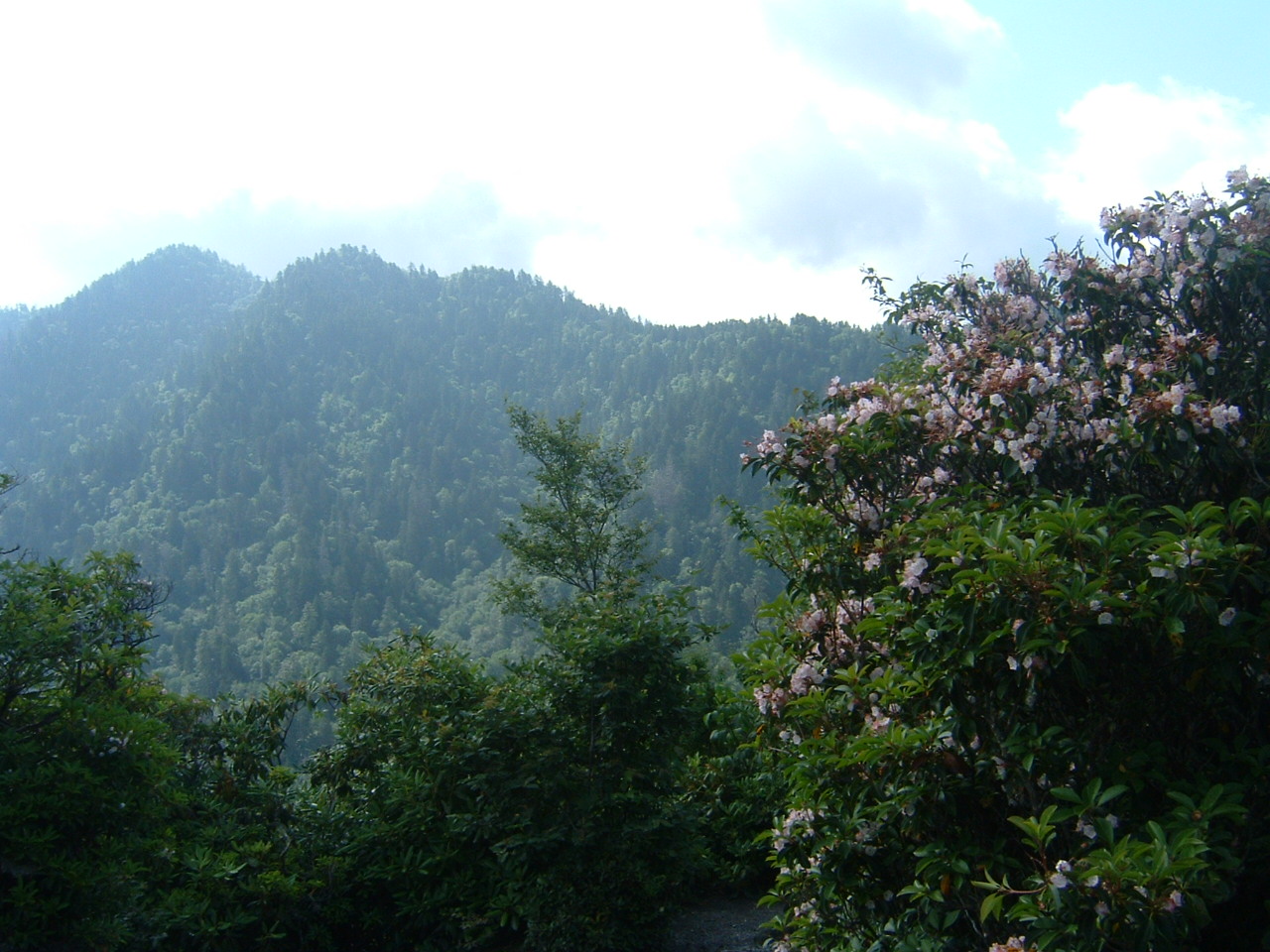
Questions people ask about White trillium
Where does white trillium grow naturally?
White trillium is found in forests across eastern North America, from Quebec and Nova Scotia south through the Appalachian Mountains to Georgia, and west to Minnesota, with some isolated populations in places like Maine and Iowa.
What does the white trillium flower look like?
It has three large white petals, sometimes turning pink with age, and three green sepals. The flower sits above a whorl of three broad leaves and has no scent.
How does white trillium spread?
Most seeds are carried short distances by ants, but deer can occasionally move seeds much farther. The plant grows slowly and can take several years to flower from seed.
Are there different forms of white trillium?
Yes, rare forms include salmon-pink flowers and double-flowered types with extra petals. Some plants may show unusual markings or leaf-like floral parts.
What is white trillium used for or what does it symbolize?
White trillium is admired for its springtime displays and is sometimes used as a regional emblem. It is also considered an indicator of healthy woodland habitats.
Good reading and sources
- Trillium grandiflorum | American wake-robinRoyal Horticultural Society, Article
- Plants of the World OnlineRoyal Botanic Gardens, Kew, Plant database
- Where it has been recordedGBIF, Plant database
- Sightings and photos by naturalistsiNaturalist, Plant database
- Trillium grandiflorum on WikipediaEncyclopedia
- More photos on Wikimedia CommonsPhotos
- Wikidata recordOpen data
The facts on this page come from the Wikipedia article "Trillium grandiflorum", written by its contributors and used under the CC BY-SA 4.0 licence, and from its Wikidata record (CC0). Phool rewrote the text in its own words, with AI assistance, and compares every page with the article to make sure no passage is copied. It may be reused under the same CC BY-SA 4.0 licence with a link back.
It may contain mistakes. It is not medical or foraging advice: many flowers are poisonous, and traditional uses are reported, not recommended. If something is wrong, tell us. Last refreshed 2026-10-03.
Others in the family Melanthiaceae
The whole family BeargrassXerophyllum tenax
A tall, white-flowered plant woven into baskets by Native Americans
Xerophyllum tenax · Wildflower
BeargrassXerophyllum tenax
A tall, white-flowered plant woven into baskets by Native Americans
Xerophyllum tenax · Wildflower
 Trillium
Woodland wildflowers with three-petalled blooms and whorled bracts
🇺🇸 United States and 4 more · Wildflower
Trillium
Woodland wildflowers with three-petalled blooms and whorled bracts
🇺🇸 United States and 4 more · Wildflower
 ToadshadeTrillium sessile
A woodland wildflower with stalkless, reddish-purple blooms
🇺🇸 United States · Wildflower
ToadshadeTrillium sessile
A woodland wildflower with stalkless, reddish-purple blooms
🇺🇸 United States · Wildflower
 Pacific trilliumTrillium ovatum
A three-petaled woodland wildflower of western North America
🇺🇸 United States · Wildflower
Pacific trilliumTrillium ovatum
A three-petaled woodland wildflower of western North America
🇺🇸 United States · Wildflower
More from Canada
All the flowers of Canada Common sunflowerHelianthus annuus
A tall annual plant grown for its large yellow flower heads and edible seeds
🇨🇦 Canada and 4 more · Wildflower
Common sunflowerHelianthus annuus
A tall annual plant grown for its large yellow flower heads and edible seeds
🇨🇦 Canada and 4 more · Wildflower
 BirchBetula
Slender trees with papery bark found across the northern world
🇨🇳 China and 7 more · Wildflower
BirchBetula
Slender trees with papery bark found across the northern world
🇨🇳 China and 7 more · Wildflower
 CactusCactaceae
Succulent plants with spines, native to the Americas
🇲🇽 Mexico and 7 more · Wildflower
CactusCactaceae
Succulent plants with spines, native to the Americas
🇲🇽 Mexico and 7 more · Wildflower
 TulipTulipa
Spring-blooming bulbs with showy, cup-shaped flowers in many colours
🇳🇱 Netherlands and 7 more · Wildflower
TulipTulipa
Spring-blooming bulbs with showy, cup-shaped flowers in many colours
🇳🇱 Netherlands and 7 more · Wildflower