
Tulipa saxatilis
A wild pink tulip from the Aegean islands and western Turkey
Tulipa saxatilis is a perennial tulip with pink petals and a yellow centre, native to the southern Aegean islands and parts of western Turkey. It grows on rocky slopes and field edges, and is also grown in gardens, with the 'Lilac Wonder' cultivar being especially popular.
- Native to Crete, Karpathos, Rhodes, and western Turkey
- Flowers are bright pink with a yellow centre
- Blooms from March to May
- 'Lilac Wonder' is a popular garden variety
- Grows on rocky slopes and field edges
What does Tulipa saxatilis look like?
Tulipa saxatilis is a small tulip that grows up to 25 cm tall from a bulb. Its leaves are long, narrow, and shiny on top, reaching up to 38 cm. The plant usually produces one flower per stem, with pointed pink petals and a clear yellow centre. The outer petals are slightly narrower than the inner ones. The stamens have dark anthers and are hairy at their base.
Where does Tulipa saxatilis come from?
This tulip is native to the southern Aegean islands, especially Crete, Karpathos, and Rhodes, and is also found on the Datça peninsula in western Turkey. It prefers rocky places, scree, and the edges of fields, often on limestone. Over time, it has spread beyond its original range and now grows wild in some parts of mainland Greece, Italy, and the Scilly Isles in the UK, usually where it has escaped from gardens.
When and how Tulipa saxatilis blooms
Tulipa saxatilis blooms in spring, from March to May. It grows from bulbs that rest underground during the off-season. The plant thrives in rocky or stony ground, often at higher elevations up to 900 meters. Gardeners grow it as an ornamental, planting the bulbs in autumn for spring flowers. The popular 'Lilac Wonder' cultivar is widely grown for its showy blooms.


How Tulipa saxatilis is used
People mainly grow Tulipa saxatilis for its attractive flowers in gardens and parks. In the wild, it adds colour to rocky slopes and field edges in its native range. The 'Lilac Wonder' variety is especially valued by gardeners for its reliable spring display.
Kinds of Tulipa saxatilis
The best-known cultivated form is 'Lilac Wonder', which has pink petals with a yellow base and is often grouped with the subspecies bakeri. This cultivar is recognized for its garden performance. Both diploid and triploid forms of the species exist, differing in chromosome number.
What Tulipa saxatilis means
Tulipa saxatilis is appreciated for its beauty in gardens and is part of the wild flora of the Aegean region. The 'Lilac Wonder' cultivar has been officially recognized for its value in gardens. The species is not tied to any particular symbolism or festival in the sources.
Questions people ask about Tulipa saxatilis
Where does Tulipa saxatilis come from?
It is native to the southern Aegean islands, including Crete, Karpathos, and Rhodes, as well as the Datça peninsula in western Turkey. It also grows wild in some areas where it has escaped from gardens.
What does Tulipa saxatilis look like?
This tulip has pointed pink petals with a sharply defined yellow centre. It grows up to 25 cm tall, with long, narrow, shiny leaves and usually a single flower per stem.
When does Tulipa saxatilis flower?
It blooms in spring, usually from March to May, both in the wild and in gardens.
How is Tulipa saxatilis used?
People mainly grow it as an ornamental plant in gardens for its colourful spring flowers. It is also found growing wild in rocky places in its native region.
Are there any well-known varieties?
Yes, 'Lilac Wonder' is a widely grown garden variety known for its pink and yellow flowers and reliable performance.
Good reading and sources
- Plants of the World OnlineRoyal Botanic Gardens, Kew, Plant database
- Where it has been recordedGBIF, Plant database
- Sightings and photos by naturalistsiNaturalist, Plant database
- Tulipa saxatilis on WikipediaEncyclopedia
- More photos on Wikimedia CommonsPhotos
- Wikidata recordOpen data
The facts on this page come from the Wikipedia article "Tulipa saxatilis", written by its contributors and used under the CC BY-SA 4.0 licence, and from its Wikidata record (CC0). Phool rewrote the text in its own words, with AI assistance, and compares every page with the article to make sure no passage is copied. It may be reused under the same CC BY-SA 4.0 licence with a link back.
It may contain mistakes. It is not medical or foraging advice: many flowers are poisonous, and traditional uses are reported, not recommended. If something is wrong, tell us. Last refreshed 2026-10-03.
Others in the family Liliaceae
The whole family LilyLilium
Tall bulb flowers with large, colourful blooms in many gardens and cultures
Lilium · Wildflower
LilyLilium
Tall bulb flowers with large, colourful blooms in many gardens and cultures
Lilium · Wildflower
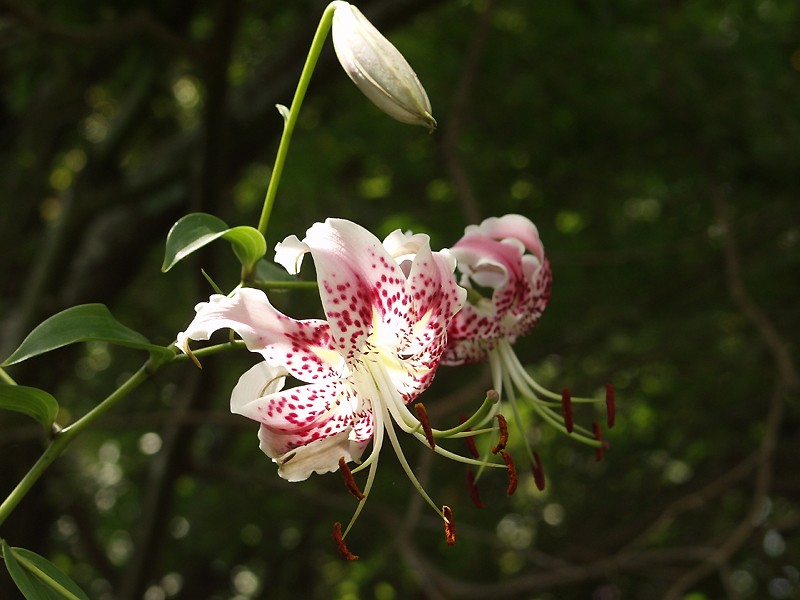 Lilium speciosum
A late-summer lily with fragrant white to pink flowers from East Asia
🇯🇵 Japan and 2 more · Wildflower
Lilium speciosum
A late-summer lily with fragrant white to pink flowers from East Asia
🇯🇵 Japan and 2 more · Wildflower
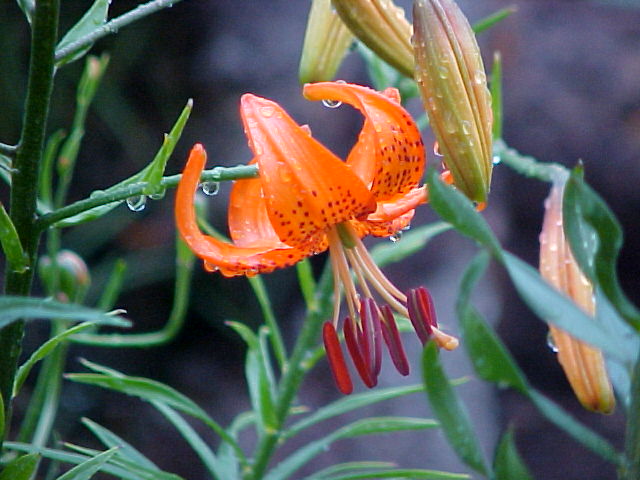 Lilium davidii
A tall Asian lily with edible bulbs and orange recurved flowers
🇨🇳 China and 1 more · Wildflower
Lilium davidii
A tall Asian lily with edible bulbs and orange recurved flowers
🇨🇳 China and 1 more · Wildflower
 Fritillaria
Bell-shaped spring flowers from the lily family grown for gardens and tradition
Fritillaria · Wildflower
Fritillaria
Bell-shaped spring flowers from the lily family grown for gardens and tradition
Fritillaria · Wildflower
More from Turkey
All the flowers of Turkey PeachPrunus persica
A flowering fruit tree from China, grown for its pink blossoms and sweet fruit
🇨🇳 China and 7 more · Flowering tree
PeachPrunus persica
A flowering fruit tree from China, grown for its pink blossoms and sweet fruit
🇨🇳 China and 7 more · Flowering tree
 PomegranatePunica granatum
A shrub with bright red flowers and a fruit full of edible seeds
🇮🇷 Iran and 9 more · Flowering shrub
PomegranatePunica granatum
A shrub with bright red flowers and a fruit full of edible seeds
🇮🇷 Iran and 9 more · Flowering shrub
 TulipTulipa
Spring-blooming bulbs with showy, cup-shaped flowers in many colours
🇳🇱 Netherlands and 7 more · Wildflower
TulipTulipa
Spring-blooming bulbs with showy, cup-shaped flowers in many colours
🇳🇱 Netherlands and 7 more · Wildflower
 Sour cherryPrunus cerasus
The small, tart cherry tree grown for its sour red fruit
🇹🇷 Turkey and 7 more · Flowering tree
Sour cherryPrunus cerasus
The small, tart cherry tree grown for its sour red fruit
🇹🇷 Turkey and 7 more · Flowering tree