
Sprenger's tulip
Tulipa sprengeri, family Liliaceae
A bright red wild tulip from Amasya, Turkey, once thought extinct
Sprenger's tulip is a perennial bulb plant with vivid red, star-shaped flowers, native to the Amasya region in Turkey. After being believed extinct in the wild for over a century, it was rediscovered in 2026 and is now grown in many botanical gardens and by gardeners for its striking blooms.
- Native to the Amasya region in Turkey
- Rediscovered in the wild in 2026 after 130 years
- Single, bright red, star-shaped flower per stem
- Grown in over 30 botanical gardens worldwide
- Bulbs dislike disturbance and root deeply
What does Sprenger's tulip look like?
Sprenger's tulip grows from a small, egg-shaped bulb and reaches about 30 to 50 cm tall. Its shiny green leaves are long and narrow, with the lower ones being wider than those near the top. Each plant bears a single upright flower on a smooth stem. The flower is funnel-shaped at first, opening into a star, with bright red petals that are pointed and sometimes show a green line on the outside. The center has yellow anthers and a green ovary.
Where does Sprenger's tulip come from?
This tulip is native to the Amasya area in Turkey. It was first collected in the 1890s by a German gardener and soon sent to nurseries in Italy and the Netherlands. Overharvesting bulbs from the wild led to its disappearance from its natural habitat, and for many years it was thought lost. In 2026, it was found again in rural Amasya. The plant has a history of being grown in European gardens and is named for Carl Sprenger, who helped introduce it.
When and how Sprenger's tulip blooms
Sprenger's tulip is grown from bulbs, which are planted about 10–15 cm deep in soil that drains well and is rich in humus. It prefers a spot with sun or partial shade that is not too hot. The plant can self-seed and usually takes around four years from seed to flower. It is hardy to moderate frost if the soil does not stay wet. The bulbs grow deep roots and do not like to be moved.

How Sprenger's tulip is used
Today, Sprenger's tulip is grown in many botanical gardens and by flower enthusiasts. It is valued for its vivid color and late spring bloom. The plant is also part of reintroduction efforts in Turkey, especially at the Atatürk Arboretum in Istanbul, in partnership with Kew Gardens. Its rarity and rediscovery have made it a symbol of conservation.
Kinds of Sprenger's tulip
There are no widely recognized cultivars or varieties of Sprenger's tulip. The plants grown in gardens and collections come from the original wild stock, and genetic studies show they have kept a good range of diversity. The species rarely crosses with other tulips because it flowers later than most.
What Sprenger's tulip means
Sprenger's tulip is a rare wildflower with a story of loss and rediscovery. Its bright red flower is a highlight in gardens and collections, and it has become a symbol for plant conservation. The species is linked to the Amasya region and is grown in over 30 botanical gardens worldwide. Its presence in gardens helps keep its memory alive.
Questions people ask about Sprenger's tulip
Where does Sprenger's tulip come from?
Sprenger's tulip is native to the Amasya region in Turkey. It was first collected there in the 1890s and was believed extinct in the wild until its rediscovery in 2026.
What does Sprenger's tulip look like?
It grows up to 50 cm tall, with long, narrow green leaves and a single upright flower. The flower is bright red, star-shaped when open, and has pointed petals.
How is Sprenger's tulip used?
It is grown as an ornamental plant in gardens and botanical collections. The tulip is also part of conservation and reintroduction projects in Turkey.
Why is Sprenger's tulip important?
Its rediscovery after being thought extinct highlights the importance of plant conservation. It is valued for its beauty and as a symbol of rare wildflowers.
Does Sprenger's tulip have any special meaning?
While not tied to a specific cultural symbol, its story of disappearance and rediscovery has made it a symbol for conservation and the protection of rare plants.
Good reading and sources
- Tulipa sprengeri (15)Royal Horticultural Society, Article
- Plants of the World OnlineRoyal Botanic Gardens, Kew, Plant database
- Where it has been recordedGBIF, Plant database
- Sightings and photos by naturalistsiNaturalist, Plant database
- Tulipa sprengeri on WikipediaEncyclopedia
- More photos on Wikimedia CommonsPhotos
- Wikidata recordOpen data
The facts on this page come from the Wikipedia article "Tulipa sprengeri", written by its contributors and used under the CC BY-SA 4.0 licence, and from its Wikidata record (CC0). Phool rewrote the text in its own words, with AI assistance, and compares every page with the article to make sure no passage is copied. It may be reused under the same CC BY-SA 4.0 licence with a link back.
It may contain mistakes. It is not medical or foraging advice: many flowers are poisonous, and traditional uses are reported, not recommended. If something is wrong, tell us. Last refreshed 2026-10-03.
Others in the family Liliaceae
The whole family LilyLilium
Tall bulb flowers with large, colourful blooms in many gardens and cultures
Lilium · Wildflower
LilyLilium
Tall bulb flowers with large, colourful blooms in many gardens and cultures
Lilium · Wildflower
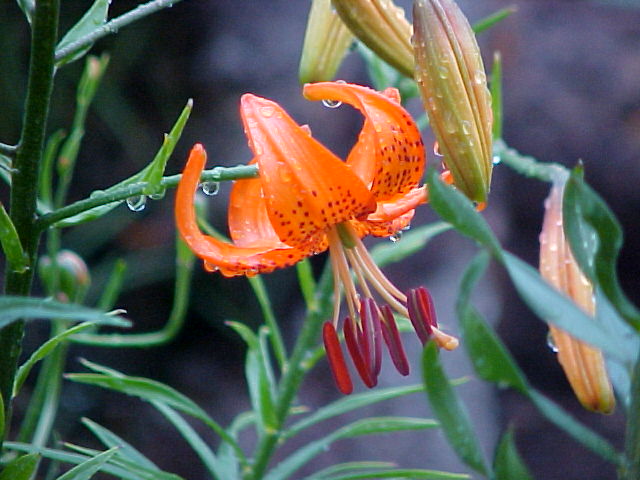 Lilium davidii
A tall Asian lily with edible bulbs and orange recurved flowers
🇨🇳 China and 1 more · Wildflower
Lilium davidii
A tall Asian lily with edible bulbs and orange recurved flowers
🇨🇳 China and 1 more · Wildflower
 Chinese LilyLilium brownii
A wild and cultivated lily from China with edible bulbs
🇨🇳 China and 3 more · Wildflower
Chinese LilyLilium brownii
A wild and cultivated lily from China with edible bulbs
🇨🇳 China and 3 more · Wildflower
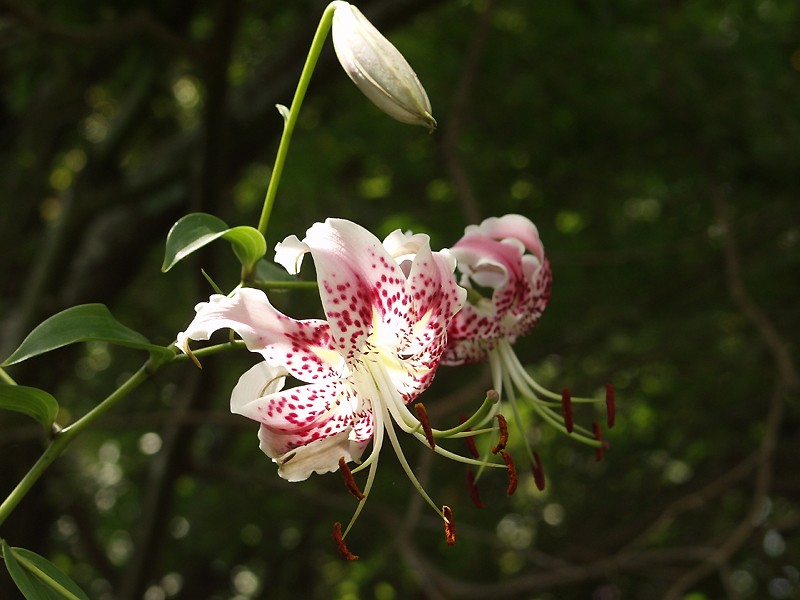 Lilium speciosum
A late-summer lily with fragrant white to pink flowers from East Asia
🇯🇵 Japan and 2 more · Wildflower
Lilium speciosum
A late-summer lily with fragrant white to pink flowers from East Asia
🇯🇵 Japan and 2 more · Wildflower
More from Turkey
All the flowers of Turkey PeachPrunus persica
A flowering fruit tree from China, grown for its pink blossoms and sweet fruit
🇨🇳 China and 7 more · Flowering tree
PeachPrunus persica
A flowering fruit tree from China, grown for its pink blossoms and sweet fruit
🇨🇳 China and 7 more · Flowering tree
 PomegranatePunica granatum
A shrub with bright red flowers and a fruit full of edible seeds
🇮🇷 Iran and 9 more · Flowering shrub
PomegranatePunica granatum
A shrub with bright red flowers and a fruit full of edible seeds
🇮🇷 Iran and 9 more · Flowering shrub
 TulipTulipa
Spring-blooming bulbs with showy, cup-shaped flowers in many colours
🇳🇱 Netherlands and 7 more · Wildflower
TulipTulipa
Spring-blooming bulbs with showy, cup-shaped flowers in many colours
🇳🇱 Netherlands and 7 more · Wildflower
 Sour cherryPrunus cerasus
The small, tart cherry tree grown for its sour red fruit
🇹🇷 Turkey and 7 more · Flowering tree
Sour cherryPrunus cerasus
The small, tart cherry tree grown for its sour red fruit
🇹🇷 Turkey and 7 more · Flowering tree