
Ironweed
Vernonia, family Asteraceae
A diverse purple-flowered genus grown for gardens, cooking greens, and seed oil
Ironweeds are flowering herbs, shrubs, and trees across the Americas, Africa, and Asia known for vivid purple blooms. Gardeners cultivate them in prairie landscapes, while several African species provide beloved bitter culinary greens and traditional remedies.
- Features roughly 350 species spanning tiny desert herbs to towering 36-metre tropical trees.
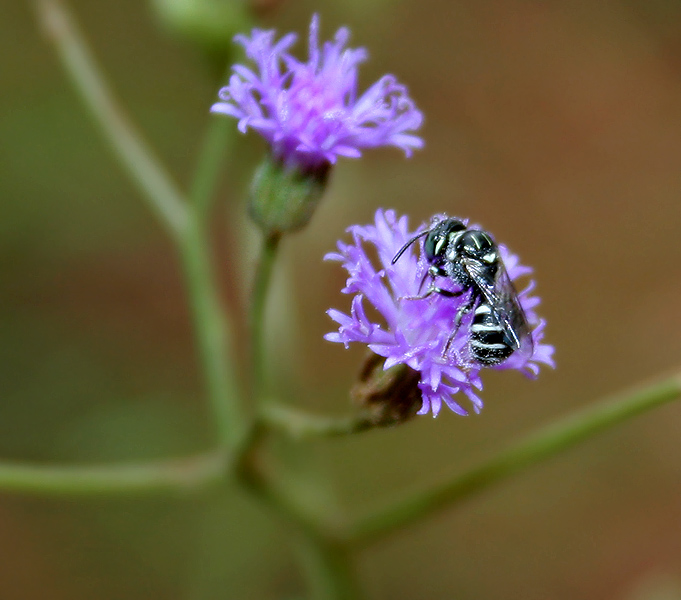
- Famous for intense purple flower heads, with select garden cultivars bearing white blooms.
- A dietary staple across West and Central Africa, where bitterleaf forms the core of ndolé soup.
- Ethiopian Vernonia galamensis seeds yield valuable oil used in paints and industrial chemicals.
What does Ironweed look like?
Vernonia is a large genus within the daisy family, Asteraceae, counting roughly 350 species. These plants span an astonishing range of sizes. They include tiny Brazilian desert plants only eight centimetres tall, woody shrubs, climbing vines, and massive trees reaching thirty-six metres high in the East Indies. Their leaves can range from petite blades to broad foliage over one metre long. Most species are celebrated for clusters of rich, vivid purple blossoms, though select garden varieties display white petals instead. Across overlapping habitats, different species readily cross and produce natural hybrids. Larvae of several moth species rely exclusively on these plants for food.
Where does Ironweed come from?
Species of Vernonia grow wild across North and South America, Africa, and Southeast Asia. The botanical genus was officially described in 1791 by German botanist Johann Christian Daniel von Schreber. He chose the scientific name to honour William Vernon, an English entomologist and plant hunter from Cambridge University who gathered botanical specimens in Maryland during the late seventeenth century. Botanists continue to debate the boundaries of the group. Some classification systems divide it into several smaller genera, restricting true Vernonia to about twenty species located primarily in North America north of Mexico alongside a few South American relatives.
When and how Ironweed blooms
Vernonia plants flourish in varied wild landscapes, from tropical woodlands to open grasslands. Several robust North American herbaceous species are cultivated by gardeners, especially as structural elements in prairie-style beds and borders. Horticulturists have bred and selected particular cultivars valued for exceptional size and vigour, as well as forms featuring white flower heads rather than the customary purple. Where different wild varieties grow side by side, they frequently cross-pollinate naturally, forming fertile hybrids in zones where their geographic distributions meet.

How Ironweed is used
People use Vernonia species for food, natural remedies, and industry. In West and Central Africa, species such as Vernonia amygdalina and Vernonia calvoana are staple leaf vegetables known as bitterleaf. They feature in traditional recipes like Nigerian onugbu soup, Cameroonian ndolé, and egusi soup, and are sold fresh, dried, or exported overseas. Healers across Africa and Brazil employ the leaves in traditional medicine. In East Africa, farmers around Harar in Ethiopia grow Vernonia galamensis for its oil-rich seeds, which provide vernolic acid used in paints and coatings.
Kinds of Ironweed
The genus contains notable variety. Vernonia arborea is the tallest daisy family member in the world, while Vernonia desertorum stays under ten centimetres. Cultivated garden perennials include Vernonia angustifolia, Vernonia gigantea, and Vernonia noveboracensis, with cultivars like 'Jonesboro Giant' and white-flowering 'Albiflora'. Vernonia galamensis serves as an oilseed crop in Ethiopia.
What Ironweed means
In West and Central Africa, bitterleaf holds deep cultural value as a beloved cooking ingredient. The leaves are integral to Cameroonian identity through ndolé, the national dish, and are central to Igbo culinary tradition in Nigeria as onugbu. In Brazilian folk practice, Vernonia condensata carries traditional names such as figatil or necroton and remains a recognized medicinal herb.
Questions people ask about Ironweed
Where do ironweeds come from?
Ironweed species grow naturally across tropical and temperate parts of North America, South America, Africa, and Southeast Asia. They inhabit prairies, forests, and varied wild ecosystems across these continents.
What are ironweeds used for?
Certain African species are essential leafy greens in traditional soups like ndolé and onugbu. Other species serve in folk medicine in Brazil and Africa, produce industrial seed oil in Ethiopia, or decorate prairie-style gardens.
What colours do ironweed flowers have?
Wild species are best known for their vibrant, deep purple flower heads. Plant breeders have also developed special garden cultivars that produce white blossoms.
Why is the genus called Vernonia?
German botanist Johann Christian Daniel von Schreber established the genus name in 1791 to honour William Vernon, an English plant and insect collector who gathered botanical specimens in North America.
Good reading and sources
- Encyclopaedia BritannicaArticle
- USDA Plants DatabaseUS Department of Agriculture, Article
- Plants of the World OnlineRoyal Botanic Gardens, Kew, Plant database
- Where it has been recordedGBIF, Plant database
- Sightings and photos by naturalistsiNaturalist, Plant database
The facts on this page come from the Wikipedia article "Vernonia", written by its contributors and used under the CC BY-SA 4.0 licence, and from its Wikidata record (CC0). EveryPhool rewrote the text in its own words, with AI assistance, and compares every page with the article to make sure no passage is copied. It may be reused under the same CC BY-SA 4.0 licence with a link back.
It may contain mistakes. It is not medical or foraging advice: many flowers are poisonous, and traditional uses are reported, not recommended. If something is wrong, tell us. Last refreshed 2026-10-04.
Others in the family Asteraceae
The whole family Common sunflowerHelianthus annuus
A tall annual plant grown for its large yellow flower heads and edible seeds
🇨🇦 Canada and 4 more · Wildflower
Common sunflowerHelianthus annuus
A tall annual plant grown for its large yellow flower heads and edible seeds
🇨🇦 Canada and 4 more · Wildflower
 Chrysanthemum菊花
Autumn-blooming flower with thousands of varieties, cherished in East Asia and beyond
🇨🇳 China and 6 more · Wildflower
Chrysanthemum菊花
Autumn-blooming flower with thousands of varieties, cherished in East Asia and beyond
🇨🇳 China and 6 more · Wildflower
 DandelionTaraxacum
A yellow-flowered perennial found in fields, lawns, and gardens worldwide
Taraxacum · Wildflower
DandelionTaraxacum
A yellow-flowered perennial found in fields, lawns, and gardens worldwide
Taraxacum · Wildflower
 Dahlia
A bushy perennial with tuberous roots and bright, star-shaped blooms
🇲🇽 Mexico and 1 more · Garden flower
Dahlia
A bushy perennial with tuberous roots and bright, star-shaped blooms
🇲🇽 Mexico and 1 more · Garden flower
More from Cameroon
All the flowers of Cameroon Cape primroseStreptocarpus
A houseplant with tubular blooms from African mountains and forests
🇿🇦 South Africa and 7 more · Wildflower
Cape primroseStreptocarpus
A houseplant with tubular blooms from African mountains and forests
🇿🇦 South Africa and 7 more · Wildflower
 Hypericum revolutum
A bright yellow-flowered shrub of African and Arabian mountain slopes
🇨🇲 Cameroon and 2 more · Wildflower
Hypericum revolutum
A bright yellow-flowered shrub of African and Arabian mountain slopes
🇨🇲 Cameroon and 2 more · Wildflower
 Bleeding glory-bowerClerodendrum thomsoniae
A climbing plant with white and red flowers grown for decoration
🇨🇲 Cameroon and 4 more · Garden flower
Bleeding glory-bowerClerodendrum thomsoniae
A climbing plant with white and red flowers grown for decoration
🇨🇲 Cameroon and 4 more · Garden flower
 African tulip treeSpathodea
A tropical African tree with large, fiery orange-red flowers
🇦🇴 Angola and 4 more · Flowering tree
African tulip treeSpathodea
A tropical African tree with large, fiery orange-red flowers
🇦🇴 Angola and 4 more · Flowering tree