
Yerba mate
Ilex paraguariensis, family Aquifoliaceae
In its own language: kaʼa
A South American holly whose caffeine-rich leaves brew mate and tereré
Yerba mate is a South American holly tree native to countries such as Brazil, Paraguay, and Argentina, bearing small greenish-white flowers and bright red berries. Its serrated evergreen leaves are dried, steeped in hot or cold water, and shared communally in traditional gourds as a caffeinated social drink.
- The plant is a South American holly tree with small greenish-white flowers and caffeine-rich foliage.
- Leaves are dried over wood fires, creating the base for the traditional hot infusion called mate.
- Drinkers share a single gourd and metal straw in a structured, clockwise communal ritual.
- Brazil and Argentina produce the majority of the global commercial harvest.
What does Yerba mate look like?
Yerba mate starts life as an evergreen bush before developing into a tree that can reach 15 meters in height. Its leathery leaves have serrated edges, grow up to 110 millimeters long, and carry small nectar glands. These leaves contain caffeine and natural stimulant compounds. The plant produces tiny greenish-white blossoms composed of four petals. After flowering, it forms small red berry-like fruits, known botanically as drupes, which measure between four and six millimeters across. Male and female flowers appear on separate plants. Female trees are comparatively rare in plantations and yield foliage with a gentler taste and less caffeine than male trees.
Where does Yerba mate come from?
Native to South American forests across Brazil, Paraguay, and Argentina, the plant was originally gathered and cultivated by Guaraní and Tupí peoples. Indigenous communities in Alto Paraná and Amambay first prepared the leaves before European arrivals adopted the custom. During the seventeenth century, Jesuit missionaries developed successful plantation techniques in Misiones, turning the crop into a major regional commodity. When the Jesuits were expelled in the 1770s, their cultivation methods were lost for over a century, and harvesters returned to cutting wild groves. French botanist Augustin Saint-Hilaire later gave the species its scientific name. Brazil and Argentina re-established commercial farming in the late nineteenth century and remain the top global producers today.
When and how Yerba mate blooms
Farmers, known as yerbateros or ervateiros, harvest purple seeds between January and April. The seeds are placed in water to separate viable ones from floating debris, then sown from March to May. Young saplings grown in containers are moved outdoors between April and September, whereas bare-root specimens are planted in June and July. Cultivators must protect plantations from leaf-eating moth caterpillars, beetles, and branch-burrowing bugs. Once gathered, workers cure the leafy branches over open wood smoke. This drying process stops moisture decay and imparts a characteristic smoky aroma to the crop before final milling.


How Yerba mate is used
People dry and chop the leaves to prepare caffeinated infusions. The classic hot brew, called mate or chimarrão, is steeped in hot but not boiling water inside a hollow gourd. Cold-water brewing produces tereré, a refreshing drink popular in warm weather and often served in a polished horn. The infusion has a grassy, herbal bitterness reminiscent of green tea, and drinkers sometimes blend it with mint or citrus peel. Commercial producers also sell roasted leaves as mate cocido in teabags, ready-to-drink iced bottles, and energy beverages. In morning cafés, hot mate is frequently served alongside sweet pastries.
Kinds of Yerba mate
Different processing and serving styles create distinct regional drinks. Chimarrão uses vibrant green, unroasted leaves served hot in a gourd, especially in southern Brazil. Tereré uses cold water or chilled citrus juice poured over green leaves, favored during hot weather. In contrast, mate cocido and Brazilian chá mate rely on roasted leaves, yielding an amber beverage sold loose, in tea bags, or in chilled cans. Toasted mate batido offers a milder, slightly spicy flavor profile compared to the sharp bitterness of raw green brews.
What Yerba mate means
Drinking mate is an important social ritual across the Southern Cone. Friends and relatives sit together, passing a single gourd and metal straw, called a bombilla, around the group in turns. The host refills the gourd for each drinker in clockwise order. By custom, a participant says thank you only when they want no further servings. In Uruguay and Paraguay, people regularly walk outdoors carrying hot-water flasks under their arms. Syrian and Lebanese immigrants returning from South America in the nineteenth century brought the beverage to the Middle East, where sharing mate remains a popular community tradition.
Questions people ask about Yerba mate
Where does yerba mate come from?
Yerba mate is native to the subtropical forests of South America, including Brazil, Paraguay, and Argentina. Indigenous Guaraní and Tupí communities first gathered and drank the leaves before Jesuit missionaries established large-scale cultivation during the seventeenth century.
What is yerba mate used for?
People harvest the leaves to brew traditional caffeinated drinks. It is steeped in hot water as mate or chimarrão, brewed cold as tereré, and roasted for teas and bottled beverages. The drink is shared communally among friends and families.
How do the flowers and fruits of the plant appear?
The yerba mate tree produces small, greenish-white blossoms with four petals. Following flowering, female trees develop round red drupes that measure between four and six millimeters across, which turn dark purple as the seeds inside ripen.
How is mate traditionally shared?
A host prepares the herb in a hollow gourd with warm water and passes it around a circle. Everyone sips through the same metal straw, called a bombilla. A drinker says thank you only when they have finished drinking for the session.
Good reading and sources
- Encyclopaedia BritannicaArticle
- IUCN Red List of Threatened SpeciesIUCN Red List, Article
- USDA Plants DatabaseUS Department of Agriculture, Article
- Plants of the World OnlineRoyal Botanic Gardens, Kew, Plant database
- Where it has been recordedGBIF, Plant database
- Sightings and photos by naturalistsiNaturalist, Plant database
The facts on this page come from the Wikipedia article "Yerba mate", written by its contributors and used under the CC BY-SA 4.0 licence, and from its Wikidata record (CC0). EveryPhool rewrote the text in its own words, with AI assistance, and compares every page with the article to make sure no passage is copied. It may be reused under the same CC BY-SA 4.0 licence with a link back.
It may contain mistakes. It is not medical or foraging advice: many flowers are poisonous, and traditional uses are reported, not recommended. If something is wrong, tell us. Last refreshed 2026-10-04.
Others in the family Aquifoliaceae
The whole family
More from Brazil
All the flowers of Brazil Eucalyptus
The tall, aromatic trees and shrubs known as gum trees or eucalypts
🇦🇺 Australia and 7 more · Flowering tree
Eucalyptus
The tall, aromatic trees and shrubs known as gum trees or eucalypts
🇦🇺 Australia and 7 more · Flowering tree
 Asteraceae
The large plant family behind daisies, sunflowers and asters
🇺🇸 United States and 2 more · Wildflower
Asteraceae
The large plant family behind daisies, sunflowers and asters
🇺🇸 United States and 2 more · Wildflower
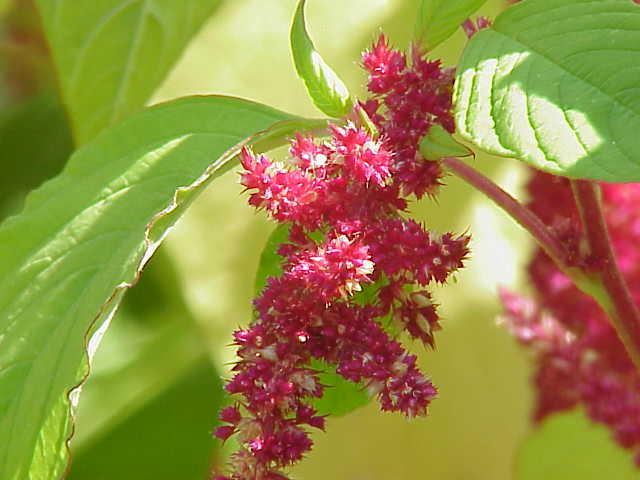 AmaranthAmaranthus
A tall, colourful plant grown for its flowers, leaves and edible seeds
🇲🇽 Mexico and 7 more · Wildflower
AmaranthAmaranthus
A tall, colourful plant grown for its flowers, leaves and edible seeds
🇲🇽 Mexico and 7 more · Wildflower
 Sensitive PlantMimosa pudica
A touch-sensitive plant whose leaves fold up when disturbed
🇧🇷 Brazil and 8 more · Wildflower
Sensitive PlantMimosa pudica
A touch-sensitive plant whose leaves fold up when disturbed
🇧🇷 Brazil and 8 more · Wildflower