
Aberglasney
Historic house and gardens in the Tywi valley, Carmarthenshire, Wales
Aberglasney is a medieval house and ten-acre garden in West Wales, known for its Elizabethan promenade garden and rare specimen trees. The gardens include walled sections, a cloister garden with ancient features, and a collection of over 450 daffodil varieties, open to the public since 1999.
- Features a rare Elizabethan promenade garden
- Home to over 450 varieties of daffodils
- Ninfarium indoor garden inspired by Italy's Garden of Ninfa
- Grade II* listed house and gardens
- Open to the public since 1999
What is Aberglasney?
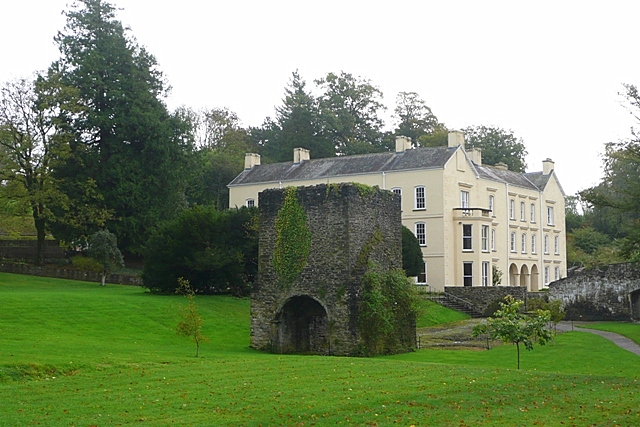
Aberglasney is a historic estate featuring a Grade II* listed house and ten acres of gardens in the Tywi valley. Visitors find several walled gardens, an Elizabethan promenade garden, a rare parapet walk, and a cloister garden with medieval origins. The grounds include specimen trees planted in the early 20th century and a large collection of daffodils. The Ninfarium, built within the mansion's ruins, displays exotic plants under glass. The gardens are open to the public and offer a mix of formal and informal planting styles.
The history of Aberglasney
The site has medieval origins and was owned by a family tracing its roots to Welsh nobility. The house was rebuilt in 1603, likely gaining its Elizabethan promenade garden at that time. Over centuries, Aberglasney passed through several families, each leaving their mark on the house and grounds. The property was used by the military during World War II and later fell into decline. Restoration began in the late 20th century, led by the Aberglasney Restoration Trust, and the gardens opened to the public in 1999.
What there is to see
The gardens at Aberglasney are divided into several distinct areas. The Elizabethan/Jacobean Cloister Garden features a rare parapet walk and dates back to at least the 13th century, as shown by archaeological finds. The Upper Walled Garden was designed by Penelope Hobhouse. The Ninfarium is an indoor garden inspired by the Italian Garden of Ninfa, filled with exotic plants. Throughout the grounds, visitors find rare specimen trees and extensive daffodil plantings.



When to go
Aberglasney is open to visitors who come to explore its historic gardens and house. The gardens are especially noted for their spring daffodil displays, with over 450 varieties. The site has hosted public events, such as the BBC's Antiques Roadshow. The gardens offer a place for walking, learning about horticultural history, and enjoying a variety of plant collections throughout the year.
Parts and collections
Notable features include the Elizabethan promenade garden, considered the best preserved of its kind in Great Britain, and the Ninfarium, which brings together exotic plants in a unique indoor setting. The daffodil collection is a highlight, with hundreds of varieties on display. The gardens also include rare specimen trees planted in the early 1900s.
Why Aberglasney matters
Aberglasney is recognized for its historic and horticultural value, with both the house and gardens listed as Grade II* for their special interest. The site is featured in poetry by John Dyer and has appeared in media such as the BBC's Antiques Roadshow. The gardens reflect centuries of Welsh history and garden design, making them a significant cultural site in Wales.
The flowers of Aberglasney

Questions people ask about Aberglasney
Where is Aberglasney located?
Aberglasney is in the Tywi valley, near Llangathen in Carmarthenshire, West Wales. It is about three miles from Llandeilo and close to the A40 road.
What is Aberglasney known for?
Aberglasney is known for its historic house, Elizabethan promenade garden, and ten acres of gardens, including a large collection of daffodils and rare specimen trees.
When can visitors see the daffodil collection?
The daffodil collection, featuring over 450 varieties, is best seen in spring when the flowers are in bloom throughout the gardens.
What are some unique features of the gardens?
Unique features include the Elizabethan/Jacobean Cloister Garden with a rare parapet walk, the Ninfarium indoor garden with exotic plants, and several walled gardens designed in different styles.
Is Aberglasney a listed historic site?
Yes, both the house and gardens are Grade II* listed for their special historic and architectural interest.
Good reading and sources
The facts on this page come from the Wikipedia article "Aberglasney", written by its contributors and used under the CC BY-SA 4.0 licence, and from its Wikidata record (CC0). Phool rewrote the text in its own words, with AI assistance, and compares every page with the article to make sure no passage is copied. It may be reused under the same CC BY-SA 4.0 licence with a link back.
It may contain mistakes. Opening times, prices and bloom dates change: check with the place before you travel. If something is wrong, tell us. Last refreshed 2026-10-03.
More of the same kind
 Place
AlhambraLa Alhambra
Medieval palace and fortress complex overlooking Granada, Spain
Granada, 🇪🇸 Spain · Flower garden
Place
AlhambraLa Alhambra
Medieval palace and fortress complex overlooking Granada, Spain
Granada, 🇪🇸 Spain · Flower garden
 Place
Chashme Shahi
A Mughal garden built around a spring in Srinagar, Kashmir
Srinagar, 🇮🇳 India · Flower garden, Mar to Nov
Place
Chashme Shahi
A Mughal garden built around a spring in Srinagar, Kashmir
Srinagar, 🇮🇳 India · Flower garden, Mar to Nov
 Place
Yadavindra Gardens
A 17th-century Mughal garden with seven terraces in Pinjore, Haryana
Panchkula, 🇮🇳 India · Flower garden, Apr to Dec
Place
Yadavindra Gardens
A 17th-century Mughal garden with seven terraces in Pinjore, Haryana
Panchkula, 🇮🇳 India · Flower garden, Apr to Dec
 Place
Shalimar Bagh
A Mughal-era garden of terraces, fountains and chinar trees by Dal Lake, Srinagar
Srinagar, 🇮🇳 India · Flower garden
Place
Shalimar Bagh
A Mughal-era garden of terraces, fountains and chinar trees by Dal Lake, Srinagar
Srinagar, 🇮🇳 India · Flower garden
More from the United Kingdom
All the flowers of the United Kingdom Place
Royal Botanic Gardens, Kew
London’s world-renowned botanical gardens and plant science centre
Kew, 🇬🇧 United Kingdom · Botanical garden
Place
Royal Botanic Gardens, Kew
London’s world-renowned botanical gardens and plant science centre
Kew, 🇬🇧 United Kingdom · Botanical garden
 Place
RHS Garden Wisley
A major English garden with glasshouses, borders and plant trials in Surrey
Wisley, 🇬🇧 United Kingdom · Botanical garden
Place
RHS Garden Wisley
A major English garden with glasshouses, borders and plant trials in Surrey
Wisley, 🇬🇧 United Kingdom · Botanical garden
 Place
Hestercombe House
Historic house and gardens in Somerset with Georgian, Victorian, and Edwardian designs
Cheddon Fitzpaine, 🇬🇧 United Kingdom · Flower garden
Place
Hestercombe House
Historic house and gardens in Somerset with Georgian, Victorian, and Edwardian designs
Cheddon Fitzpaine, 🇬🇧 United Kingdom · Flower garden
 Place
RHS Garden Bridgewater
A 154-acre public garden on the former Worsley New Hall estate in Salford, England
Salford, 🇬🇧 United Kingdom · Flower garden
Place
RHS Garden Bridgewater
A 154-acre public garden on the former Worsley New Hall estate in Salford, England
Salford, 🇬🇧 United Kingdom · Flower garden