Markets, growers and the trade
The Aalsmeer flower auction and the Dutch clock
The largest flower auction in the world, where prices fall on a clock until the first buyer presses a button.
Presented by ClearTrust Free for gardeners, florists, travellers and the curious.
At Aalsmeer, near Amsterdam's airport, millions of cut flowers and pot plants change hands every weekday morning. The auction is run by Royal FloraHolland, a cooperative owned by growers. It sells by the Dutch clock: the price starts high and drops until someone buys. Flowers sold before breakfast are in shops across Europe by the next day.
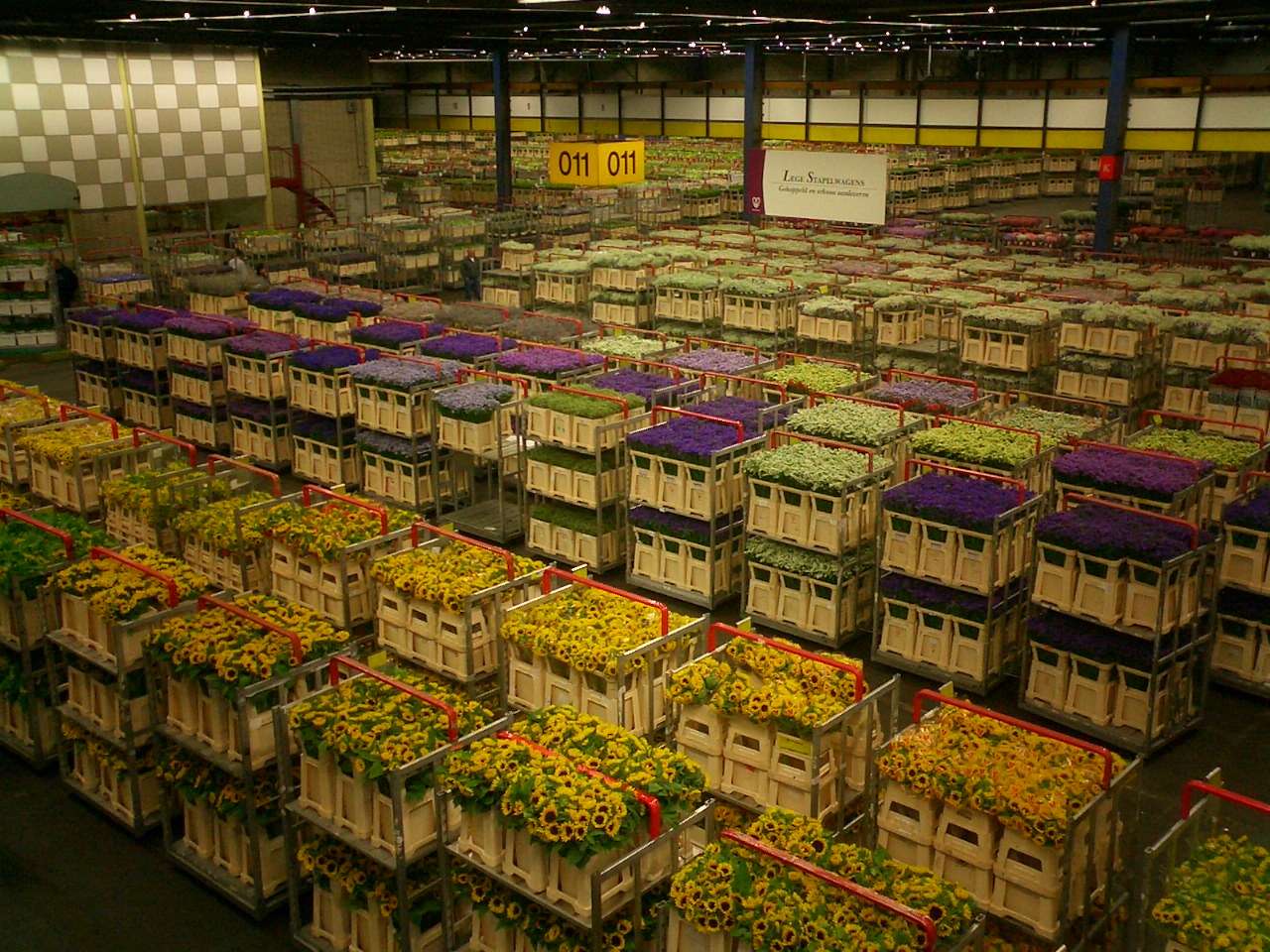
What it is
The auction building is one of the largest in the world by floor area, a vast cooled shed where trolleys of flowers move on electric trains. Growers deliver the evening before or overnight. Each lot is inspected and graded, and then offered on a clock. Buyers are wholesalers and exporters who supply florists, supermarkets and street markets. Roses, tulips, chrysanthemums, gerberas and lilies make up much of the volume, and thousands of other varieties pass through.
How the clock works
In an ordinary auction the price rises until one bidder is left. In a Dutch auction it falls. A pointer or a ring of lights starts at a high price and runs down quickly. The first buyer to press the button stops it and takes as much of the lot as they want at that price. The rest is offered again. Each sale takes a few seconds. Wait too long and a rival buys. Press too soon and you overpay.
Where it comes from
Growers around Aalsmeer set up their first auctions in the early 1910s, in cafés, to stop traders playing one grower against another. The local auctions merged over the decades, and in 2008 the two biggest Dutch flower cooperatives joined to form the present company. Today most buyers bid remotely from a screen, and a growing share of flowers is sold directly between grower and buyer, with the cooperative handling payment and logistics.
Why it matters
The clock sets a public price each morning for thousands of flower types, and growers from Kenya to Colombia watch it. The auction also sets quality and packing standards that the whole trade follows. The Netherlands grows many of the flowers itself, under glass, and re-exports a great many more that are flown in from Africa and South America, which makes Aalsmeer the hub of the world trade. Whatever the season outside, tulips, roses and orchids pass through its halls.
How to take part
- Check the Royal FloraHolland website to see whether visitor access is offered at present, and on which days.
- If it is, arrive early. Trading starts around dawn and is largely over by mid morning.
- Follow the visitor walkway above the floor and watch the trolley trains below.
The flowers
 RoseWoody perennial plants with showy, often fragrant flowers in many colours
 TulipSpring-blooming bulbs with showy, cup-shaped flowers in many colours
 ChrysanthemumAutumn-blooming flower with thousands of varieties, cherished in East Asia and beyond
 GerberaBright daisy-like blooms from South Africa, popular in gardens and bouquets
 LilyTall bulb flowers with large, colourful blooms in many gardens and cultures
Also part of it, and being written: Phalaenopsis.
Sources and further reading
Original text by the Phool desk, written with AI assistance. Customs vary from place to place. If we have something wrong, tell us.
Photo credits on this page
The small pictures above come from Wikimedia Commons under free licences. Some are cropped to fit.
- Rose: User:Tigerente, CC BY-SA 3.0, source
- Chrysanthemum: Muhammad Mahdi Karim, GFDL 1.2, source
- Tulip: John O'Neill, CC BY-SA 3.0, source
- Lily: Denis Barthel, CC BY-SA 3.0, source
- Aalsmeer Flower Auction: No machine-readable author provided. Miriam8~commonswiki assumed (base, Public domain, source
- Gerbera: Novita Saulina Sitohang, CC BY 4.0, source