
Chinoiserie
In its own language: 中国风
European decorative style inspired by imagined Chinese and East Asian art
Chinoiserie is a European decorative style that imitates Chinese and broader East Asian artistic traditions. It became popular in the 18th century through trade with Asia and is known for asymmetry, whimsical nature scenes, and exotic motifs in interiors, gardens, porcelain, and painting.
- Peaked in the 18th century alongside the Rococo style
- Inspired by Chinese porcelain, gardens, and textiles brought by East India Companies
- Featured in royal palaces like Brighton’s Royal Pavilion and Potsdam’s Sanssouci
- Included real Chinese-inspired buildings like the Chinese House in Potsdam
- Revived in elite design after the 19th century despite early criticism
What is Chinoiserie?
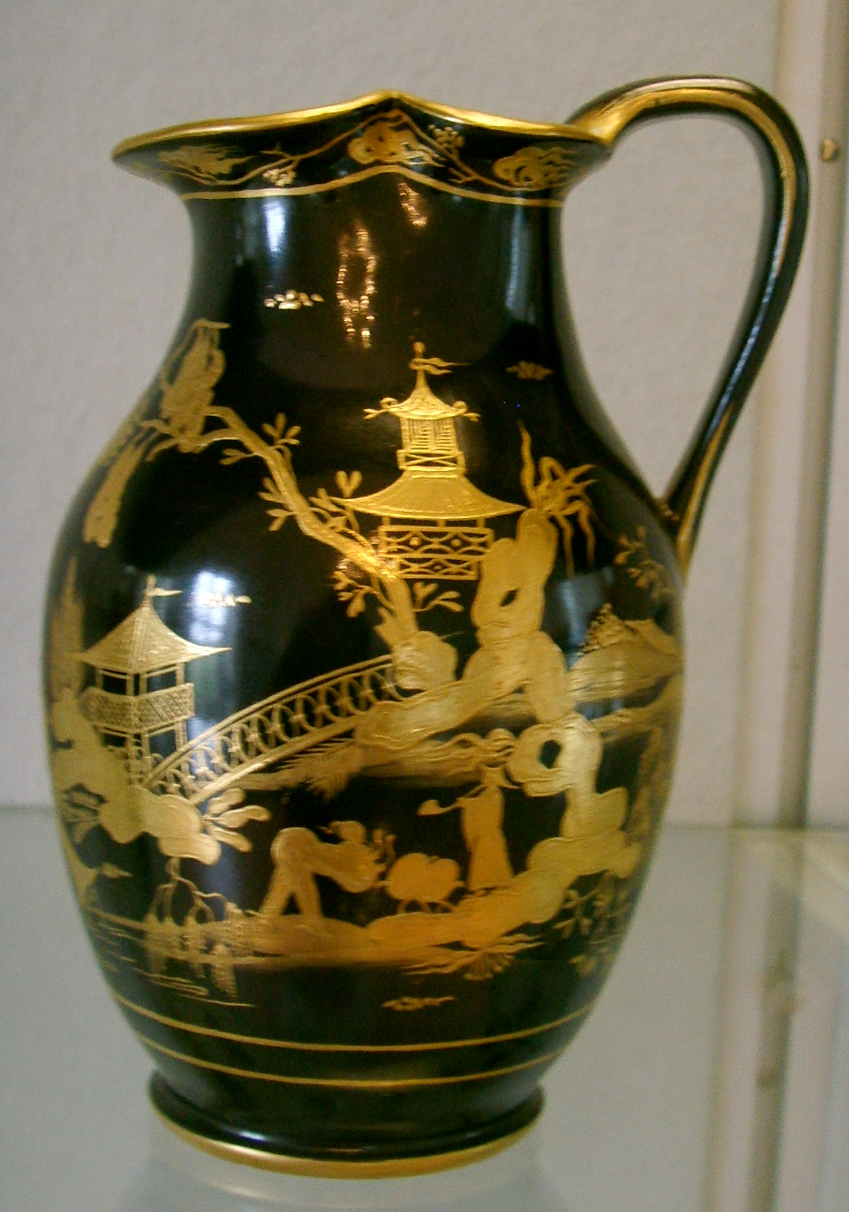
Chinoiserie is a European decorative style that blends fantasy and imitation of Chinese, Japanese, and other East Asian art. It features asymmetrical compositions, lighthearted scenes of imagined Asian life, pagodas, dragons, and flowering trees. Common in 18th-century interiors, gardens, and porcelain, it emphasizes whimsy over accuracy.
Where does Chinoiserie come from?
Chinoiserie emerged in Europe in the mid-to-late 17th century, fueled by trade with China and reports from merchants and Jesuit missionaries. Though named after China, it often mixed elements from Japan, India, and Persia. The term itself entered French literature in the 19th century, but the style peaked earlier alongside Rococo.
How Chinoiserie is made
Artisans created chinoiserie by adapting East Asian motifs, like blue-and-white porcelain patterns or garden pavilions, to European tastes. Painters used asymmetrical layouts and capricious subjects; furniture makers like Chippendale added lacquered finishes and fretwork. Porcelain factories in Meissen and elsewhere copied Chinese designs on Western shapes.


When and where Chinoiserie is used
Chinoiserie decorated royal palaces, pleasure pavilions, and elite homes across Europe. It appeared in interior panels, garden follies like Potsdam’s Chinese House, and tableware. Though its popularity waned after the 1830s, it saw revivals in the late 19th century and remains a reference in high-end interior design today.
Forms of Chinoiserie
Local versions developed beyond Europe, in India, Japan, Iran, and Latin America. In Mexico, Chinese porcelain imported via Manila inspired Talavera pottery. Meanwhile, China itself produced 'occidenterie': Western-style art for domestic consumers, seen in structures like the Xiyang Lou at the Old Summer Palace.
What Chinoiserie means
Chinoiserie reflected European fascination with an idealized East, praised by thinkers like Voltaire and Schopenhauer. Critics, however, called it irrational or inauthentic. Linked to Orientalism, it shaped perceptions of Asia for centuries and stands as a symbol of cross-cultural exchange, however imagined.
Questions people ask about Chinoiserie
What is chinoiserie?
Chinoiserie is a European decorative style that imitates Chinese and East Asian art, especially in interiors, gardens, porcelain, and painting, often based on fantasy rather than accurate representation.
Where did chinoiserie originate?
It originated in 17th-century Europe, particularly in countries with East India Companies like England, France, and the Netherlands, and peaked in the 18th century during the Rococo period.
Is chinoiserie actually Chinese?
No. Though inspired by Chinese and East Asian imports, chinoiserie is a European interpretation that often blended elements from China, Japan, India, and Persia into an imagined 'Oriental' aesthetic.
How was chinoiserie used?
It decorated royal palaces, private homes, gardens, and porcelain. Examples include painted wall panels, Chinese-style pavilions, and furniture with lacquer and fretwork details.
Is chinoiserie still used today?
Yes, it persists in elite interior design and fashion, with periodic revivals since its 19th-century decline following the Opium Wars and shifting colonial attitudes.
Good reading and sources
- Encyclopaedia BritannicaArticle
- The influence of East Asian lacquer on European furniture · V&AVictoria and Albert Museum, Article
The facts on this page come from the Wikipedia article "Chinoiserie", written by its contributors and used under the CC BY-SA 4.0 licence, and from its Wikidata record (CC0). Phool rewrote the text in its own words, with AI assistance, and compares every page with the article to make sure no passage is copied. It may be reused under the same CC BY-SA 4.0 licence with a link back.
It may contain mistakes. If something is wrong, tell us. Last refreshed 2026-10-03.
More of the same kind
 Decoration
Nageirebana抛入花
A free-form ikebana style using tall vases and no flower holders
Arrangement
Decoration
Nageirebana抛入花
A free-form ikebana style using tall vases and no flower holders
Arrangement
 Decoration
Bonsai盆栽
The Japanese art of shaping miniature trees in shallow pots
🇯🇵 Japan and 7 more · Art or design
Decoration
Bonsai盆栽
The Japanese art of shaping miniature trees in shallow pots
🇯🇵 Japan and 7 more · Art or design
 Decoration
Tokonoma床の間
A Japanese alcove for displaying scrolls and flower arrangements
🇯🇵 Japan · Arrangement
Decoration
Tokonoma床の間
A Japanese alcove for displaying scrolls and flower arrangements
🇯🇵 Japan · Arrangement
 Decoration
Sōgetsu草月流
A modern school of Japanese ikebana open to all materials and styles
🇯🇵 Japan · Arrangement
Decoration
Sōgetsu草月流
A modern school of Japanese ikebana open to all materials and styles
🇯🇵 Japan · Arrangement
More from France
All the flowers of France Decoration
Paisleyبته
A curved teardrop motif from Iran and India, now used worldwide on textiles
🇮🇷 Iran and 8 more · Art or design
Decoration
Paisleyبته
A curved teardrop motif from Iran and India, now used worldwide on textiles
🇮🇷 Iran and 8 more · Art or design
 Decoration
May devotions to the Blessed Virgin Mary
Month-long Catholic customs honouring Mary with flowers, altars, and processions
🇮🇹 Italy and 7 more · Custom, May
Decoration
May devotions to the Blessed Virgin Mary
Month-long Catholic customs honouring Mary with flowers, altars, and processions
🇮🇹 Italy and 7 more · Custom, May
 Decoration
May Day Festival
A spring festival with flowers, greenery, maypoles and bonfires on the first of May
🇮🇪 Ireland and 5 more · Custom, May
Decoration
May Day Festival
A spring festival with flowers, greenery, maypoles and bonfires on the first of May
🇮🇪 Ireland and 5 more · Custom, May
 Decoration
Corn dolly
Straw figures shaped for harvest customs across Europe
🇮🇪 Ireland and 3 more · Flower craft
Decoration
Corn dolly
Straw figures shaped for harvest customs across Europe
🇮🇪 Ireland and 3 more · Flower craft