
Kusudama
In its own language: 薬玉
A Japanese paper sphere made from folded flowers or units, often hung as decoration
Kusudama is a traditional Japanese paper craft where many folded units, often shaped like flowers, are joined to form a decorative ball. Once used to hold incense or herbs, kusudama are now made as ornaments or gifts, sometimes with a tassel and sometimes split open at celebrations.
- Kusudama means 'medicine ball' in Japanese.
- It is made by joining folded paper units into a sphere.
- Waritama is a type that splits open to release confetti at events.
- Kusudama was once used to hold incense or herbs.
- Modern kusudama may be assembled without glue or thread.
What is Kusudama?
A kusudama is a decorative ball made by joining many folded paper units, often in the shape of flowers or pyramids, to create a sphere. The units may be sewn or glued together, and a tassel is sometimes added to the bottom. Kusudama can be hung as ornaments, used in displays, or given as gifts. Some versions, called waritama, are large and split open to release confetti or streamers at celebrations.
Where does Kusudama come from?
Kusudama comes from Japan, where it was originally used to hold incense or potpourri, possibly made from real flowers or herbs. The name combines the Japanese words for 'medicine' (kusuri) and 'ball' (tama). Over time, the practice shifted from using natural materials to creating the balls from folded paper, becoming a respected part of Japanese origami and decorative arts.
How Kusudama is made
To make a kusudama, many identical paper units are folded, often using origami techniques. These units are then joined, traditionally by sewing or gluing, to form a sphere. Modern kusudama can be assembled by inserting flaps into pockets, without glue or thread. A tassel may be attached to the bottom, and the finished ball is often hung up for display.

When and where Kusudama is used
Kusudama are mainly used as decorative ornaments in homes or at celebrations. The waritama version is displayed and then split open to release confetti or balloons at events like graduations or ceremonies. Kusudama are also given as gifts, reflecting care and craftsmanship. They are a recognized part of Japanese festive and craft traditions.
Forms of Kusudama
Traditional kusudama often use origami flowers like lilies, but modern designs include many geometric and floral patterns. Some kusudama are modular, assembled without glue or thread. Waritama is a special type that splits open for celebrations. Origami artists such as Tomoko Fuse have developed new kusudama styles.
What Kusudama means
Kusudama holds a place in Japanese culture as a symbol of celebration and good wishes. Once linked to health and protection through incense, it is now mainly decorative. The waritama is a familiar sight at Japanese ceremonies. The confetti ball emoji (🎊) is based on waritama, showing its cultural reach.
Questions people ask about Kusudama
Where does kusudama come from?
Kusudama originated in Japan, where it was first used to hold incense or herbs. The craft later evolved into making decorative paper balls using origami techniques.
What is a kusudama used for today?
Today, kusudama are mainly used as decorative ornaments, gifts, or for special celebrations. The waritama type is split open to release confetti or balloons at ceremonies.
How is a kusudama made?
A kusudama is made by folding many identical paper units, often in floral shapes, and joining them together—traditionally by sewing or gluing, or by slotting the pieces together in modern modular designs.
What does kusudama mean?
The word 'kusudama' comes from the Japanese words for 'medicine' (kusuri) and 'ball' (tama), reflecting its early use for holding incense or herbs.
Are there different types of kusudama?
Yes, traditional kusudama often use origami flowers, while modern designs include geometric forms. Waritama is a special type that splits open to release confetti at events.
Good reading and sources
The facts on this page come from the Wikipedia article "Kusudama", written by its contributors and used under the CC BY-SA 4.0 licence, and from its Wikidata record (CC0). Phool rewrote the text in its own words, with AI assistance, and compares every page with the article to make sure no passage is copied. It may be reused under the same CC BY-SA 4.0 licence with a link back.
It may contain mistakes. If something is wrong, tell us. Last refreshed 2026-10-03.
More of the same kind
 Decoration
Corn dolly
Straw figures shaped for harvest customs across Europe
🇮🇪 Ireland and 3 more · Flower craft
Decoration
Corn dolly
Straw figures shaped for harvest customs across Europe
🇮🇪 Ireland and 3 more · Flower craft
 Decoration
Paisleyبته
A curved teardrop motif from Iran and India, now used worldwide on textiles
🇮🇷 Iran and 8 more · Art or design
Decoration
Paisleyبته
A curved teardrop motif from Iran and India, now used worldwide on textiles
🇮🇷 Iran and 8 more · Art or design
 Decoration
Butaبوته
A curved floral motif found in Persian, Indian, and Central Asian art and textiles
🇮🇷 Iran and 5 more · Art or design
Decoration
Butaبوته
A curved floral motif found in Persian, Indian, and Central Asian art and textiles
🇮🇷 Iran and 5 more · Art or design
 Decoration
Vase
An open container for holding and displaying cut flowers
Arrangement
Decoration
Vase
An open container for holding and displaying cut flowers
Arrangement
More from Japan
All the flowers of Japan Decoration
Bonsai盆栽
The Japanese art of shaping miniature trees in shallow pots
🇯🇵 Japan and 7 more · Art or design
Decoration
Bonsai盆栽
The Japanese art of shaping miniature trees in shallow pots
🇯🇵 Japan and 7 more · Art or design
 Decoration
Tokonoma床の間
A Japanese alcove for displaying scrolls and flower arrangements
🇯🇵 Japan · Arrangement
Decoration
Tokonoma床の間
A Japanese alcove for displaying scrolls and flower arrangements
🇯🇵 Japan · Arrangement
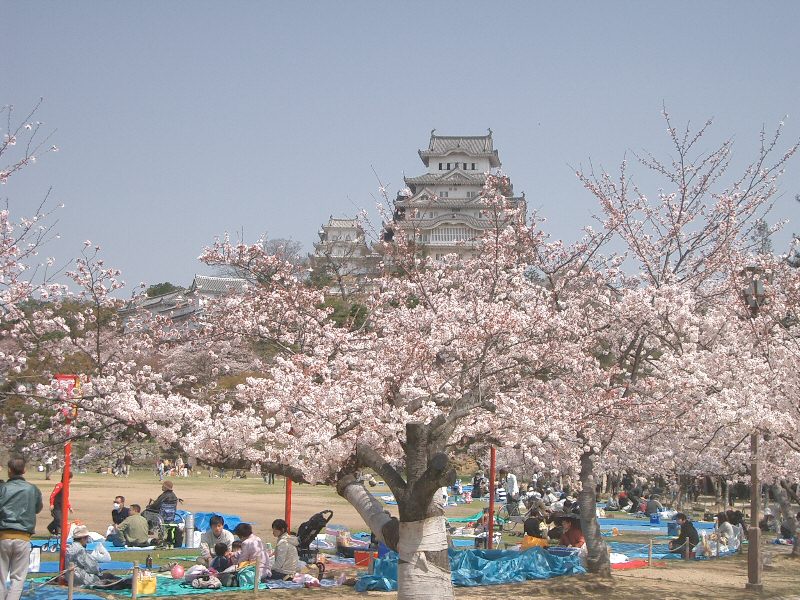 Decoration
Hanami花見
The Japanese tradition of gathering to enjoy cherry blossoms in spring
🇯🇵 Japan and 7 more · Custom, Jan to May
Decoration
Hanami花見
The Japanese tradition of gathering to enjoy cherry blossoms in spring
🇯🇵 Japan and 7 more · Custom, Jan to May
 Decoration
Sōgetsu草月流
A modern school of Japanese ikebana open to all materials and styles
🇯🇵 Japan · Arrangement
Decoration
Sōgetsu草月流
A modern school of Japanese ikebana open to all materials and styles
🇯🇵 Japan · Arrangement